
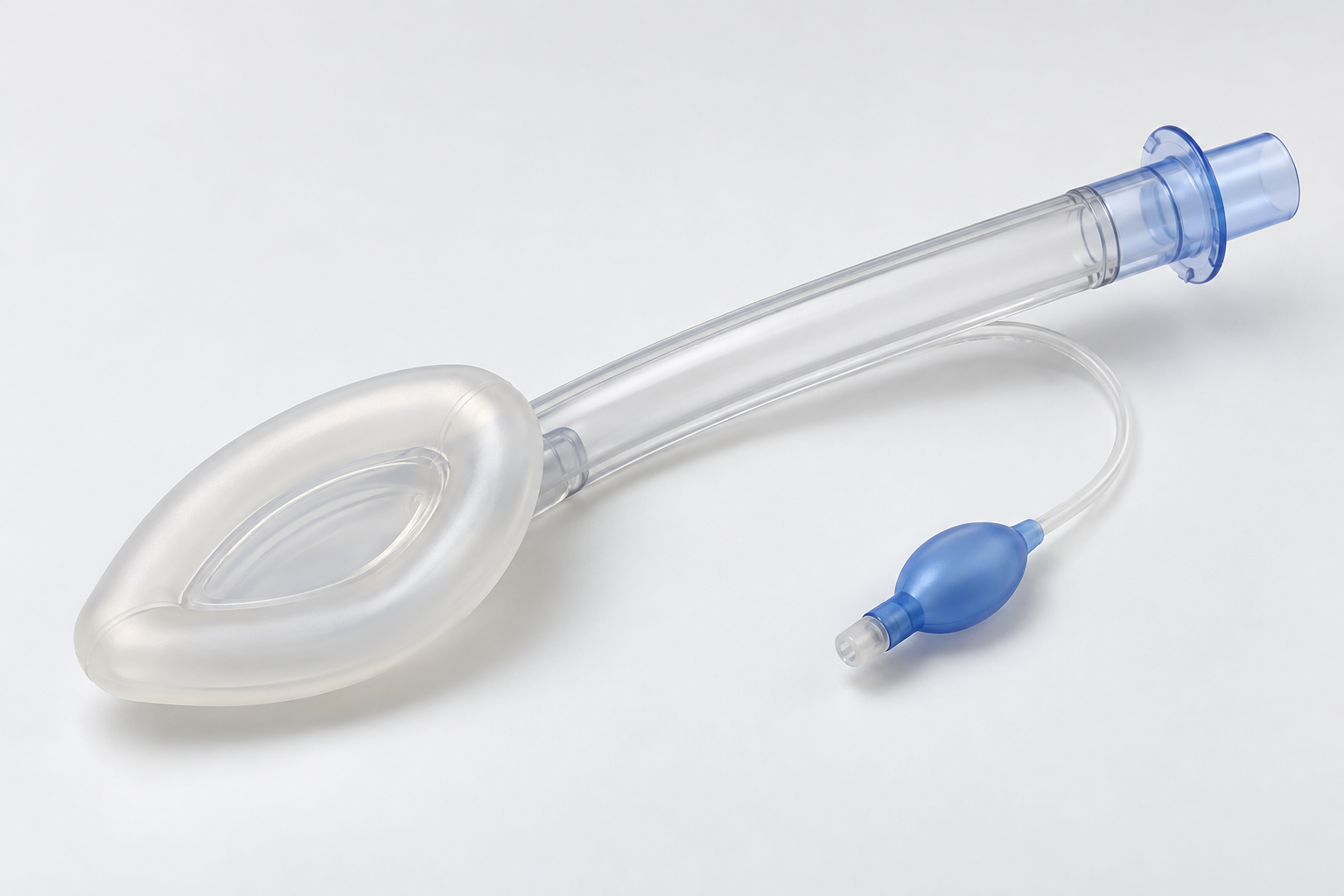
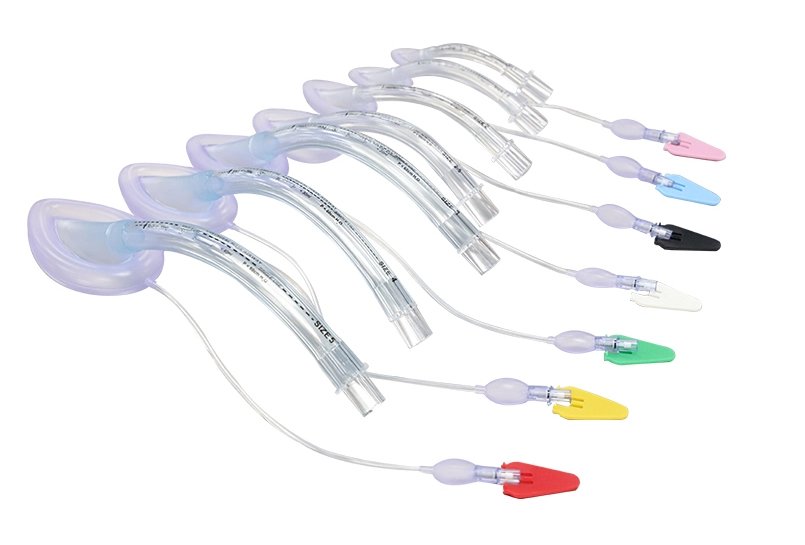
A laryngeal mask airway (LMA) is a supraglottic airway device that creates a respiratory pathway above the laryngeal inlet. Instead of passing through the vocal cords like an endotracheal tube, its mask-shaped distal section sits around the laryngeal opening.
The product may look simple, but it combines several functions in a compact assembly. The airway tube must remain open, the mask must locate correctly, the cuff or sealing body must conform to surrounding anatomy, and all joined components must remain secure throughout the intended procedure.
For product developers and sourcing teams, the important questions extend beyond whether the device is described as single-use, reusable, single-lumen or second-generation. Material documentation, sealing geometry, tube stiffness, bonding, dimensional consistency, sterilization compatibility and functional testing all affect the finished device.
This article explains those considerations from a product development and manufacturing perspective. It is not a clinical-use guide. Device selection and use remain the responsibility of trained healthcare professionals following the approved instructions for use and applicable clinical protocols.
What is a Laryngeal Mask Airway?
A laryngeal mask airway belongs to the broader family of supraglottic airways. ISO 11712:2023 describes essential requirements for supralaryngeal airways and connectors, including dimensions, basic properties and size designation. The standard describes their purpose as providing a respiratory pathway to the top of the larynx during spontaneous, assisted or controlled ventilation.
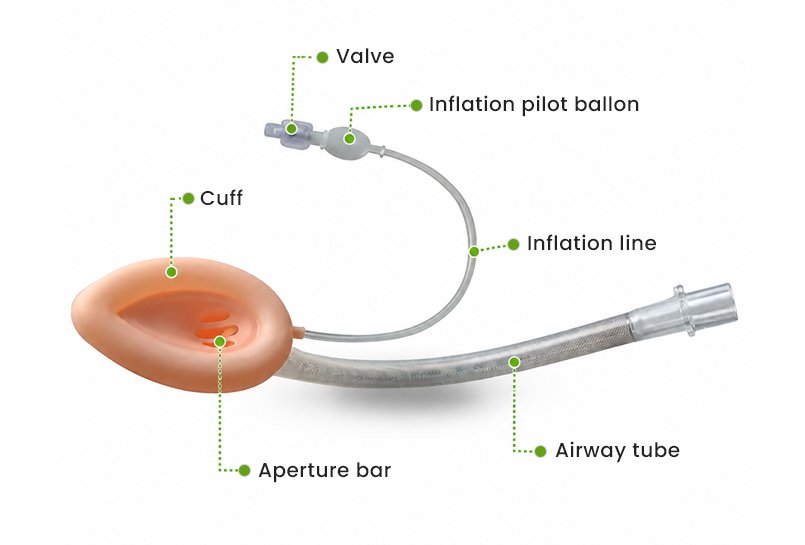
A typical inflatable laryngeal mask airway contains:
- An airway tube that connects the mask to the breathing circuit
- A mask bowl or backplate that directs airflow toward the laryngeal inlet
- A soft inflatable cuff that forms the peripheral seal
- An inflation line, pilot balloon and valve for cuff pressure management
- A standardized proximal connector
Some designs add a gastric drainage channel, integrated bite block, reinforced tube, epiglottic support features or a conduit intended to assist tracheal intubation. Each additional feature changes the tooling, assembly and verification plan.
Supraglottic airways also have a recognized role in difficult-airway and resuscitation systems. Professional guidance from organizations such as the American Society of Anesthesiologists and Resuscitation Council UK includes supraglottic airway devices within airway-management planning. The exact device, size and technique depend on the patient, procedure, operator training and approved product labeling.
Clinical Advantages and Limitations
A laryngeal mask airway can establish a supraglottic airway without passing through the vocal cords. Depending on the device and clinical situation, this can make placement relatively quick, support spontaneous or controlled ventilation, and cause less stimulation than tracheal intubation. It can also provide a more consistent hands-free airway than a face mask and serve as an option in emergency or difficult-airway planning.
These advantages do not make an LMA suitable for every patient or procedure. Its seal is generally less resistant to high airway pressure than a cuffed endotracheal tube, and leakage or gastric insufflation can occur during positive-pressure ventilation. An LMA also does not provide complete separation of the respiratory and digestive tracts, so regurgitation and aspiration risk remain important selection considerations. Some designs provide limited access for suctioning below the device.
Important risks and performance concerns include:
- Airway obstruction caused by malposition, cuff folding, rotation or excessive cuff inflation
- Leakage caused by incorrect sizing, shallow or deep placement, poor alignment or excessive airway pressure
- Regurgitation and aspiration in patients or procedures with elevated gastric risk
- Sore throat or local tissue irritation associated with insertion, repeated attempts or excessive cuff pressure
- Laryngospasm when airway reflexes are stimulated under unsuitable clinical conditions
Device design can reduce some of these risks through appropriate sizing, atraumatic geometry, controlled cuff pressure, reliable valves and, in second-generation products, a dedicated gastric drainage channel. It cannot replace patient assessment, professional training or adherence to the approved instructions for use.
Laryngeal Mask Airway Types
Laryngeal masks can be grouped by airway structure, sealing design, intended function and whether they are single-use or reusable. These categories overlap, so a useful product specification should describe the actual construction rather than relying only on a generation label.
Single-Lumen Laryngeal Masks
A basic single-lumen design has one airway passage and an inflatable cuff. Its relatively simple construction can support straightforward insertion and cost-efficient manufacturing.
Because it does not include a separate gastric drainage path, the complete device has different risk controls and application boundaries from a second-generation design. The cuff seal should not be presented as complete protection against regurgitation or aspiration. Claims must follow the finished device’s validation and regulatory clearance.
Dual-Lumen Laryngeal Masks
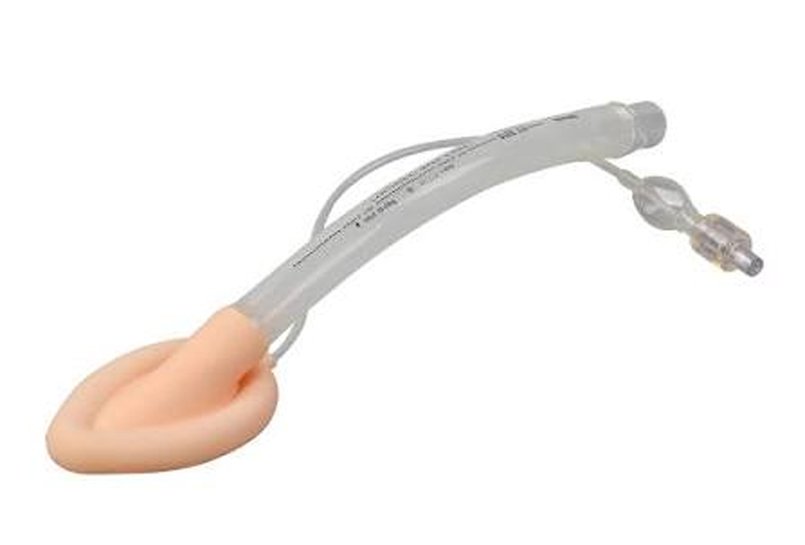
Second-generation devices generally add a gastric drainage channel and may use a modified cuff, mask bowl or backplate to improve sealing performance. The separate channel can permit passage of a gastric tube or provide a route for drainage, depending on the approved design.
Adding this lumen makes the component architecture more demanding. The airway and drainage passages must remain separate, open and correctly aligned. Bonded interfaces must not leak between channels, and the distal geometry must be reproduced consistently without flash or distortion.
Reinforced and Pre-Curved Laryngeal Masks
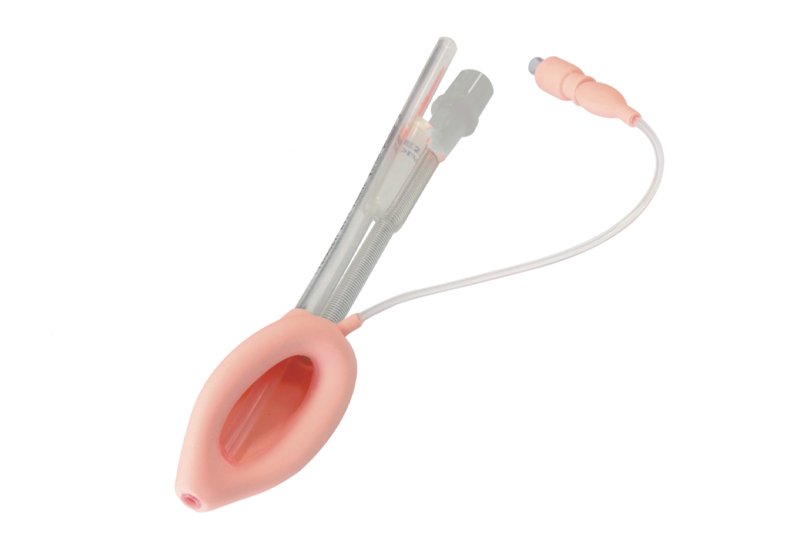
A reinforced airway tube can contain a helical wire or other structural element that helps resist kinking while allowing the tube to flex. This architecture is often associated with procedures where the breathing circuit must be routed away from the operating field.
A pre-curved tube takes a different approach. Its molded or formed curvature is designed to follow a defined insertion path and maintain a repeatable connection position. Tube angle, bending stiffness and elastic recovery are therefore important drawing requirements rather than cosmetic details.
Intubating and Endoscopy-Oriented Laryngeal Masks
Some laryngeal masks provide a larger or more controlled airway conduit through which an endotracheal tube or bronchoscope can pass. Other specialized designs provide access for endoscopic procedures while maintaining a ventilation pathway.
These products require clear dimensional compatibility between the internal lumen and the intended auxiliary device. Internal transitions, aperture size, surface finish and tube curvature can determine whether the instrument passes without catching or damaging the device.
Inflatable and Non-Inflatable Laryngeal Masks
An inflatable cuff allows the seal to be adjusted within the limits stated in the instructions for use. Its thin wall must inflate evenly and retain pressure without localized ballooning, folds or weak seams.
A non-inflatable design uses a preformed sealing body made from a soft elastomer or gel-like material. It removes the inflation line and valve from the assembly, but it places more responsibility on molded geometry, material softness and size selection. Neither approach is automatically better for every intended use.
Why Silicone Is Used in Laryngeal Mask Components
Medical silicone is commonly considered for inflatable cuffs, mask bodies, pilot balloons, inflation lines and selected airway tubes. Its value comes from a combination of softness, elastic recovery, temperature stability and the availability of grades supported by medical-device documentation.
The material choice should still be made at grade level. Calling a compound “medical-grade silicone” does not by itself establish that the finished laryngeal mask is biocompatible or suitable for a particular procedure.
The FDA’s biocompatibility guidance uses a risk-based approach based on the nature, location, frequency and duration of body contact. FDA also explains that assessment considers the device in its final finished form, including sterilization when applicable. Raw-material data is useful, but it does not replace evaluation of the molded, printed, bonded, cleaned and sterilized device.
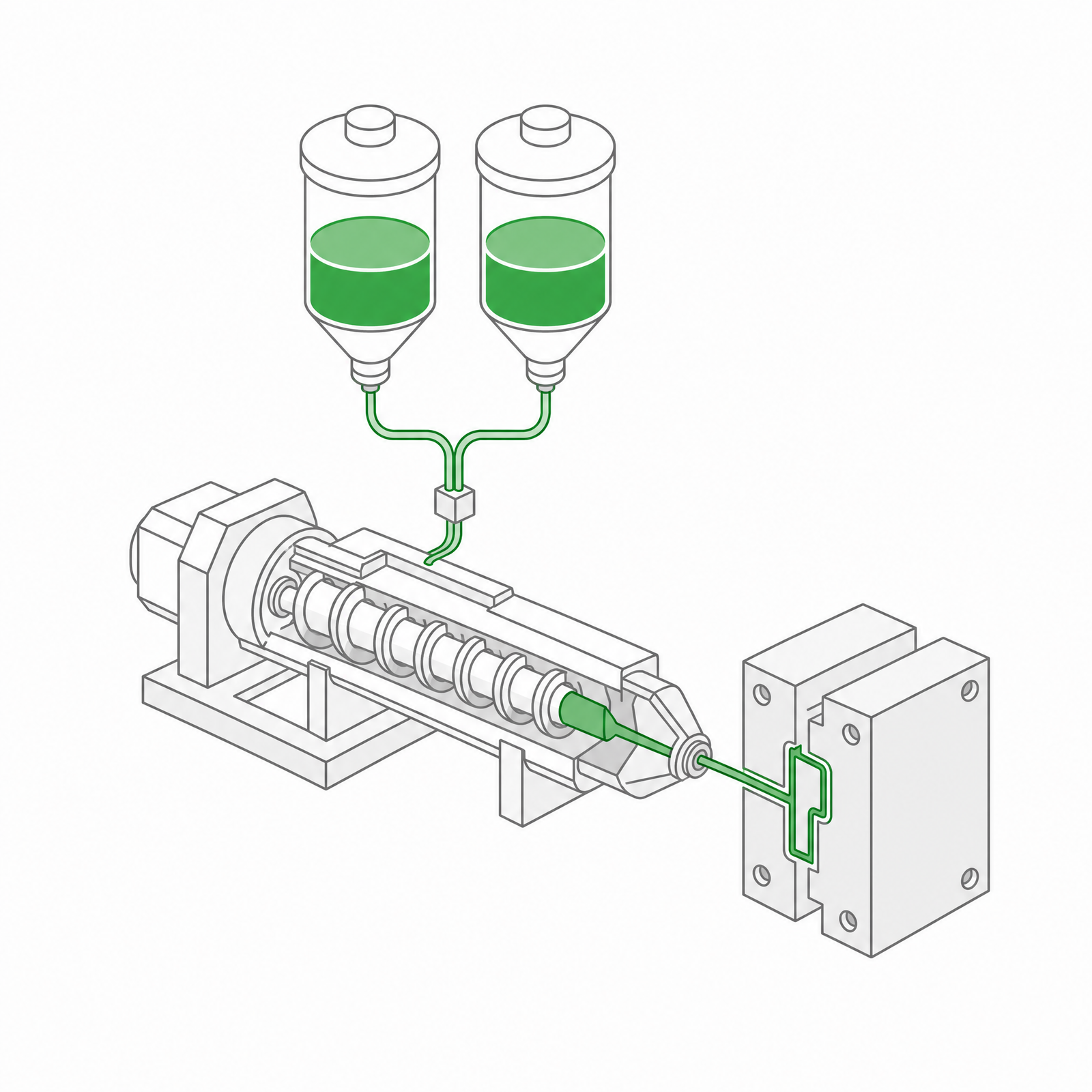
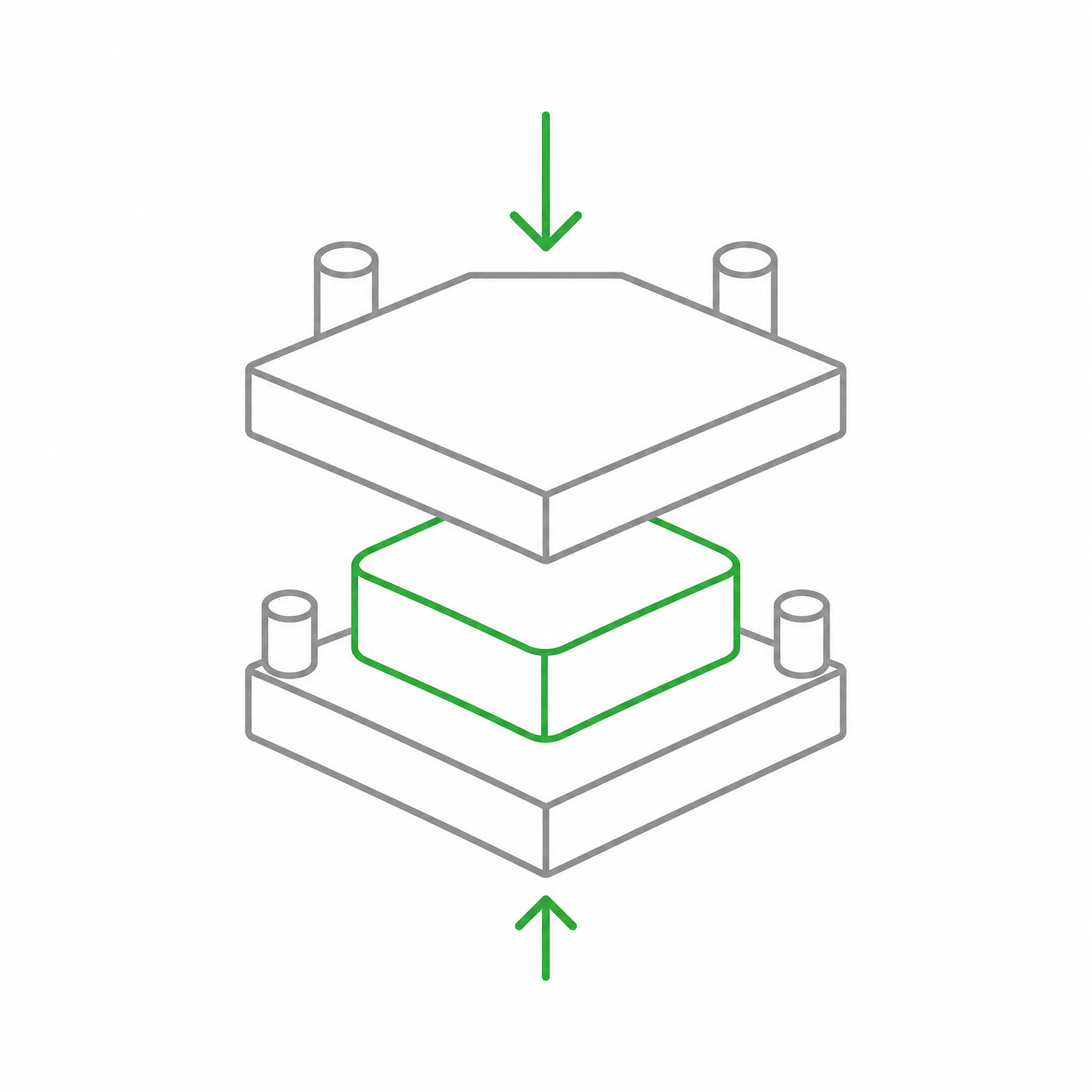
Liquid silicone rubber can form thin and detailed cuff components through LSR injection molding. High-consistency silicone may also be selected for molded parts, while tubing can be produced through silicone extrusion. The final selection depends on component geometry, volume, tolerance and material qualification.
Silicone and PVC are both found in airway-device constructions. PVC can provide a firmer tube and efficient single-use production, while silicone can offer a softer patient-contact interface and good elastic recovery. Hybrid devices may therefore use different materials for the tube, cuff, connector and valve. Compatibility at every bonded or assembled interface must be verified after aging and sterilization.
Laryngeal Mask Airway Manufacturing Process
The production flow varies by product architecture, but an inflatable silicone design commonly combines molding, extrusion, bonding, printing, assembly and leak testing.
Component and Tooling Development
Development begins by separating the assembly into functional components and critical interfaces. The cuff requires controlled wall thickness and smooth sealing surfaces. The mask bowl must direct airflow without obstruction. Tube and connector dimensions must support airflow and circuit connection, while drainage lumens in second-generation devices must remain open and isolated.
The mold design should place gates, vents and parting lines away from patient-contact sealing edges whenever practical. Thin cuff sections are especially sensitive to trapped air, short filling and tearing during demolding. Multi-cavity tools also need balanced filling so one cavity does not produce a different cuff thickness or cure state.
Silicone Preparation, Molding and Extrusion
The selected silicone is prepared under controlled conditions before molding or extrusion. For LSR, the two components are metered and mixed before entering a heated mold. Cure temperature, injection pressure, venting and demolding timing influence flash, wall thickness and mechanical properties.
Airway and inflation tubes may be extruded with in-line dimensional monitoring. Inner diameter, outer diameter, ovality and wall thickness affect airflow, kink resistance and fit with mating components. Reinforced tubing adds another control challenge because the reinforcement must remain positioned without exposed wire or blocked lumen areas.
Bonding, Printing and Assembly
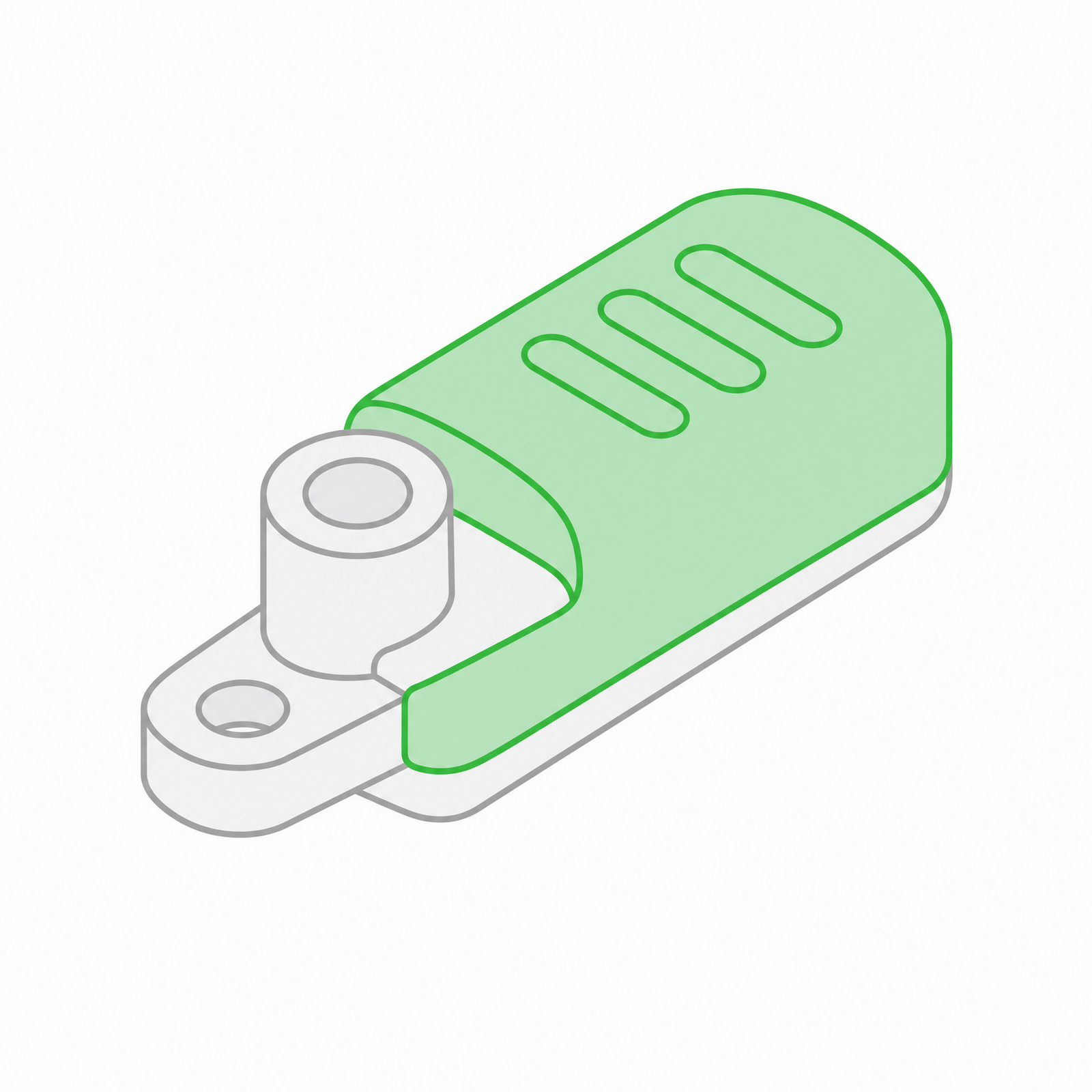
The cuff, mask bowl, airway tube, connector, inflation line and pilot balloon may be bonded or mechanically assembled according to the design. Joint surfaces must be clean and consistently prepared. Adhesive amount and cure conditions should be controlled so excess material does not enter an airflow path or create a hard, irregular patient-contact edge.
Printing normally includes size, inflation guidance, orientation information, identification and traceability content required by the product specification. Ink adhesion and legibility should be evaluated after handling, cleaning or sterilization as applicable. These are part of the broader secondary operations plan rather than decorative additions.
Cleaning, Sterilization and Packaging
Manufacturing cleanliness must match the device risk and downstream process. Cleanroom molding can reduce particle and handling exposure, but cleanroom production is not sterilization.
Sterilization compatibility should be established for the complete device, not assumed from the silicone alone. Radiation, ethylene oxide, steam or another validated process can affect polymers, adhesives, inks, valves and packaging differently. Single-use and reusable products therefore require different validation and labeling strategies.
Quality Controls and Sourcing Questions
A laryngeal mask airway should be evaluated as a functional assembly. Visual inspection is necessary, but it cannot confirm lumen patency, cuff integrity or bond strength on its own.
Depending on the design and regulatory plan, inspection and validation may include:
- Dimensional inspection of the cuff, mask bowl, tube, connector and inflation components
- Airway and drainage-lumen patency and airflow-resistance testing
- Cuff inflation, pressure retention, leakage and sealing-performance testing
- Bond, pull and connector security testing
- Final-device biocompatibility, sterilization, packaging, shelf-life and aging validation
Before requesting a quotation, a buyer should provide more than an overall device image. A useful technical package includes component drawings, size range, material grades, target sterilization method, single-use or reusable status, intended assembly method, critical dimensions, acceptance criteria, estimated volume and required documentation.
It is also important to define who owns device-level responsibilities. A silicone component manufacturer may develop the cuff, tube, pilot balloon or molded mask body, but the legal manufacturer of the finished device remains responsible for intended-use claims, risk management, clinical and regulatory strategy, sterilization validation and final release requirements.
Building a Reliable Laryngeal Mask Airway Supply Program
Laryngeal mask development connects clinical function with detailed manufacturing control. Single-lumen, second-generation, reinforced, pre-curved and non-inflatable designs each place different demands on geometry, materials and assembly.
For silicone components, the most important work happens before production: select the exact qualified material, identify the surfaces and dimensions that control sealing, review how thin sections will fill and demold, and define tests for every bonded interface and lumen. Then verify the complete device after all printing, cleaning, sterilization and aging steps.
Fecision supports medical silicone molding projects from component design review through tooling, molding, extrusion, bonding and inspection. For a laryngeal mask program, the starting point is a clear component specification and a device-level validation plan that connects each manufactured feature to its intended function.
 LSR Injection Molding
 Silicone Rubber Overmolding
 Compression Molding
 Silicone Rubber Extrusion
 In-house Tooling