
Silicone Rubber and LSR
Silicone and liquid silicone rubber are the main choices for flexible umbrella valves. Most designs use material below 55 Shore A, with many applications in the 30 to 40 Shore A range.
One-piece elastomer check valves for low-pressure sealing, venting, and controlled one-way flow.
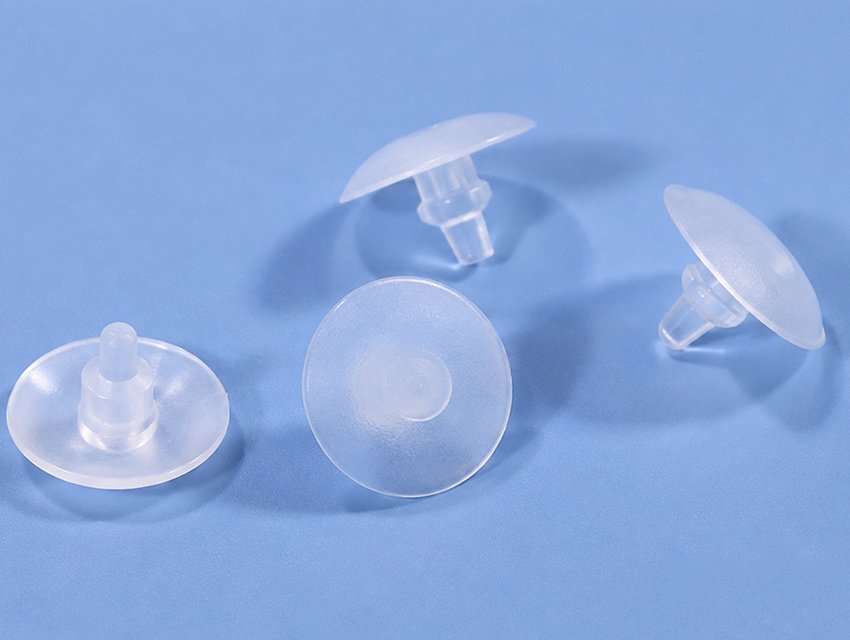
An umbrella valve, also called a mushroom valve or diaphragm check valve, is a one-piece elastomer valve with a flexible circular skirt and a central retaining stem. The stem usually includes a hook or barb that locks the valve into the mounting hole.
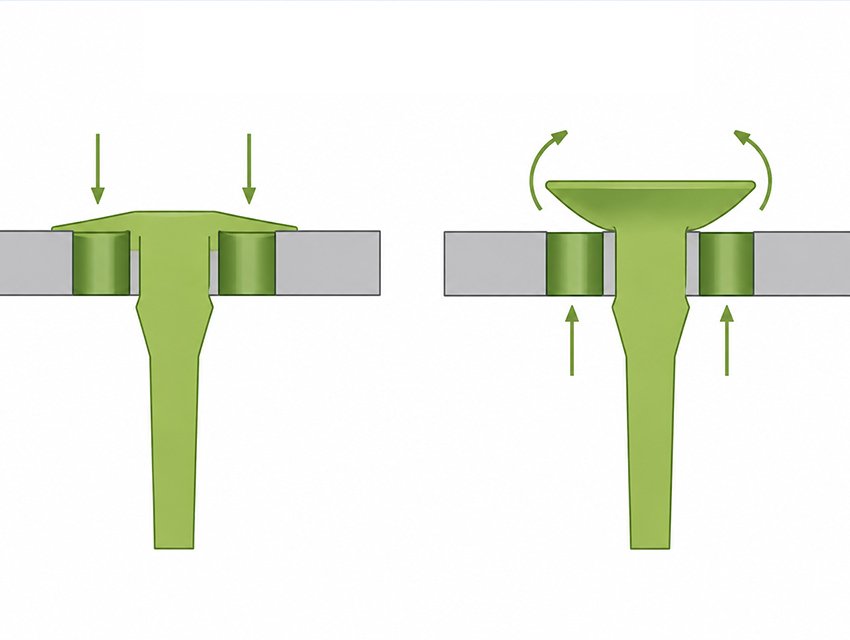
At rest, the skirt presses against the valve seat and seals the flow path. When upstream pressure reaches the required cracking pressure, the skirt edge lifts and allows fluid or gas to pass. When pressure drops or reverses, the skirt returns to the seat and closes the valve.
The compound affects how easily the skirt opens and how well it returns to the seat. It must also tolerate the working fluid and any sterilization cycle without losing that response.
Silicone and liquid silicone rubber are the main choices for flexible umbrella valves. Most designs use material below 55 Shore A, with many applications in the 30 to 40 Shore A range.
FVMQ can be selected for oil and fuel exposure, EPDM for weather and ozone resistance, and NBR or CR for application-specific oil, chemical, or environmental requirements.
Silicone rubber valves can be manufactured by compression molding and LSR injection molding, depending on the product structure and quantity. The manufacturing process of silicone rubber cross-slit valves requires precision and expertise to ensure the quality and reliability.
The valve opens and closes through pressure differential and elastic deformation of the silicone skirt.
With little or no pressure difference, the skirt stays in contact with the valve seat and blocks the flow path.
When upstream pressure reaches the cracking pressure, the skirt edge flexes away from the seat and fluid passes through the vent openings.
When pressure falls or reverses, the skirt quickly returns to the seat and restores the one-way seal.
Umbrella valves are commonly produced by silicone compression molding or LSR injection molding. LSR injection molding uses precisely metered two-component silicone and a precision mold to form the thin skirt, sealing lip, stem, and retaining feature in one cycle.
Compression molding is often used for medium-volume programs or larger valve sizes. For umbrella valves, skirt thickness transition, stem geometry, and seat contact are controlled to keep opening pressure and recovery stable.
Liquid or high-consistency silicone is conditioned and precisely metered by weight into charge preforms. Charge accuracy helps prevent skirt-edge flash and short-shots around the stem.
Liquid injection or compression molding at 150-180°C forms the skirt, sealing lip, central stem, and retaining feature. Skirt profile determines cracking pressure and reverse seal.
A secondary thermal cure drives off cure byproducts and stabilizes extractables, supporting downstream ISO 10993 biocompatibility testing when required.
Parting-line flash around the skirt edge, vent path, and retaining stem is removed by cryogenic deflash or controlled trimming without tearing the thin diaphragm.
Every unit is tested for forward cracking pressure, skirt recovery, and reverse-seal integrity against your spec window before it leaves the line.
Parts can be ultrasonically cleaned and packaged under ISO Class 8 cleanroom controls, also described as Class 100,000 cleanroom conditions, before your EtO or gamma sterilization cycle.
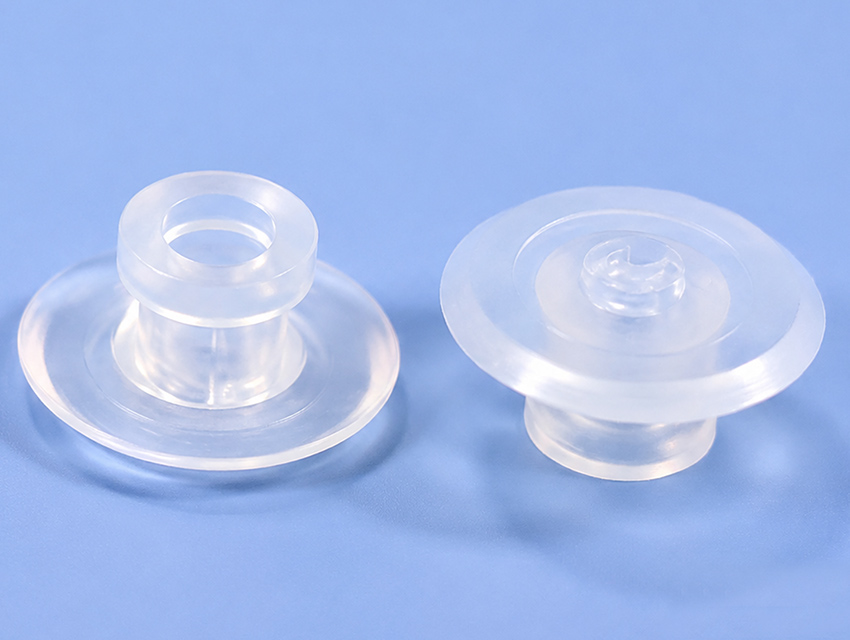
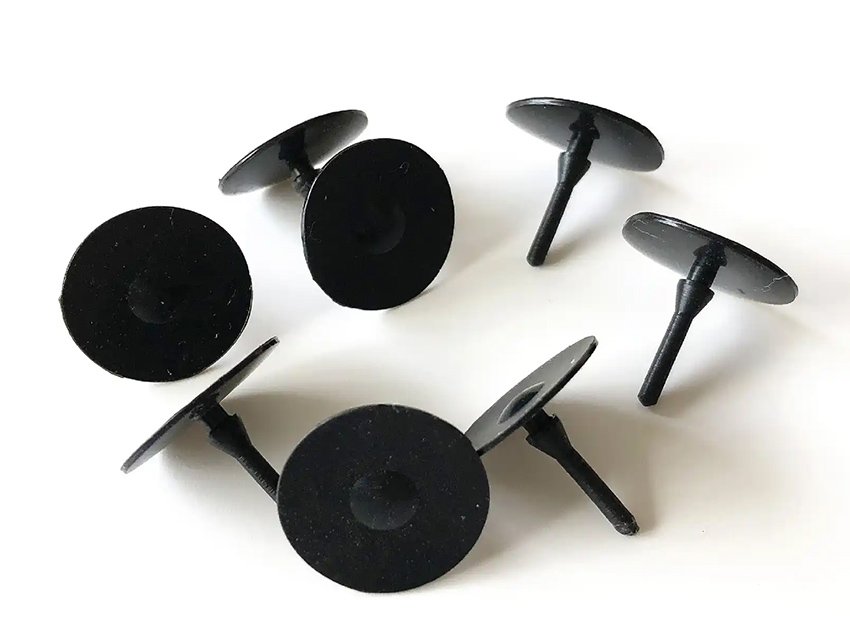
Custom umbrella valve samples showing skirt geometry, molded sealing surfaces, and application-ready silicone valve details.
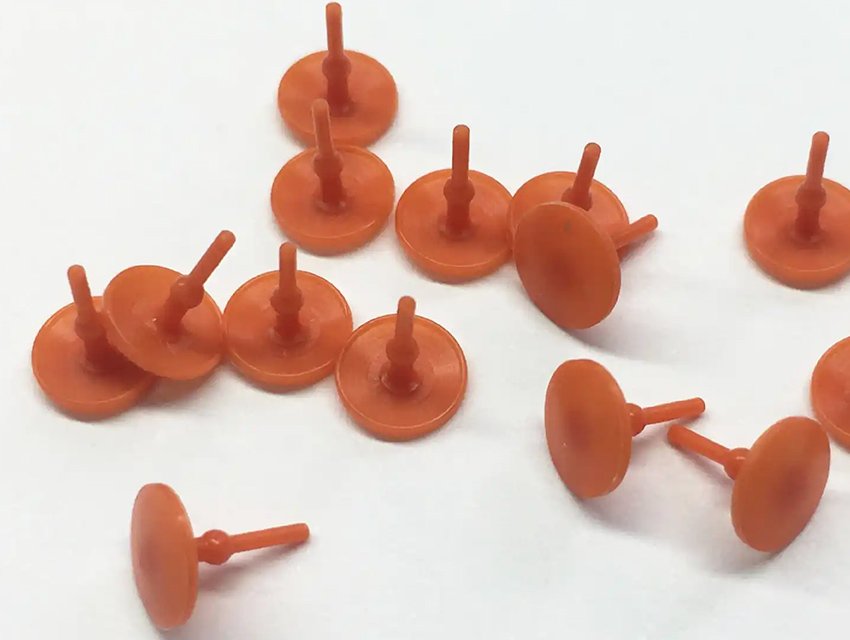
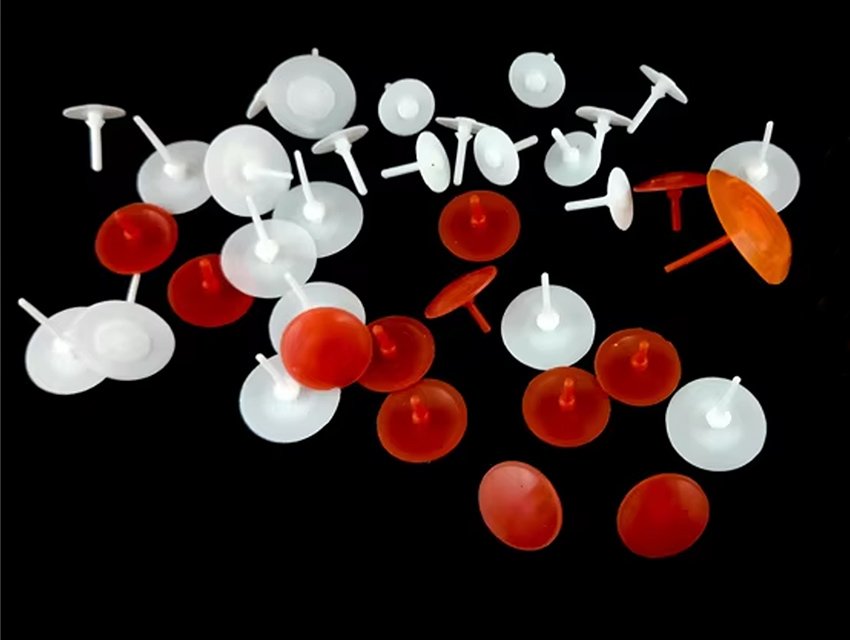
Cracking pressure, material recovery, temperature, and sterilization requirements should be matched to the actual system.
| Property | Typical Guidance | Design Meaning |
|---|---|---|
| Cracking Pressure | Often below 2 psi; low-pressure respiratory designs can be much lower | Controlled mainly by skirt thickness, diameter, seat height, vent geometry, and material stiffness. |
| Hardness | Commonly 30 to 40 Shore A; generally below 55 Shore A | Softer compounds open more easily, while higher hardness can raise cracking pressure and complicate demolding. |
| Temperature Range | Silicone designs commonly target about -40°C to 230°C | The final range depends on the selected material grade and the media being handled. |
| Recovery | Low compression set and high resilience preferred | Good elastic recovery helps the skirt reseal after repeated opening cycles. |
| Sterilization | Suitable medical LSR grades may support autoclave, EO, and gamma processes | Material and valve geometry should be validated against the actual sterilization cycle. |
Reliable umbrella valve performance depends on the relationship between the skirt, seat, vent openings, material, and retaining stem.
A thicker center with a thinner edge and defined sealing lip can improve recovery and reduce long-term compression deformation.
Seat height, vent size, vent shape, skirt diameter, and skirt thickness work together to set cracking pressure and maximum flow.
The retaining feature needs enough holding force without creating excessive demolding stress. Material hardness and draft should be considered together.
Choose the elastomer around the fluid, operating temperature, cleaning process, and sterilization method instead of selecting hardness alone.
Umbrella valves are used where a compact, quiet, spring-free one-way valve is needed for gas or liquid control.
Used in resuscitation masks, breathing circuits, ventilator exhaust valves, infusion systems, and drug-delivery assemblies.
Used in fuel-tank venting, PCV systems, vacuum lines, and other compact one-way flow controls.
Used in soap dispensers, spray bottles, pumps, and inflatable products that require simple inlet or outlet control.
Used in vent structures, pressure-relief functions, and packaging systems that need compact elastomer sealing.
Share your target cracking pressure, flow, media, installation space, and material requirements. Fecision can review the valve geometry and recommend a practical molding approach.