
Atmospheric pressure
Outside pressure pushes the workpiece toward the suction cup.
Fecision molds silicone vacuum cups to fit your workpiece and handling equipment. Custom lip profiles and mounting options help maintain a secure grip during automated pick-and-place.
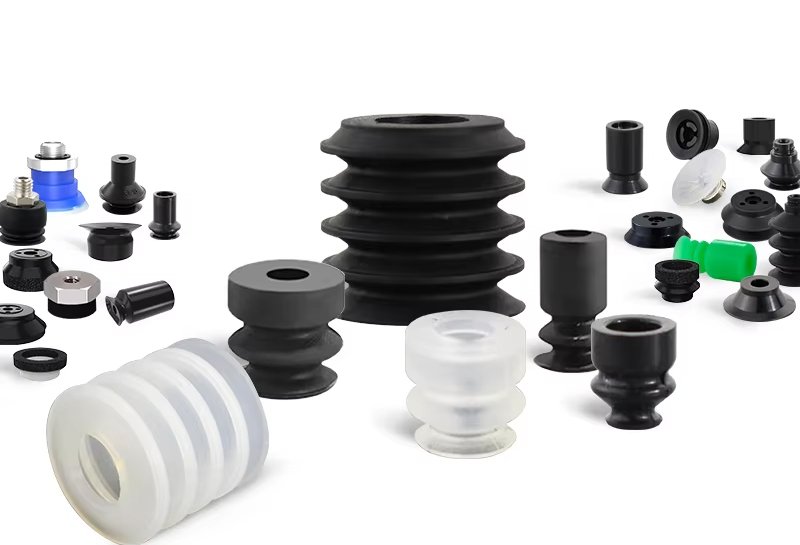
Fecision designs and manufactures custom silicone rubber vacuum suction cups or pads around the real workpiece and operating environment. Standard suction cups are easy to buy, but they may not solve weak holding force, falling parts or short service life in demanding automation lines.
We design the cup lip and body to follow the workpiece surface, including curved or uneven shapes. The material and mounting connection are then selected for the handling equipment and the part being lifted.
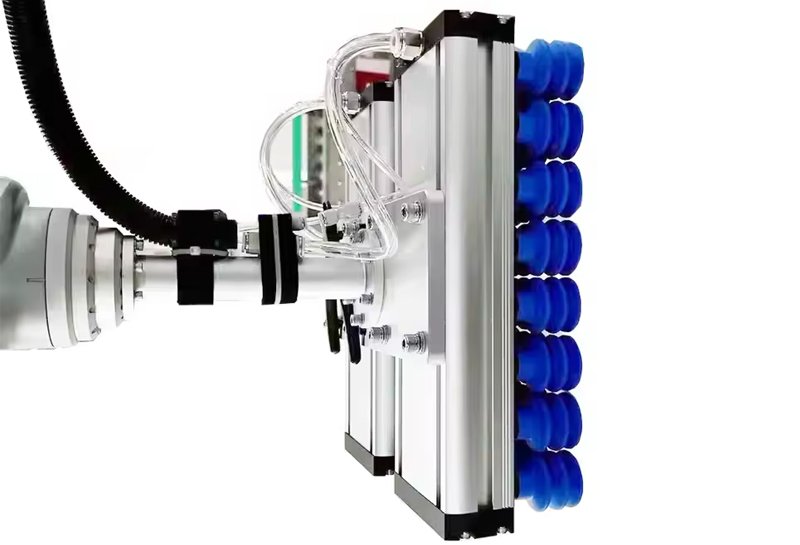
A vacuum suction cup is a vacuum actuator. Its air port connects to a vacuum generator or vacuum pump. When the vacuum source starts, air inside the suction cup is removed and the internal pressure drops.
The pressure inside the cup is lower than the outside atmospheric pressure. This pressure difference pushes the workpiece against the suction cup. The higher the vacuum level and the better the seal, the more stable the grip becomes.
P2 < P1 The internal vacuum pressure is lower than the outside atmospheric pressure, so the pressure difference creates holding force.
Outside pressure pushes the workpiece toward the suction cup.
Air is removed from the inner chamber to create suction, so P2 is lower than P1.
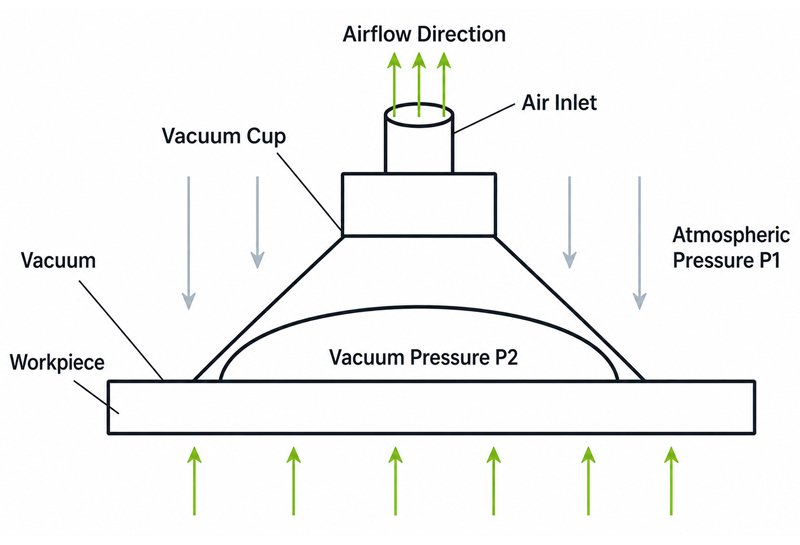
The lip must seal against the workpiece while the body maintains the vacuum chamber. The air path and mounting arrangement need to support that seal as the equipment moves.
The main elastic body can be round, square, rectangular, oval, bellows-shaped, or custom-molded. It forms the vacuum chamber and contacts the workpiece.
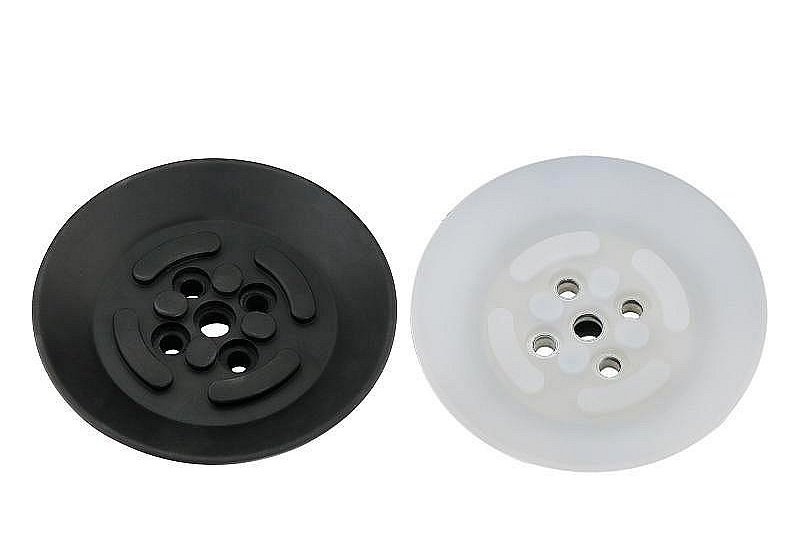
The lip and diaphragm control sealing behavior, deformation, and holding force. Thickness and elasticity affect pull-off force and vacuum stability.
The air connection and mounting thread need to match the EOAT system, vacuum line, and machine structure. Common threads include M5, M6, and M8.
The best suction cup shape depends on the workpiece surface, geometry, leakage level, and handling motion.
Commonly used on glass, metal sheet, plastic panels, and other airtight flat workpieces.
Best for: flat, smooth surfaces
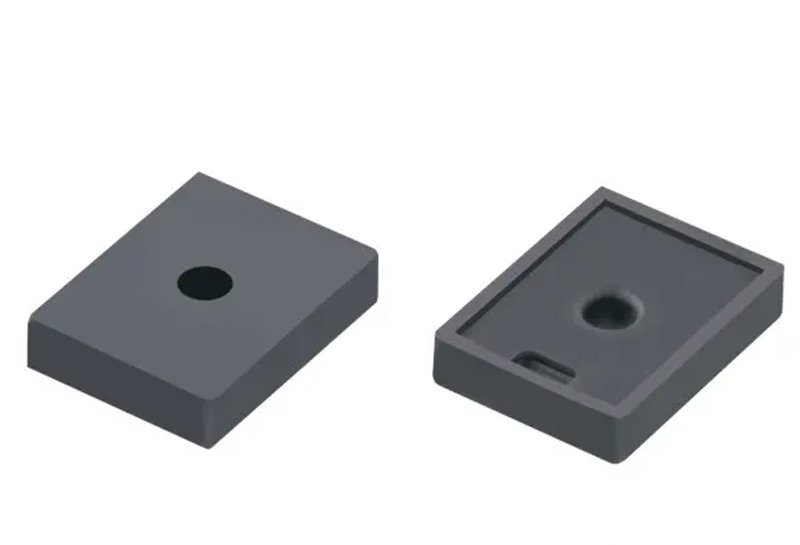
Useful when the workpiece needs a larger contact area or more stable gripping across a straight edge.
Best for: boxes, panels, and wide edges
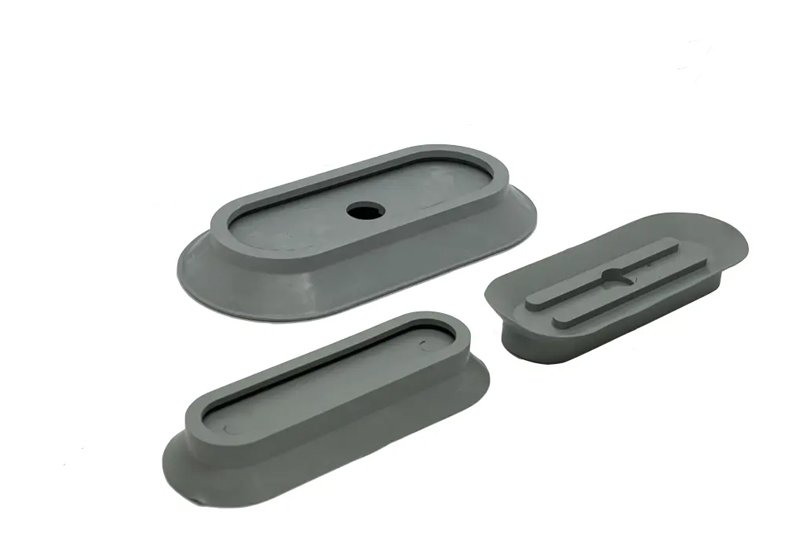
The elongated contact surface helps seal on slim profiles, curved parts, and elongated components.
Best for: long, narrow, or tubular parts
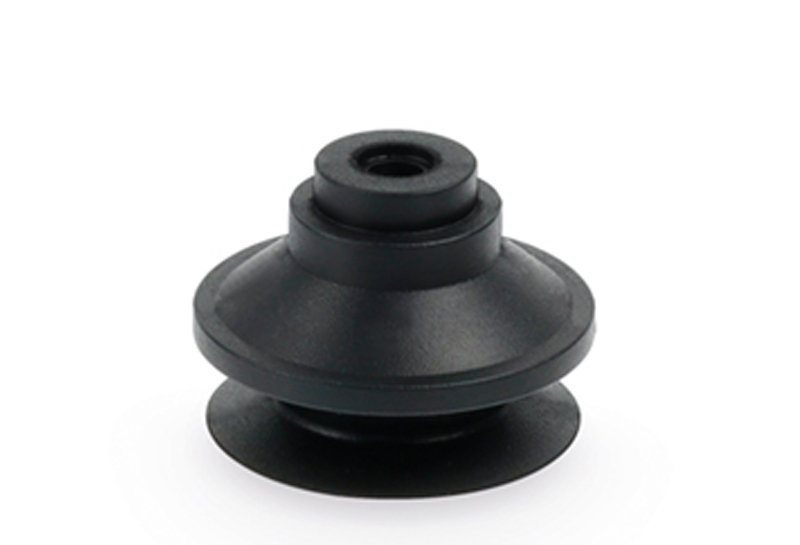
Corrugated cups add cushioning and adapt to height differences during pick-and-place movement.
Best for: uneven height and curved surfaces
Workpiece material has a direct effect on the vacuum level and cup selection. Airtight surfaces often need only 60% to 80% vacuum to lift, while porous materials require further calculation or testing.
Rating guide: Best = highly suitable, Good = suitable, Fair = basically suitable, - = not suitable.
| Material Factor | Nitrile Rubber | Polyurethane | Vulkollan | Silicone Rubber | Fluororubber | Antistatic Nitrile Rubber |
|---|---|---|---|---|---|---|
| Color | Black | Blue | Blue | White transparent | Gray | Black with white specks |
| Typical use | General applications | Rough surfaces | Automotive applications | Food applications | Glass applications | Electronics applications |
| Temperature range, long-term | -10 to +70 °C | -20 to +60 °C | -20 to +60 °C | -30 to +180 °C | -30 to +200 °C | -30 to +70 °C |
| Shore hardness | 50 +/- 5 | 60 +/- 5 | 60 +/- 5 | 50 +/- 5 | 60 +/- 5 | 50 +/- 5 |
| Main advantage | Low cost | Wear resistance | Oil resistance | Food-grade use | Chemical and temperature resistance | Antistatic performance |
| Very high pressure | - | Fair | Fair | Fair | - | - |
| Food processing | - | - | - | Fair | - | - |
| Greasy workpieces | Fair | Fair | Best | - | Fair | Fair |
| High ambient temperature | - | - | - | Fair | Fair | - |
| Low ambient temperature | - | Fair | Fair | Fair | - | - |
| Smooth surfaces, such as glass | Fair | Fair | Fair | - | Fair | - |
| Rough surfaces, such as wood or stone | - | Fair | Good | - | - | - |
| Antistatic handling | - | - | - | - | - | Fair |
| Low marking | - | Fair | Fair | Fair | - | - |
| Resistance Capability | ||||||
| Weather resistance | Fair | Good | Good | Best | Best | Good |
| Tear resistance | Good | Best | Best | Fair | Good | Good |
| Wear and abrasion resistance | Good | Best | Best | Fair | Good | Good |
| Permanent deformation resistance | Good | Fair | Good | Good | Best | Good |
| Mineral hydraulic oil | Best | Best | Best | - | Best | - |
| Synthetic ester hydraulic oil | Fair | - | - | - | Fair | - |
| Non-polar solvents, such as white spirit | Best | Good | Good | - | Best | - |
| Polar solvents, such as acetone | - | - | - | - | - | - |
| Ethanol | Best | - | - | Best | Fair | - |
| Isopropanol | Good | - | - | Best | Best | - |
| Water | Best | - | - | Good | Good | - |
| Acid, 10% | - | - | - | Fair | Best | - |
| Alkali, 10% | Good | Fair | Fair | Best | Good | - |
Silicone suction cups combine soft contact, stable sealing, and broad material flexibility for automation systems.
Custom lip and bellows structures can improve friction and sealing on smooth, airtight workpieces.
Vacuum gripping can handle many non-magnetic materials as long as the surface can form a stable seal.
Elastic silicone contact helps reduce scratches, dents, and surface marks during pick-and-place movement.
Silicone compounds can be selected for food contact, ESD control, temperature resistance, or chemical exposure.
Selection starts with the workpiece, then moves into suction force, vacuum source, and mounting details.
Smooth metal, glass, and plastic parts often work with standard cups. Rough, porous, or breathable parts may need foam cups or a higher-flow vacuum source. Curved and tubular parts may need oval, arc, or bellows cups.
F = A x Delta P x eta
F is suction force, A is suction area, Delta P is vacuum pressure difference, and eta is the safety factor. A safety factor of 1.5 to 3 is commonly used.
Vacuum generators respond quickly and fit single-machine systems. Vacuum pumps provide higher flow for multiple cups. Typical vacuum levels are around -60 to -80 kPa.
Fixed mounts fit rigid structures. Universal mounts handle angle deviation. Spring-loaded brackets absorb height variation and reduce impact during contact.
Fecision develops the cup around the workpiece it must grip. Our tooling and production teams use sample testing to confirm the design before repeat manufacture.
We start with the workpiece's weight and surface condition, then review how quickly it must move. The operating temperature and any chemical exposure guide material selection.
We prepare suction cup and insert drawings, then review deformation and stress distribution during suction.
Precision CNC mold machining helps control suction cup dimensions, wall thickness, and sealing lip geometry.
Samples can be tested for pull-off force, sealing behavior, fatigue life, surface marking, and antistatic function.
Vulcanization time, mold temperature, material batch, and final dimensions are controlled for consistent quality.
Custom silicone vacuum suction cups are used where the handling system needs reliable sealing, soft contact, and repeatable release.
Wafers, chips, and mobile phone glass panels.
Design: ESD protection, mark-free suction, and high flatness accuracy.
Pastries, bagged food, and medicine bottles.
Design: FDA-grade material, easy cleaning, and soft gripping without damage.
Stamped body parts and curved metal shells.
Design: Oil resistance, multi-bellows cushioning, and high tear strength.
Cartons, plastic bags, and irregular packages.
Design: Rough or breathable surface handling and high-flow suction design.
Send your workpiece details, handling speed, vacuum source, and mounting interface. Fecision can help review the suction cup structure and material route.