
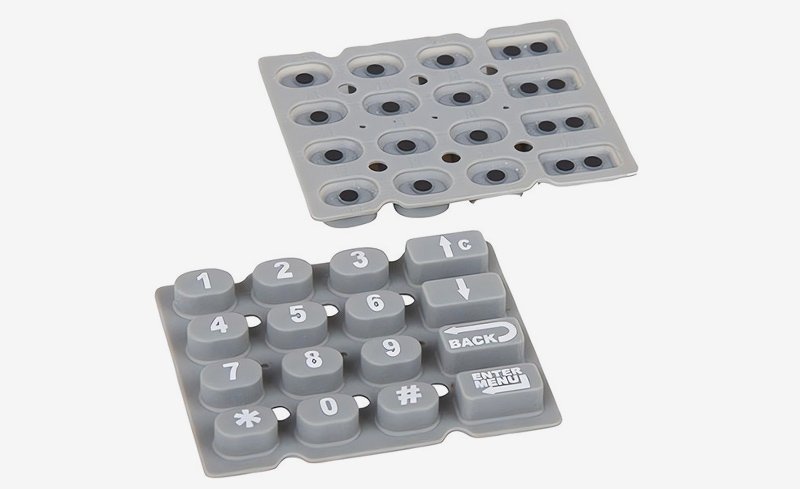
Conductive Silicone Rubber Keypads
Conductive silicone rubber keypads use carbon pills, conductive ink, metal domes, or molded contact structures. They provide reliable circuit closure on PCB, FPC, PET, or membrane switch contacts.
Custom silicone rubber keypads built for reliable touch, stable electrical contact, durable legends, and controlled production for volume manufacturing.
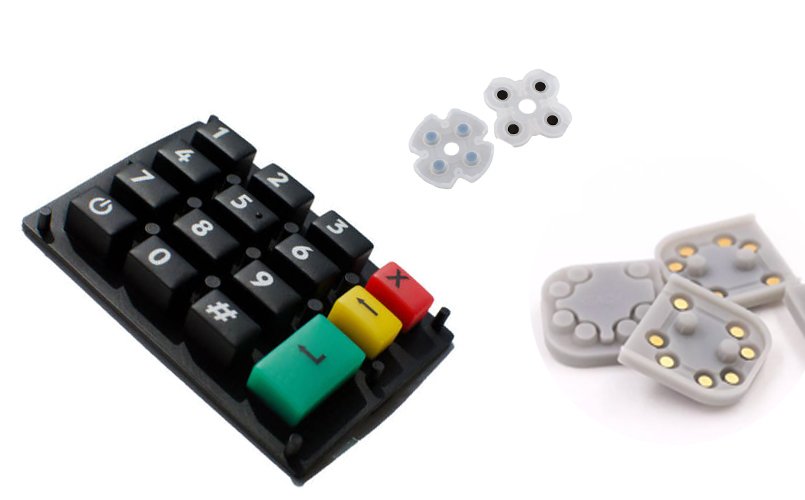
Fecision develops custom silicone rubber keypads around the assembled product. Our engineers check the required button response and use it to refine the geometry and material. The approved design then guides tooling and production.
Our tooling and production teams work in the same facility. Feedback from sample inspection can therefore be applied directly to the mold and finishing process before repeat manufacture.
Different keypad structures are selected around electrical contact, lighting, symbol durability, and the final control surface.
Conductive silicone rubber keypads use carbon pills, conductive ink, metal domes, or molded contact structures. They provide reliable circuit closure on PCB, FPC, PET, or membrane switch contacts.
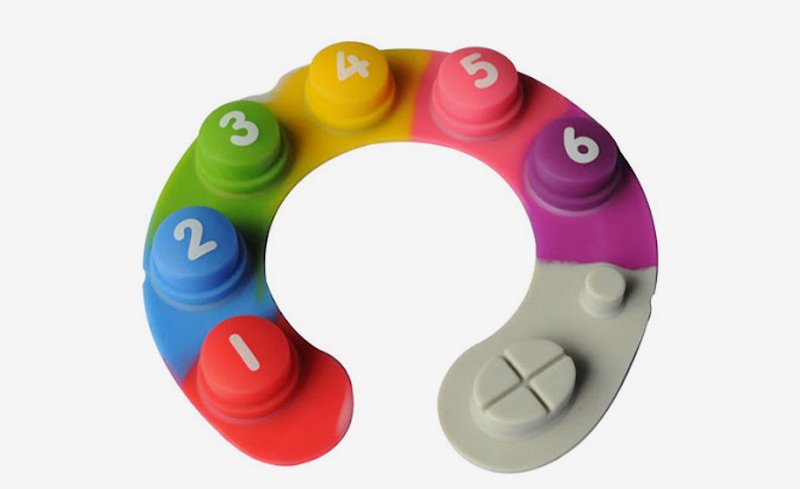
A dual-color keypad created by permanently bonding two silicone colors through single-shot or two-shot molding. It provides permanent color separation for functional zoning.
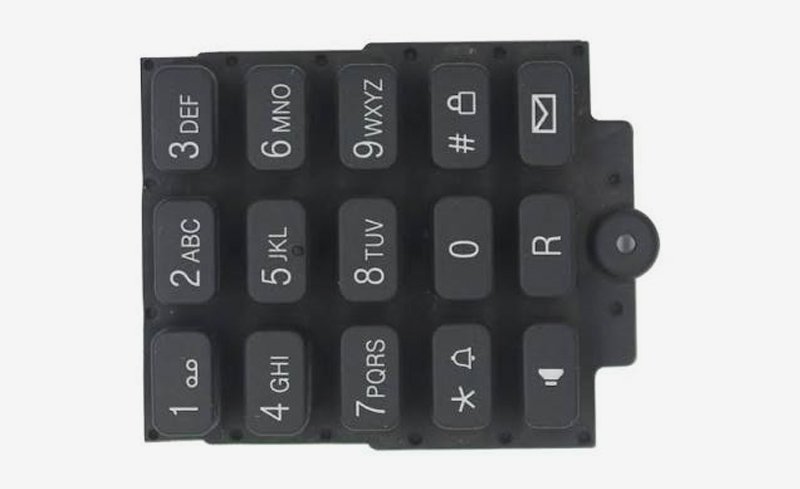
Coated silicone rubber keypads can be laser etched to form legends or icons. The process supports durable day-and-night markings, backlit symbols, and wear-resistant OEM control surfaces.
Material selection is one of the first decisions in silicone rubber keypad production. Fecision supports solid silicone rubber, also called HTV or HCR silicone rubber, and liquid silicone rubber, or LSR.
Additives can give silicone a specific function, such as conducting electricity at a keypad contact. They also affect how the material behaves, so the modified compound needs to be checked against the complete part specification.
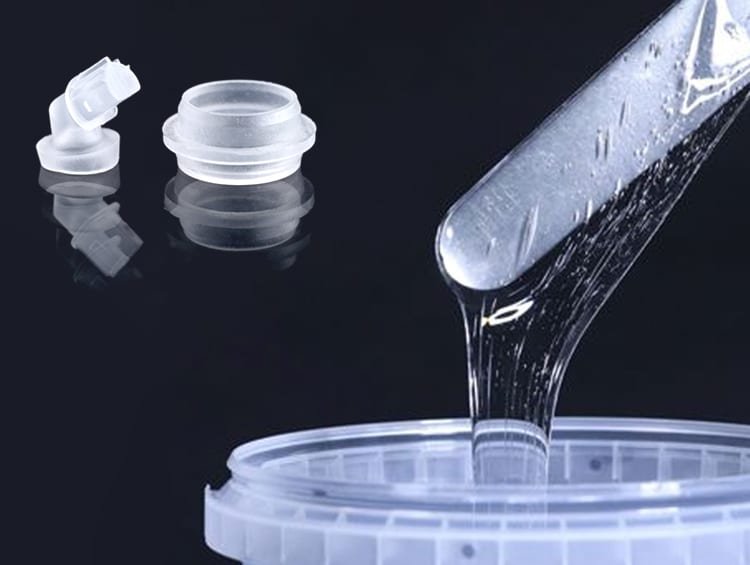
Silicone rubber gives keypad products a soft user feel while supporting environmental durability and design flexibility.
Typical operating range can reach from -50°C to 250°C, depending on the selected silicone compound and application conditions.
The elastic material gives a comfortable press feel and helps reduce operating noise compared with hard plastic interfaces.
Silicone keeps low wear and strong oxidation resistance even in high-humidity environments.
Translucent silicone options work well with LED lighting, molded light windows, and laser-etched legends.
Silicone rubber keypads can be color matched for product branding, function grouping, or visual identification.
The molding route is selected around part size, tolerance, production volume, material form, and surface requirements.
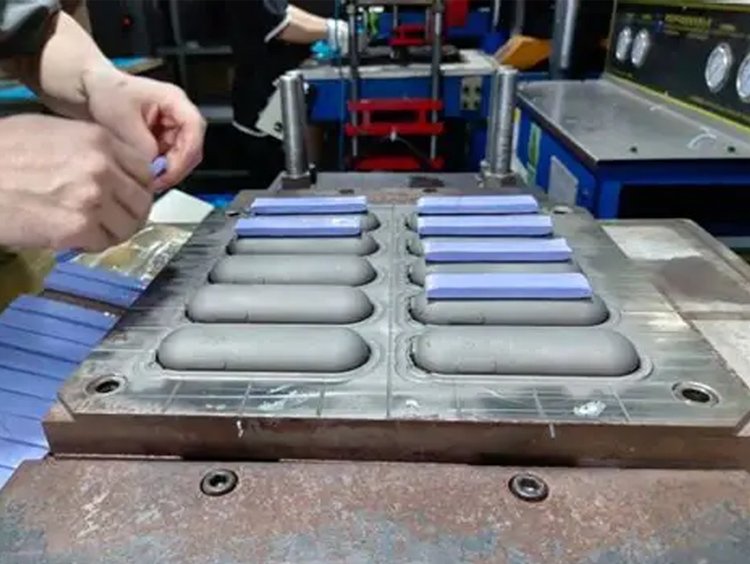
Solid silicone compression molding is often used for medium-volume, multi-variety, thick, or large keypad products. Tooling cost is usually lower, and the process is flexible for multi-color and multi-hardness keypads.
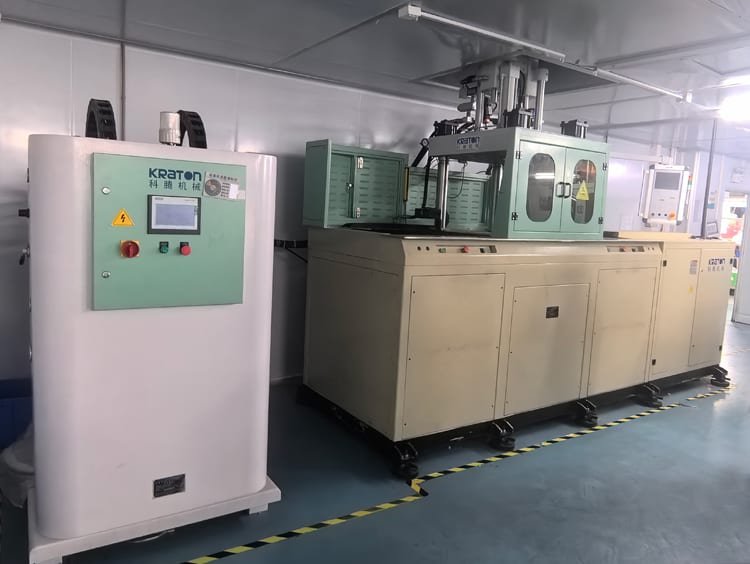
LSR molding can support high-precision parts, complex structures, and high-volume orders. It can reach dimensional tolerances around +/-0.05 mm and is suitable for waterproof smartphone buttons and medical silicone rubber keypads.
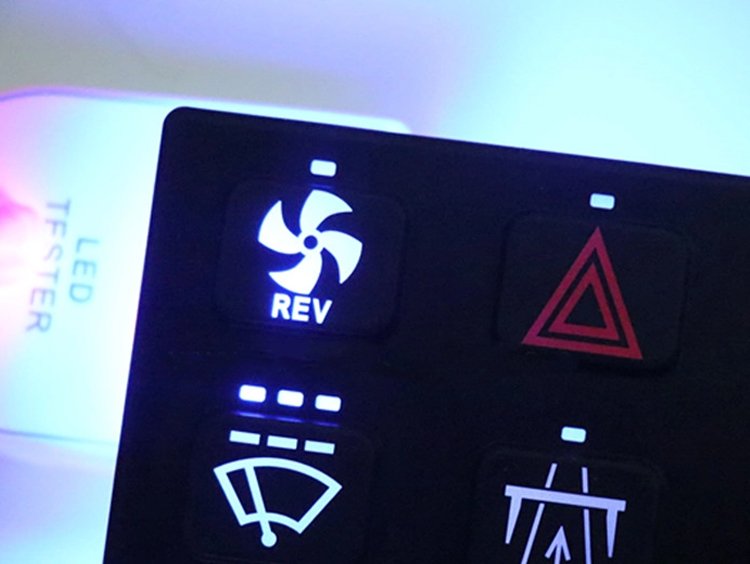
Silicone rubber keypads often combine secondary processes to achieve the required appearance, tactile feel, and durability. Fecision offers finishing and marking options including screen printing, pad printing, soft-touch PU or UV coating, and laser etching.
We carry the approved keypad requirements from design review into tooling and production, using inspection results to confirm that the finished part meets them.
We review how the keypad fits the housing and the button response it needs to provide. Electrical contacts and any backlighting or waterproofing requirements are included in the initial 3D design.
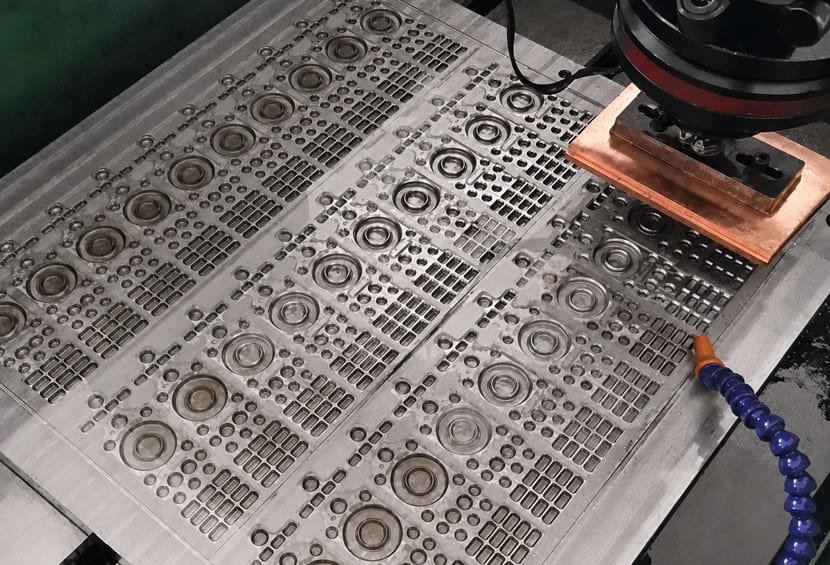
Tooling engineers use CNC machining, sink EDM, precision grinding, and related processes to build aluminum or steel molds around the product structure.
Silicone materials are selected around working conditions and appearance needs. Custom color matching and environmental compliance checks can be supported.
After molding, legends can be screen printed or laser etched to suit the design. Surface treatment is selected for the required grip and wear resistance.
Production batches can be checked by keypad life-cycle testing, tensile testing, salt spray testing, and other inspections before packaging.
Silicone keypad dimensions should be planned around curing behavior, material shrinkage, housing clearance, and final assembly fit.
| Design Factor | Recommended Guidance |
|---|---|
| Dimensions | Maximum thickness can reach about 15 to 20 mm. A thickness no greater than 3 mm is usually recommended. The theoretical minimum can reach 0.2 mm, while 0.4 mm is usually safer for design. |
| Thickness | The thinnest area and thickest area should generally stay within a 3:1 ratio. |
| Shrinkage | Silicone shrinkage is often between 1.022 and 1.042. For Shore A 40 to 50 materials, a typical shrinkage rate is about 1.03. |
| Tolerance | General dimensional tolerance is usually +/-0.10 mm. High-precision products can reach +/-0.05 mm. For housing or button openings, minimum clearance is typically 0.1 mm, and 0.2 mm is recommended. |
Conductive silicone rubber keypads usually use conductive carbon pills or conductive ink to complete the electrical contact.
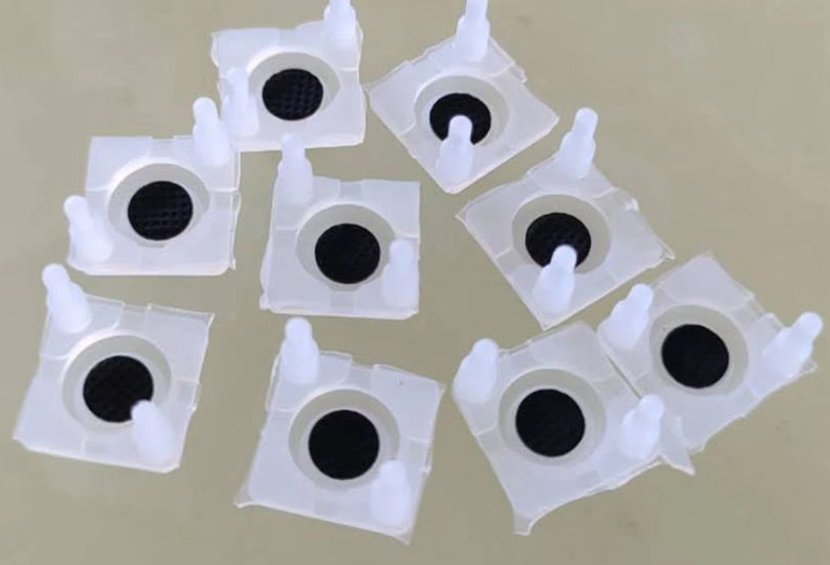
Conductive carbon particles contact each other and form a conductive path. Before curing or drying, the particles are separated inside the binder. After curing or drying, volume shrinkage brings them into stable contact, so the material becomes conductive.
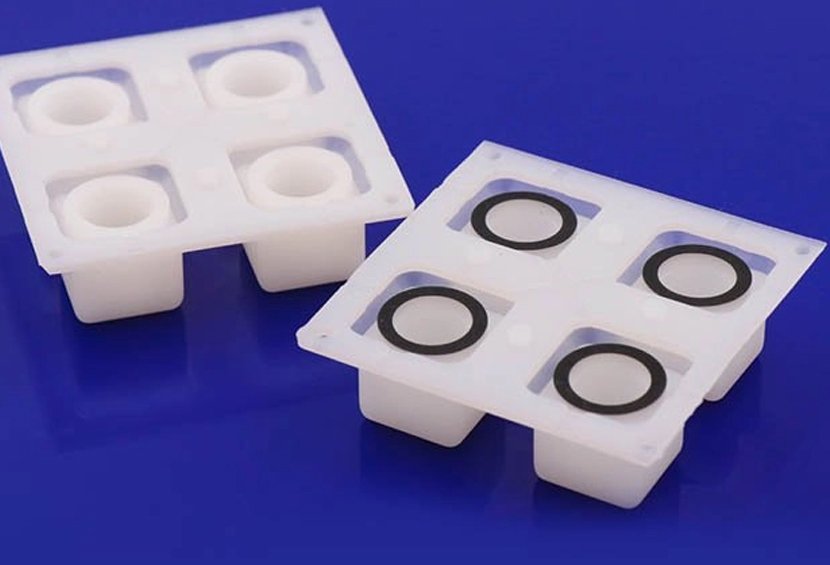
Conductive ink is made by dispersing silver, copper, or carbon into a binder. It can be used to print conductive points or conductive traces for keypad contact areas.
Start with the keypad's fit in the product and the response the user should feel. A carbon-pill contact may suit a simple control, while a backlit keypad needs a different legend and lighting design. Confirm the manufacturing and inspection approach before tooling, particularly where tight tolerances or medical requirements apply.
Silicone Rubber Keypad Design Guide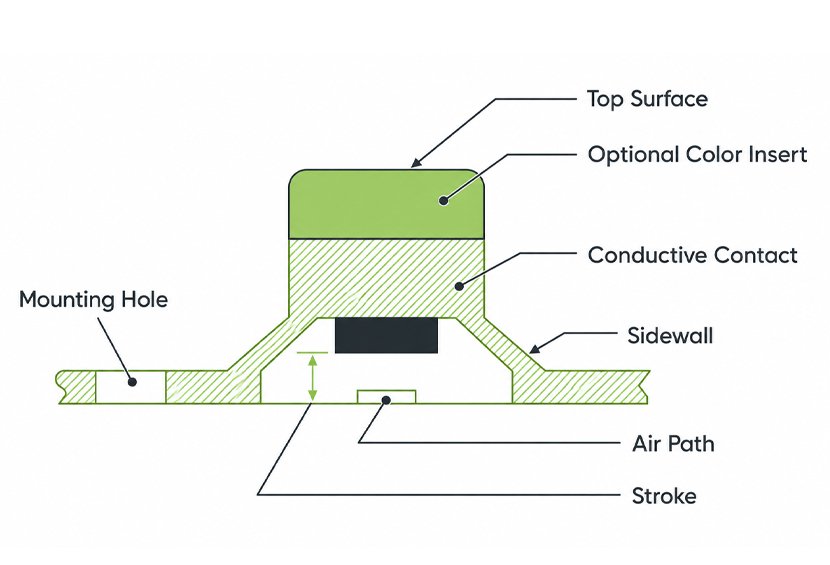
Silicone rubber keypads are used where sealed control surfaces, tactile feedback, and long service life need to work together.
Used in patient monitors, infusion pumps, and diagnostic equipment, silicone rubber keypads provide sealed, easy-to-clean controls with precise tactile feedback.
Silicone rubber keypads offer quiet operation, a comfortable touch, and long-term durability for remote controls, game controllers, and smart devices.
Used in steering-wheel controls, window switches, and climate panels, silicone rubber keypads withstand temperature changes, vibration, and repeated use.
Silicone rubber keypads provide durable, tactile controls that resist dust, moisture, grease, and frequent operation in demanding environments.
Send your drawing, requirements and expected volume. Fecision can review the design and recommend a practical manufacturing route.