
Multi-Wire Seal Grommets
Combine multiple wire openings into one molded seal for compact multi-pin connector systems.
Fecision manufactures custom silicone rubber wire seals, wire seal grommets, and multi-wire connector seals for cable-entry protection in compact electrical assemblies.
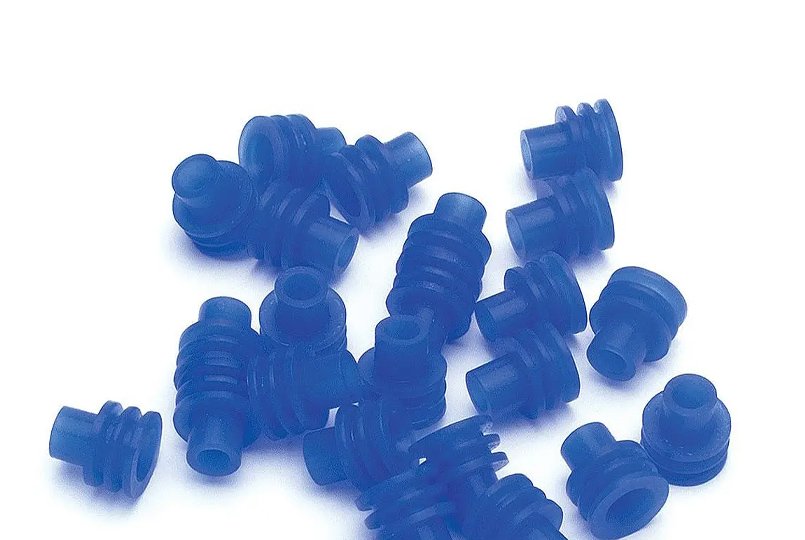
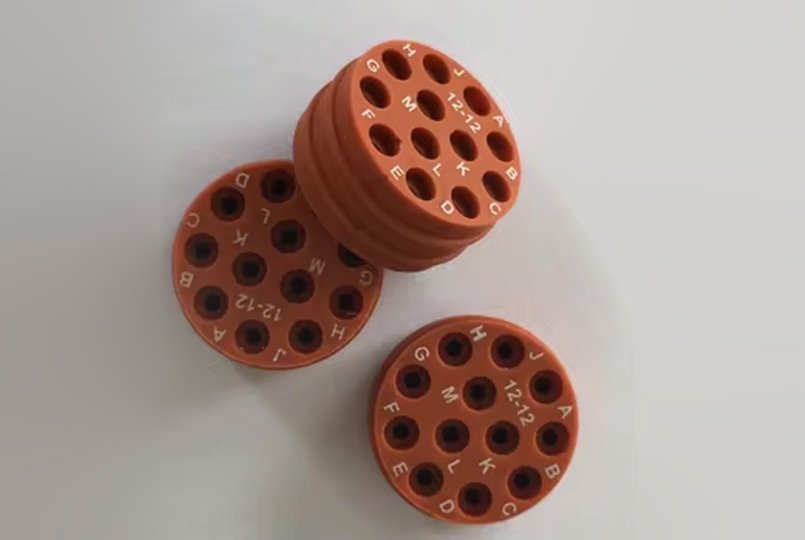
A wire seal grommet is an elastomeric sealing component installed around one or more wires where they enter a connector, enclosure, sensor, or electrical assembly.
Its job is to control the interface between the wire, the silicone rubber seal, and the surrounding housing. A good design needs enough interference to maintain sealing contact while keeping wire insertion, assembly, and long-term deformation within practical limits.
Different connector platforms need different seal formats. Fecision supports both standard-style cavity seals and fully custom grommet layouts for unusual housings, cable counts, or space limits.
Combine multiple wire openings into one molded seal for compact multi-pin connector systems.
Seal one wire or terminal cavity at a time with geometry matched to the wire OD and connector cavity.
Custom molded grommets with ribs, locating features, retention details, and irregular outer profiles.
Seal cables entering equipment housings, control modules, sensors, instruments, or sealed enclosures.
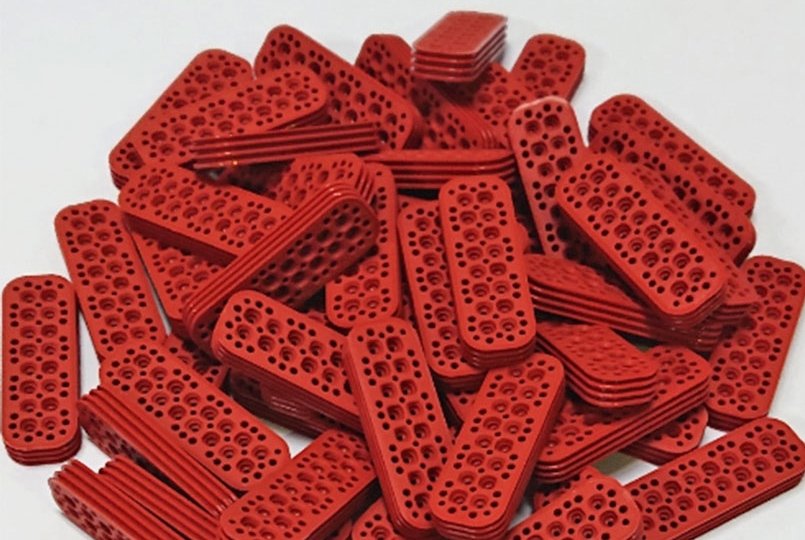
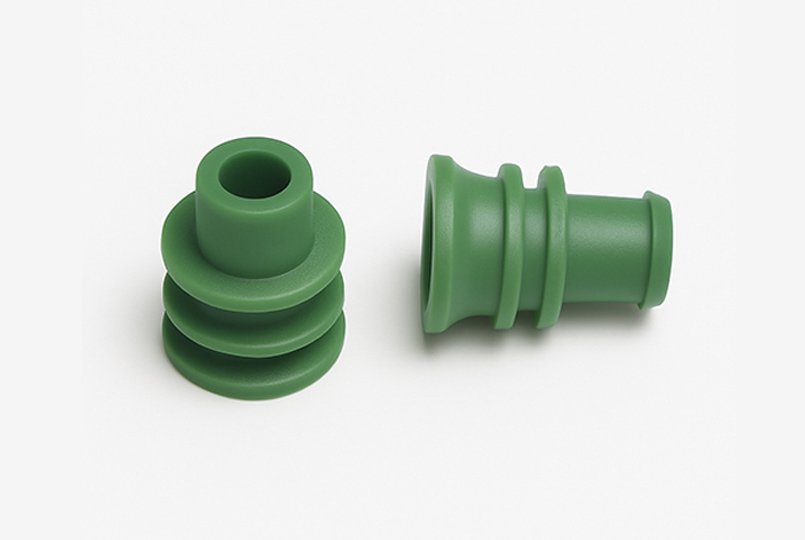
The compound must seal around the wire without making insertion too difficult. We check its resistance to the working temperature and fluids, then review any electrical or industry-specific requirements.
Chosen for stable high-volume molding, clean material flow, and consistent detail reproduction in compact elastomer parts.
Provides flexibility, temperature stability, electrical insulation, and long-term elastic recovery for general connector sealing.
Used when wire seals must tolerate fuels, oils, solvents, or other fluid exposure beyond standard silicone capability.
Specific medical-grade LSRs can be selected when the project requires controlled formulation, traceability, or application-specific documentation.
Available for programs where electrical equipment or enclosure requirements call for a flame-retardant silicone formulation.
Color and Shore hardness can be adjusted for identification, assembly, sealing behavior, and project-specific performance targets.
Wire seal design starts with the actual connector assembly. Wire diameter and housing tolerances determine the available compression. Cavity spacing and the insertion sequence must then allow the wires to be installed without damaging the seal.
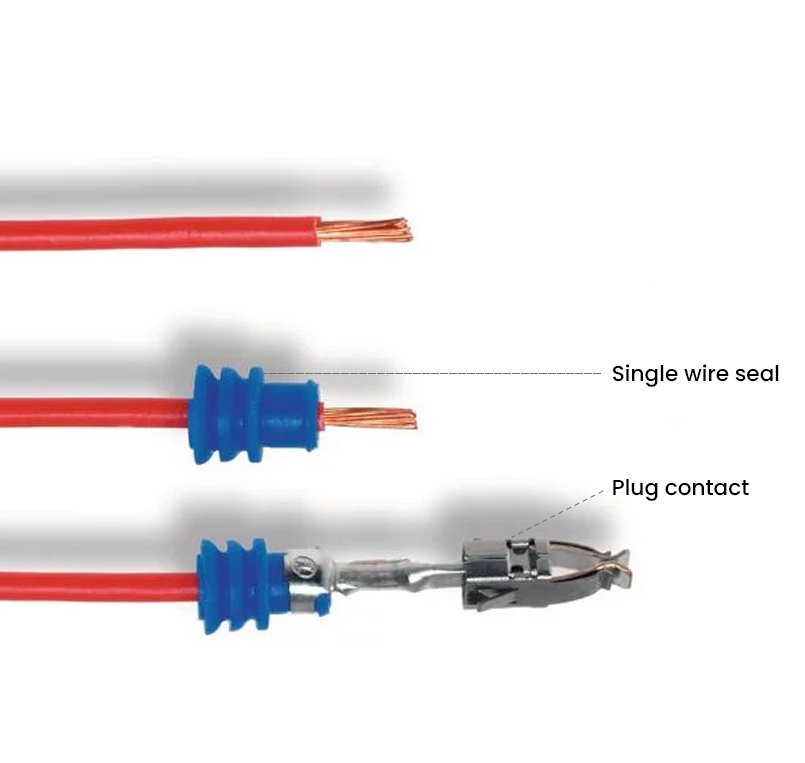
Use the actual insulation outside diameter range, not only the nominal cable size. OD variation directly changes wire-to-seal interference and insertion force.
Opening diameter, lip thickness, contact length, lip angle, and cavity spacing should work together to create controlled deformation around the wire.
The outer ribs and seal body must also fit the connector housing correctly. Seal-to-housing compression is as important as the wire interface.
Too much interference can make assembly difficult or damage delicate sealing lips. Sealing contact and assembly practicality should be balanced together.
Wire seals often have small openings separated by thin walls and flexible lips. These features can tear during molding or insertion, and excess flash may obstruct the wire. Tooling and inspection therefore need to focus on the surfaces that make the seal.
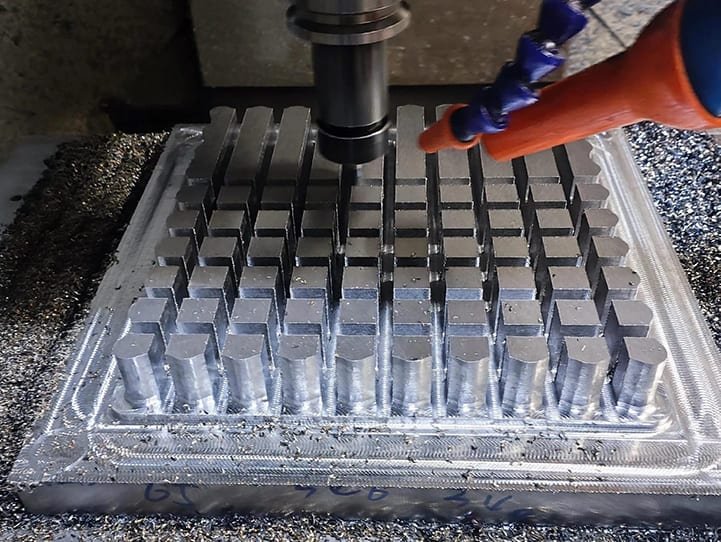
Parting strategy, core-pin fit, venting, mold precision, and molding parameters must be controlled around small wire holes and sealing lips.
Closely spaced holes require enough surrounding material and tool strength to maintain repeatable geometry during molding and demolding.
Once the sealing interface is approved, we prepare the design for LSR injection molding. Tooling review focuses on supporting the small core pins and filling around them consistently. The part must also release without damaging its sealing lips and remain accessible for inspection.
Sampling is used to tune injection pressure, cure profile, demolding behavior, and trimming needs before the process is released. This keeps dimensional control and visual acceptance tied to real molded samples.
For repeat orders, cavity balance, lot traceability, packaging method, and shipment planning are managed so the parts arrive ready for connector assembly.
A practical control plan separates cosmetic checks from features that affect sealing, insertion, retention, and final assembly.
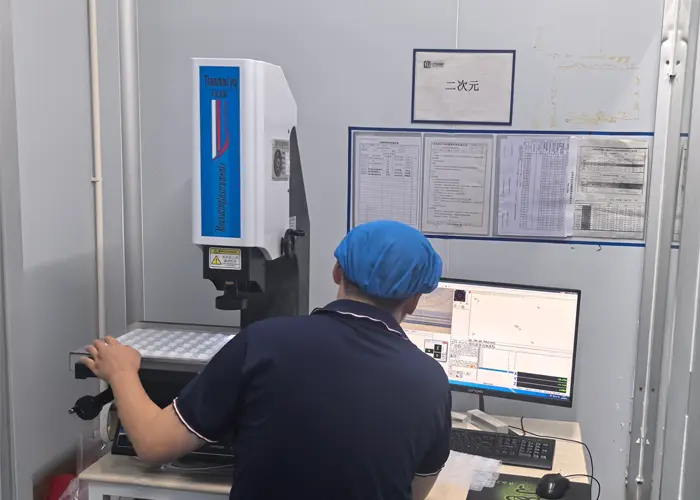
Hole diameter, overall dimensions, rib geometry, cavity spacing, and other CTQ features can be defined for dimensional inspection.
Small holes and sealing lips are reviewed for flash that could restrict the wire path, affect sealing contact, or generate loose particles.
Material identification, color, hardness, and project-specific documentation can be controlled according to the approved specification.
Tears, short shots, deformation, contamination, and damaged sealing features can be included in visual acceptance criteria.
Initial samples can be measured against defined drawing requirements before the process is released for repeat production.
Lot records and inspection documentation can be aligned with the quality requirements of the specific production program.
The approved sample establishes the production requirements. Each batch then follows the defined manufacturing and inspection route through to shipment.
You do not always need a finished CAD model to start. If you are replacing an existing supplier, solving an assembly problem, or redesigning a connector, send the current seal, mating parts, wire specification, and the issue you are seeing.
We can turn the sample and mating interface into clearer dimensions, risk notes, and a practical replacement plan.
Custom silicone rubber wire seals are used across industries wherever wires or cables pass through a connector, sensor, housing, or electrical system that needs a controlled environmental interface.
Connector seals for sensors, lighting, battery systems, power electronics, charging equipment, EV systems, and commercial vehicles.
Custom LSR sealing components for diagnostic equipment, pumps, monitors, laboratory systems, portable devices, and other electrical interfaces.
Wire and cable sealing for sensors, motors, automation systems, control equipment, instruments, pumps, and machinery.
Compact multi-wire and cable-entry seals for appliances, outdoor electronics, communication devices, charging products, and compact assemblies.
Sealing components for battery packs, energy storage, power conversion, charging infrastructure, and electrical distribution equipment.
Custom seals for compact sensor, actuator, motor, and connector systems where cable routing and repeatable assembly are critical.
Send your drawing, housing CAD, wire specification, or existing sample. Fecision will help identify the next practical step.