
Neoprene / Chloroprene
Performs well around oils and offers good ozone, aging, and chemical resistance across a wide operating temperature range.
-40°C to 120°CFecision designs and manufactures custom O-rings for sealing challenges that standard sizes or standard compounds cannot solve. We support material selection, groove review, tooling, molding, inspection, and delivery for prototype and production programs.
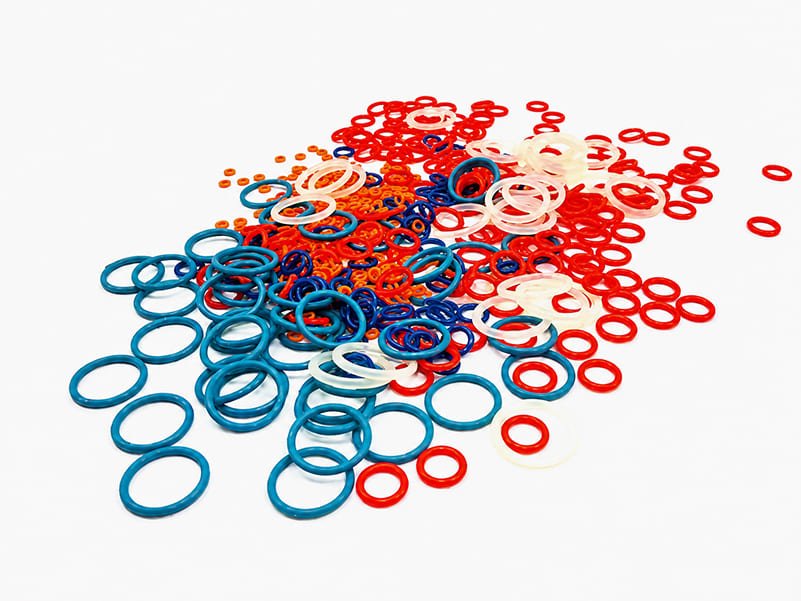
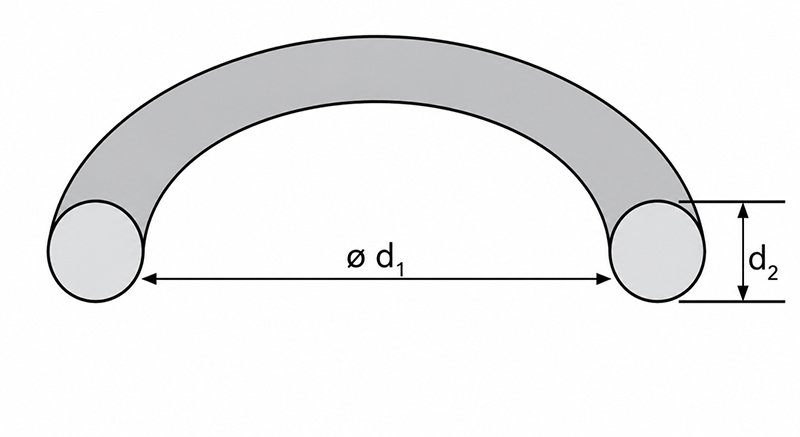
An O-ring is a toroidal gasket with a circular, O-shaped cross-section. It creates a seal through compressive stress when it is properly compressed inside a groove.
Custom O-rings are designed around the problem the seal must solve. During development, we review whether an existing O-ring can be reworked or whether a new size, compound, hardness, color, or production route is required.
Material selection controls heat resistance, chemical compatibility, compression set, weathering, hardness, and cost. Fecision supports common elastomers and specialty materials for demanding sealing applications.
Performs well around oils and offers good ozone, aging, and chemical resistance across a wide operating temperature range.
-40°C to 120°COffers insulation, ozone resistance, weather resistance, and physiologically neutral properties for consumer and life science markets.
-60°C to 200°CHigh acrylonitrile grades provide strong fuel and oil resistance, making NBR useful in fuel systems and energy applications.
-40°C to 120°CA silicone hybrid with improved fuel and mineral oil resistance for higher-temperature fuel and aerospace sealing conditions.
-60°C to 175°CExcellent resistance to heat, ozone, oxygen, mineral oils, fuels, aromatics, and many organic solvents and chemicals.
-20°C to 200°CHighly resistant to heat, steam, water, and oxygenated solvents, and commonly used in braking and hydraulic systems.
-50°C to 150°CKnown for resistance to high heat and harsh chemicals, including acids, bases, and oils, when elastomers cannot survive.
-200°C to 260°C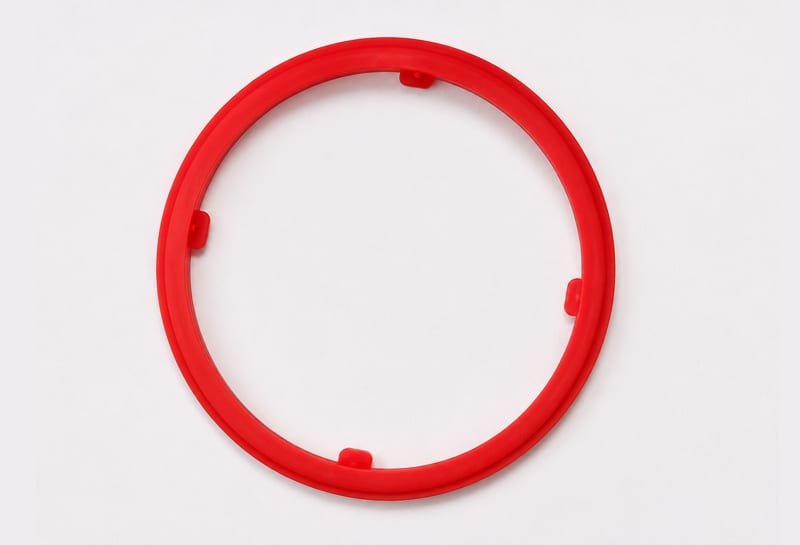
Use these quick references as a starting point before detailed material review. Final selection should consider media, temperature at the seal, pressure, movement, regulatory needs, and assembly conditions.
Soft seals for low pressure and larger gaps.
General-purpose sealing for most applications.
Harder seals for high pressure and extrusion resistance.
Rigid chemical-service seals with low elasticity.
| Medium | NBR | CR | VMQ | FKM | EPDM | PTFE |
|---|---|---|---|---|---|---|
| Gasoline | Excellent | Good | Fair | Excellent | Poor | Excellent |
| Water | Good | Excellent | Good | Good | Excellent | Excellent |
| Strong Acid | Good | Good | Fair | Excellent | Good | Excellent |
| Strong Alkali | Good | Excellent | Fair | Poor | Excellent | Excellent |
| Brake Fluid | Poor | Fair | Good | Poor | Excellent | Excellent |
Before quoting or tooling, we review the operating conditions that determine whether the seal needs a standard compound, a modified existing design, or a completely new custom O-ring.
Measure temperature at the sealing point, not only the ambient environment, especially when the seal faces quick changes or sustained high and low temperatures.
Hardness is measured by durometer. Higher-pressure liquid or gas applications usually require a harder compound to resist extrusion.
Standard O-rings are commonly designed around roughly 1,500 psi. Higher pressure may require thicker sections, tighter groove control, or backup rings.
Installation stretch should usually stay between 1% and 5%. Excess stretch can reduce sealing force and shorten fatigue life.
An O-ring must be installed in a dedicated groove, usually with a rectangular cross-section. The groove should follow the relevant industry standard, control depth and width carefully, and leave enough space for swelling, thermal expansion, and media flow.
Groove depth is determined by the O-ring cross-section d2 and the target initial squeeze.
Control compression in this range to keep the seal tight and stable.
Increase groove depth to reduce friction, wear, and service-life loss on moving surfaces.
Groove width must contain the compressed O-ring shape while leaving space for media flow and thermal expansion.
Avoid overfilling the groove or leaving too much clearance for uneven sealing force.
Add bottom radius r1 and upper radius or chamfer r2 to prevent cutting during installation.
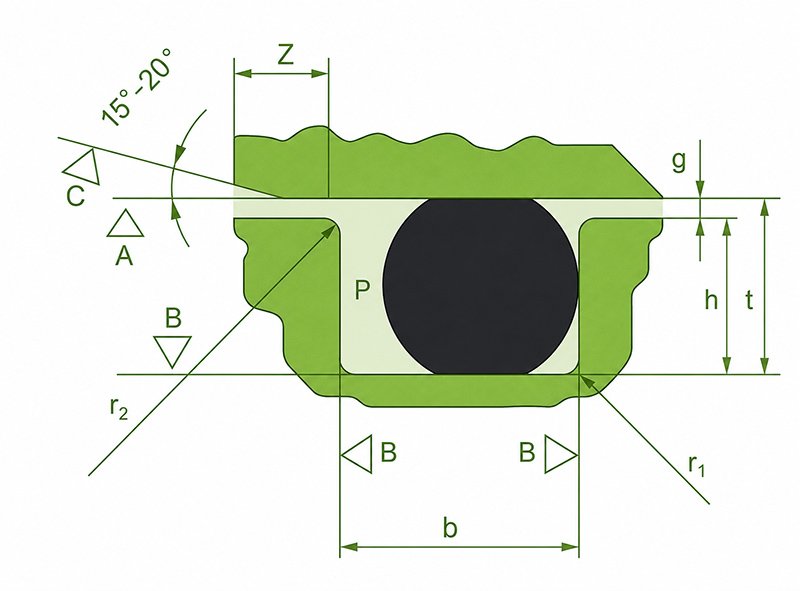
Surface requirements depend on where the O-ring is used, so there is no single universal roughness value. The table lists common surface roughness references for typical sealing applications.
| Surface | Application | Rz (µm) | Ra (µm) |
|---|---|---|---|
| Groove bottom (B) | Static | 6.3 | 1.6 |
| Groove wall (B) | Static | 6.3 | 1.6 |
| Sealing surface (A) | Static | 6.3 | 1.6 |
| Groove bottom (B) | Dynamic | 6.3 | 1.6 |
| Groove wall (B) | Dynamic | 6.3 | 1.6 |
| Sealing surface (A) | Dynamic | 1.6 | 0.4 |
| Installation angle (C) | -- | 6.3 | 1.6 |
For O-rings designed around international reference standards, cross-section diameter tolerance can follow ISO 3601-1. For non-standard cord sizes, the tolerance range can be selected from the table below.
| Cross-section d2 mm |
Tolerance mm |
Cross-section d2 in |
Tolerance in |
|---|---|---|---|
| 0.80 < d2 ≤ 3.15 a | ± 0.08 | 0.031 < d2 ≤ 0.124 | ± 0.003 |
| 0.80 < d2 ≤ 2.25 b | ± 0.08 | 0.031 < d2 ≤ 0.089 | ± 0.003 |
| 2.25 < d2 ≤ 3.15 b | ± 0.09 | 0.089 < d2 ≤ 0.124 | ± 0.004 c |
| 3.15 < d2 ≤ 4.50 | ± 0.10 | 0.124 < d2 ≤ 0.177 | ± 0.004 c |
| 4.50 < d2 ≤ 6.30 | ± 0.13 | 0.177 < d2 ≤ 0.248 | ± 0.005 |
| 6.30 < d2 ≤ 8.40 | ± 0.15 | 0.248 < d2 ≤ 0.331 | ± 0.006 |
Note: a class A only; b class B only; c inch values may differ due to metric conversion and rounding.
Fecision combines material sourcing, tooling, molding, inspection, secondary processing, and logistics support so custom sealing programs can move from design review to reliable production.
Rubber compounds are sourced from internationally recognized suppliers, with material options aligned to RoHS, REACH, FDA, GB, AS568, JIS, and other program requirements.
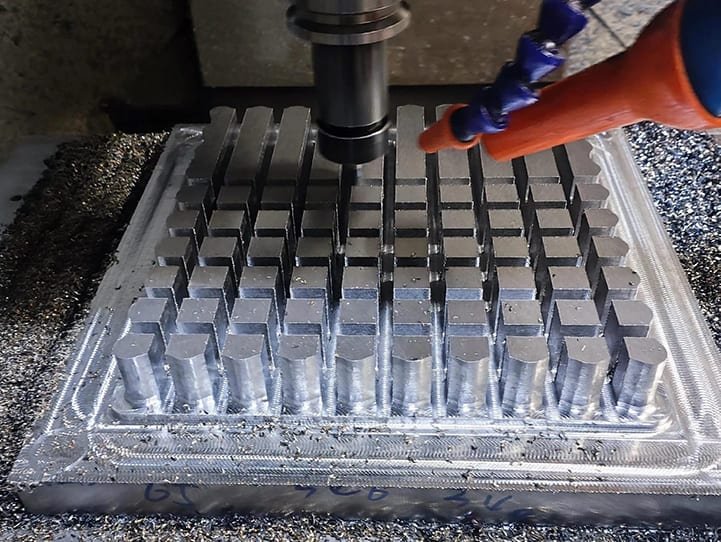
Stable vulcanization units and precision CNC machining centers support repeatable sealing performance and controlled mold quality.
Multi-layer quality checks, preventive planning, in-process monitoring, and traceability help prevent defective parts from reaching customers.
We support early design input, material development, prototyping, grinding, coating, special packaging, assembly, and logistics planning.
Not every O-ring can be selected from a standard catalog. Size, hardness, color, and material all need to match the actual working conditions. We support custom O-ring orders in a wide range of quantities, and tooling charges are not required for most sizes.
Customers can choose from different durometers, colors, and compound options, including FDA-compliant and USP Class VI materials. For more demanding environments, we also offer PTFE treatments and other surface coatings. These options can help reduce friction, improve chemical resistance, and extend service life under high temperature, pressure, or continuous movement.
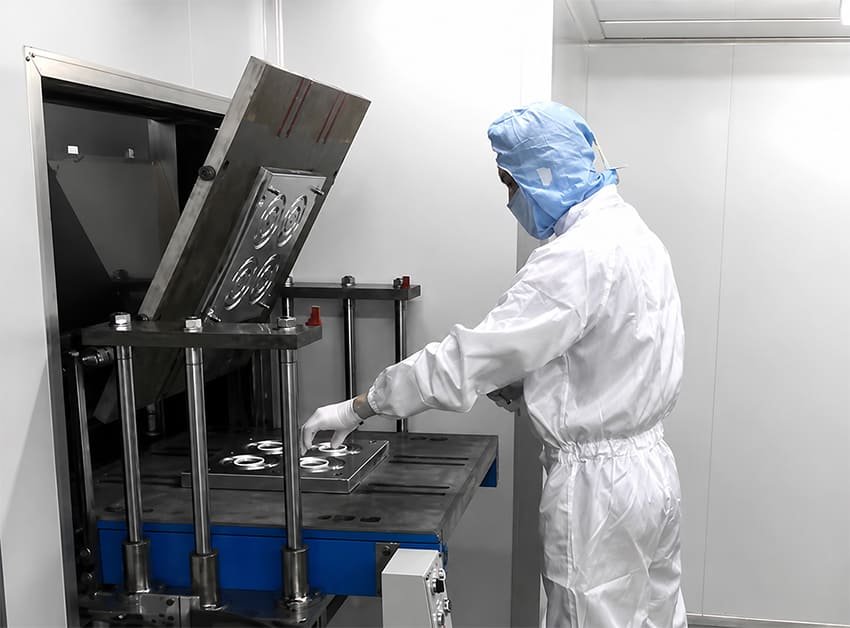
Most elastomer O-rings are produced through compression molding or injection molding. The best route depends on size, geometry, volume, tolerance, compound, and tooling economics.
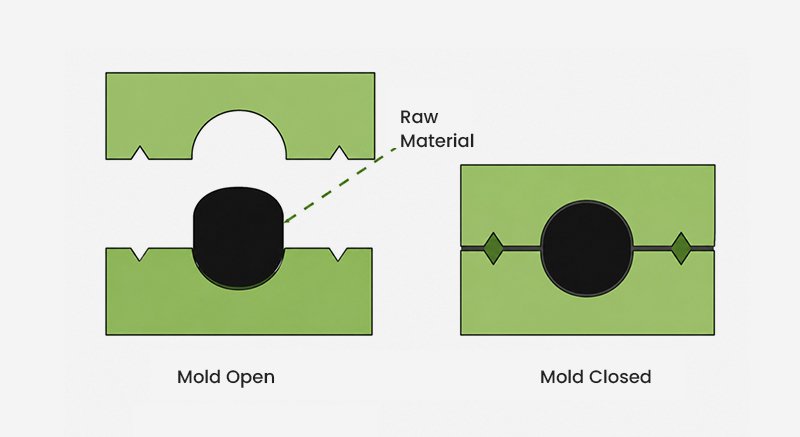
The raw compound is manually loaded into the mold before the mold halves close and vulcanize the part. This method is well suited to small batches and large-diameter O-rings.
Low Volume / Large Sizes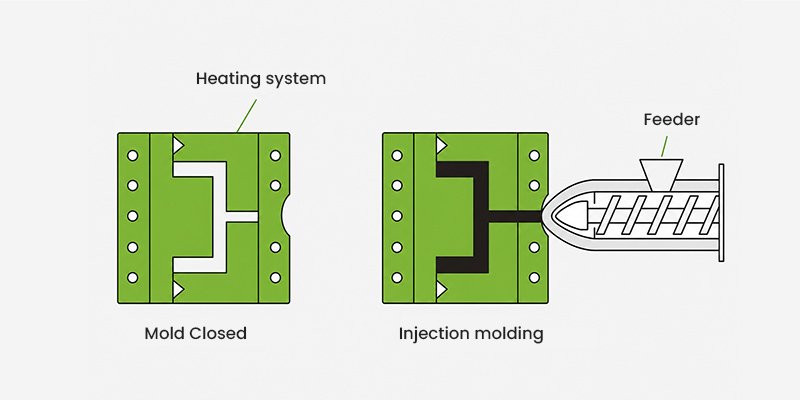
The compound is automatically injected into multi-cavity tooling. It is best for high-volume production, small-dimension O-rings, tight consistency, and shorter cycle times.
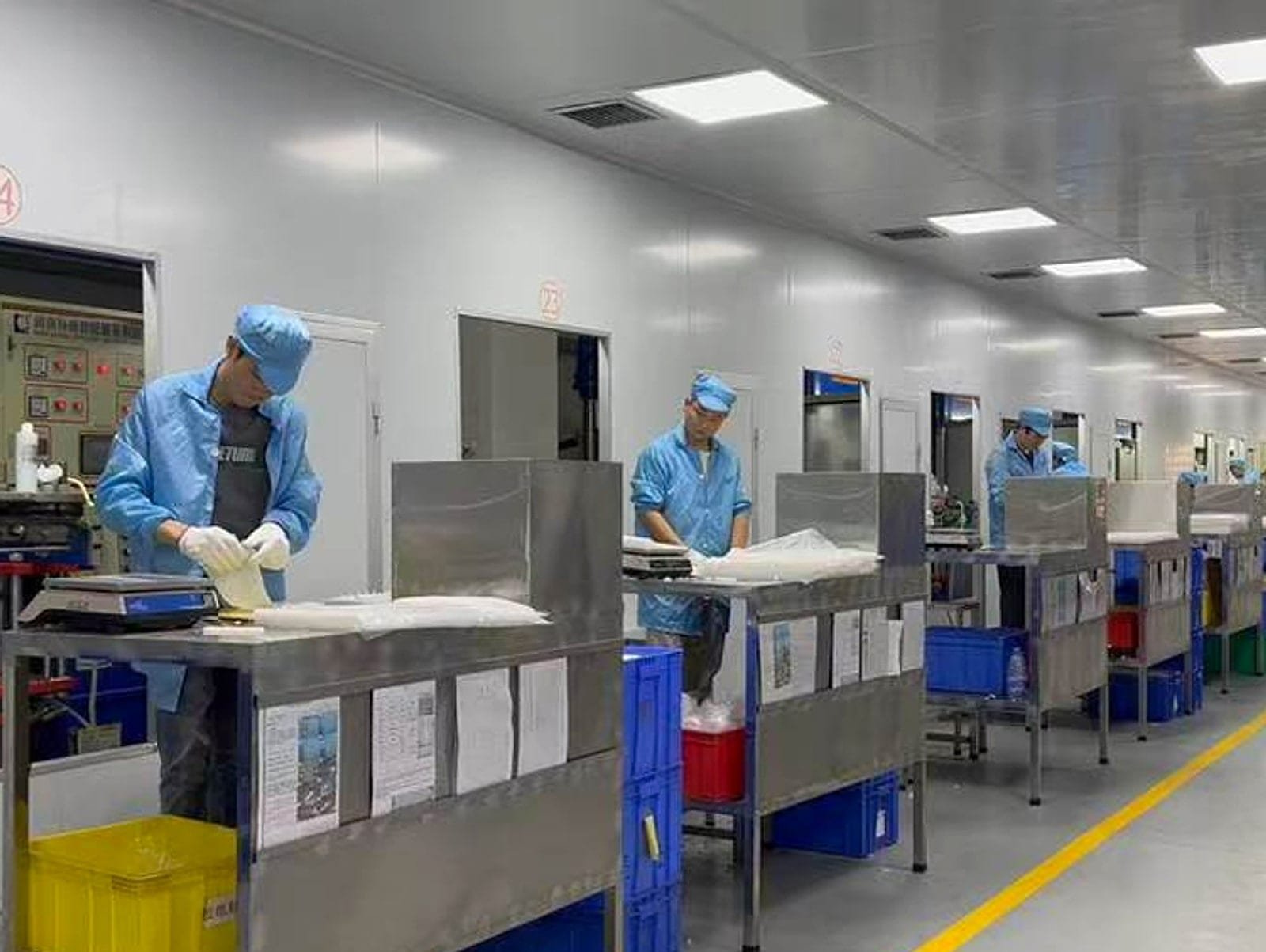
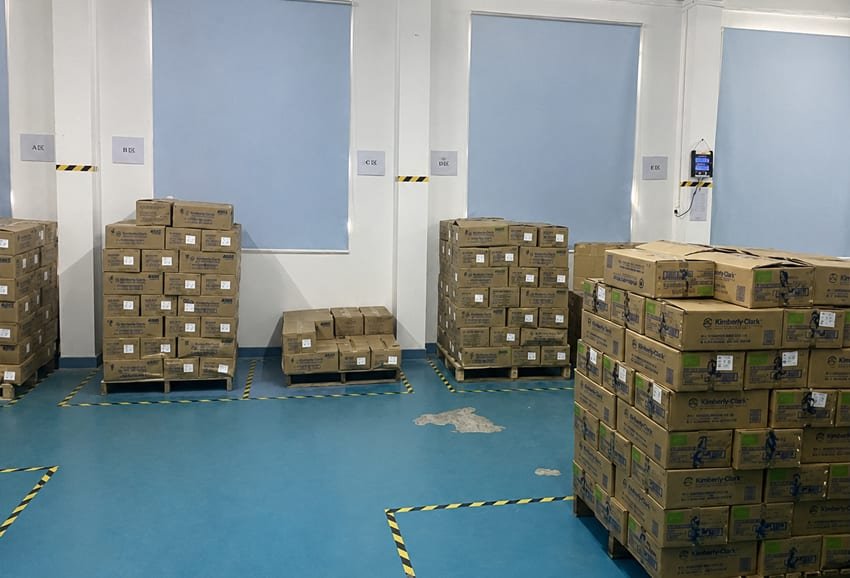
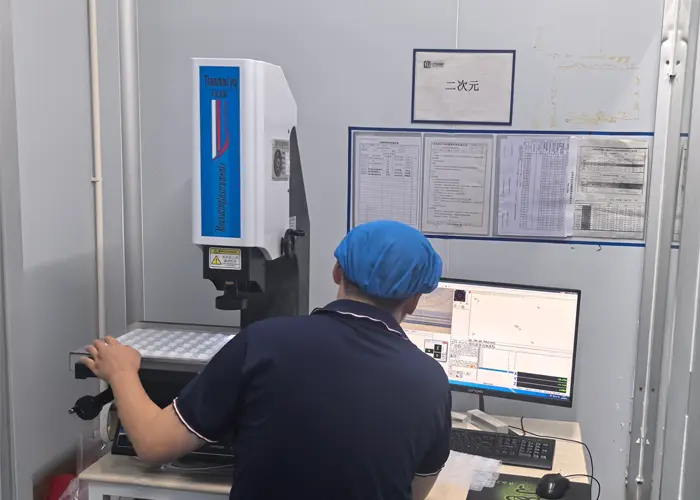
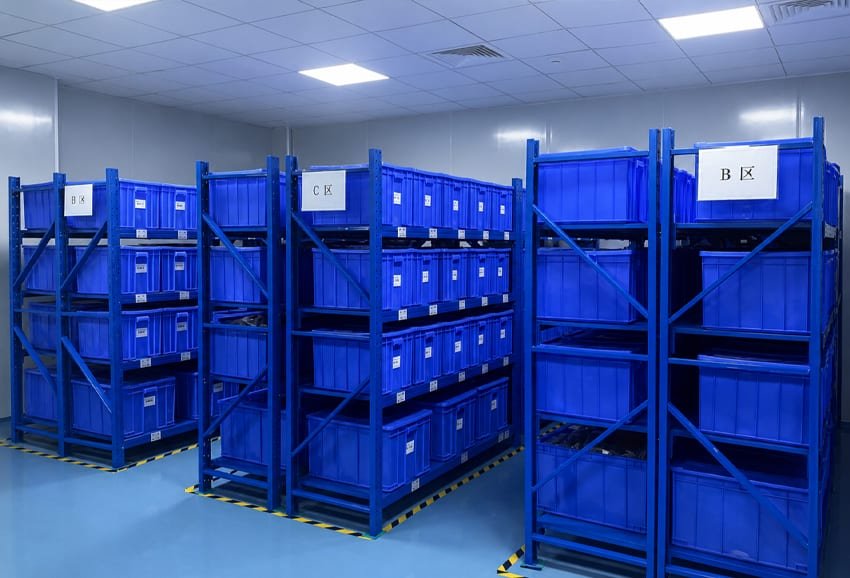
High Volume / Small SizesFrom raw material control to molding, trimming, inspection, packaging, and shipment, each step is reviewed around the sealing function and release requirements.
These answers cover the details teams usually need before requesting a custom O-ring quote.
Please send the inside diameter, cross-section diameter, target material, hardness, color, operating temperature, media, pressure, stretch requirement, drawings or samples, and estimated volume.
Yes. We review the working medium, temperature range, pressure, sealing type, movement, regulatory needs, and assembly conditions before recommending NBR, FKM, EPDM, VMQ, PTFE, or another compound.
Yes. We can produce custom inside diameters, cross-sections, colors, hardness levels, and application-specific compounds when standard O-rings are not enough.
Yes. We can support early design review and rapid prototyping, then move into compression molding or multi-cavity injection molding for stable production.
O-ring performance depends on more than choosing a rubber compound. The groove geometry, squeeze, stretch, and clearance all need to work together before the seal can hold pressure reliably.
Read O-ring Design Guide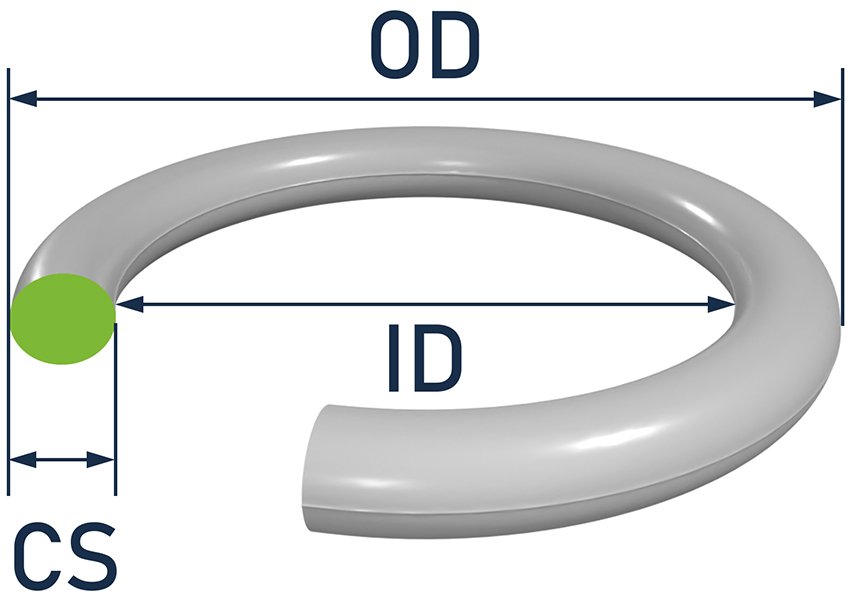
Send your O-ring files. Fecision will review the sealing requirements and suggest a practical production path.