
Electrical Resistance Target
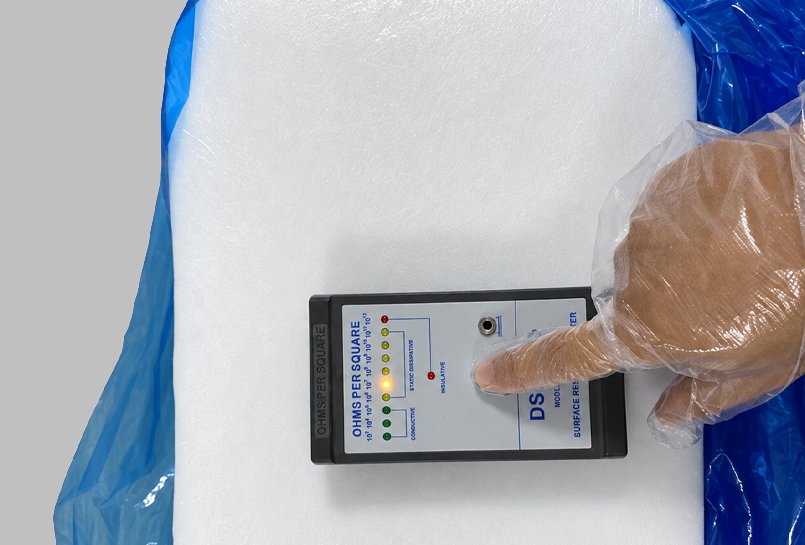
Common static-dissipative targets such as 10^6 to 10^9 ohms can be reviewed, with test conditions confirmed before production.
Fecision manufactures custom anti-static silicone rollers for semiconductor, PCB, optical film, cleanroom handling, and precision electronics lines. Each roller is built around the contact surface, grounding path, line speed, temperature, and dimensional requirements of your equipment.
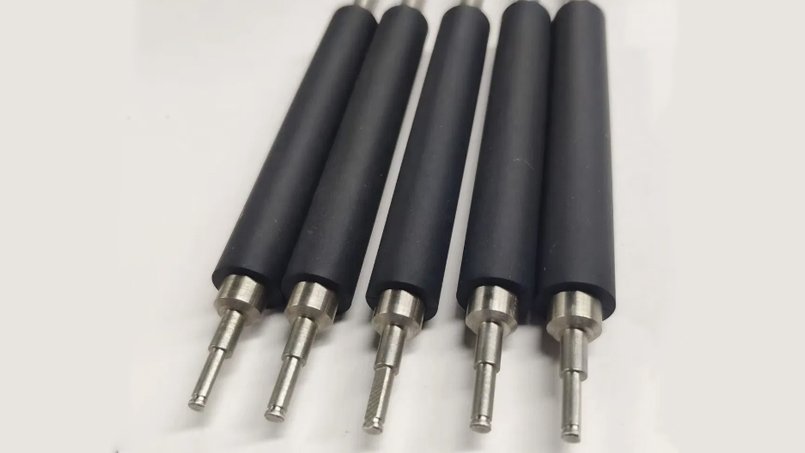
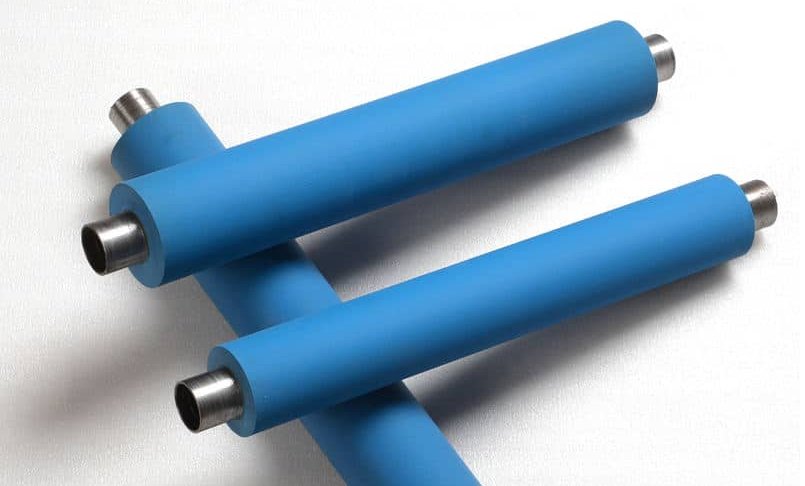
An anti-static silicone roller is a custom rubber-covered roller designed to reduce static buildup while maintaining controlled contact with sensitive electronic, film, or panel surfaces.
In high-value production lines, a roller can influence particle control, static buildup, surface marking, material release, and transport stability. Standard rubber or plastic rollers may generate triboelectric charge, attract dust, or leave residue when they run against films, tapes, panels, or conveyor surfaces.
Custom anti-static silicone rollers use a silicone surface bonded to a machined metal core. For ESD-sensitive processes, conductive or static-dissipative fillers can be distributed through the silicone compound so the roller surface remains more consistent through wear than a temporary surface coating.
The roller covering material should protect the product and keep the line stable. We review ESD behavior, cleanliness, temperature exposure, release behavior, hardness, and roller geometry together.
For precision rollers, anti-static performance should come from the rubber compound itself rather than only a temporary coating. Conductive or static-dissipative additives are dispersed through the silicone matrix so the roller can keep a more stable electrical path as the surface is used and reground.
Silicone also brings soft contact, heat resistance, and natural release behavior for adhesive films, OCA, PCB, display panels, and printer feed media. The right compound depends on the substrate, grounding path, measurement method, contact pressure, temperature, and cleanliness requirement.
Common static-dissipative targets such as 10^6 to 10^9 ohms can be reviewed, with test conditions confirmed before production.
Carbon-filled grades are common, while low-particle or carbon-free options may be reviewed when black transfer or cleanroom contamination is a concern.
Shore A hardness, tack, surface finish, and rubber thickness are matched to avoid scratching, sticking, wrinkling, or unstable feeding.
Silicone helps support heat exposure, but the final compound should be checked against line temperature, chemical contact, UV exposure, and expected service life.
These values are starting points for quotation. Final specifications depend on the core design, silicone compound, roller size, surface finish, and equipment interface.
| Specification | Custom Options |
|---|---|
| Metal core | Aluminum, stainless steel, carbon steel, or customer-supplied shafts and cores. |
| Outer diameter | Custom sizes, commonly from 20 mm to 250 mm or larger depending on equipment design. |
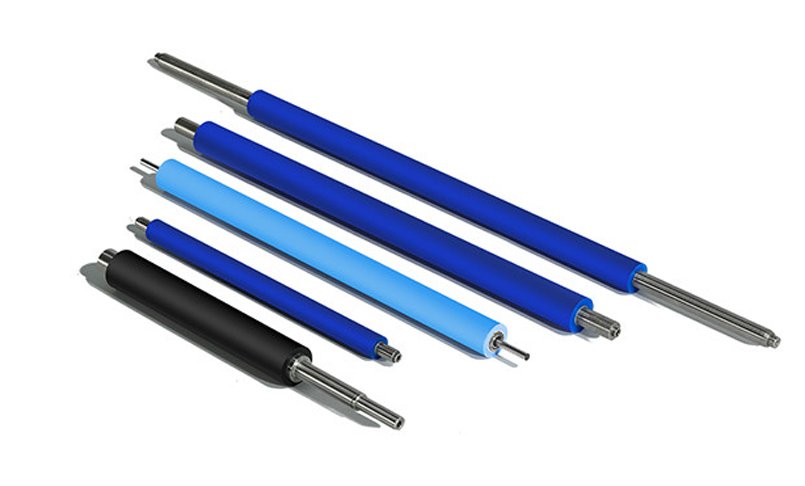
| Face length | Custom length from compact guide rollers to long web-handling rollers, including lengths up to 3,000 mm when feasible. |
| Electrical resistance | Static-dissipative targets such as 10^6 to 10^9 ohms can be reviewed for ESD-sensitive lines. |
| Temperature range | Typical silicone roller applications can be reviewed from -40°C to +200°C, depending on compound and exposure time. |
| Color | Black for many conductive grades, with dark blue or custom colors available when the formulation allows. |
| Concentricity / runout | Precision grinding can support tight runout targets such as ≤0.02 mm on suitable roller designs. |
| Surface finish | Smooth, matte, tack-controlled, release-focused, or application-specific finishes. |
Silicone overmolding or rubber covering is a central step, but the finished roller depends on the complete process chain.
A typical custom roller program starts with metal core machining and surface preparation. The silicone is then bonded to the core through molding or rubber covering, cured, post-cured when required, and precision ground to the final OD and surface finish.
For ESD and cleanroom applications, we also review grounding design, surface resistance, visual condition, hardness, dimensional accuracy, cleaning, and packaging before shipment.
View Silicone Overmolding Capability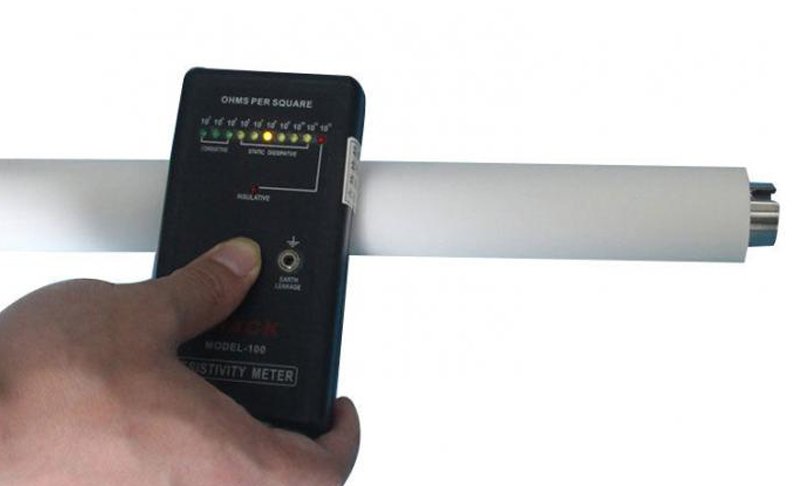
A drawing is the best starting point. If you do not have a finished drawing yet, these details help us review feasibility and material direction.
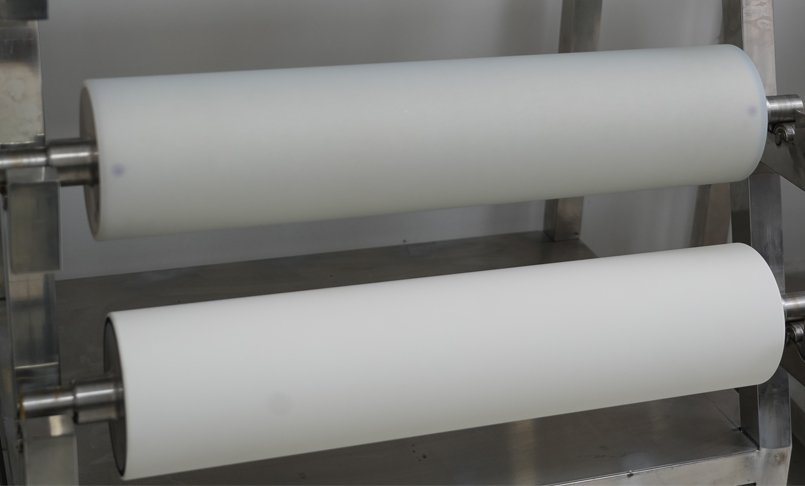
Confirm whether the substrate is wafer-adjacent material, PCB, optical film, adhesive tape, OCA, PET, PI, copper foil, or packaging film.
Define the surface resistance target, grounding method, measurement condition, and whether static dissipation must remain stable after wear.
Line pressure, hardness, rubber thickness, and surface tack should be matched so the roller does not wrinkle, stretch, mark, or pull the substrate.
Share OD tolerance, face length, shaft details, runout target, balance requirement, speed, and any vibration or tracking issues from the current roller.
Anti-static silicone rollers are used where the product surface is valuable, sensitive, adhesive, or easily damaged by static and hard contact.
Guide, nip, transfer, or support rollers for adhesive tape, release film, PET, PI, separator film, coated film, and precision web handling.
Rollers used in optical film lamination, OCA handling, multilayer material bonding, flexible circuit lamination, and composite processing.
ESD-conscious transport or cleaning rollers for PCB, FPC, IC substrate, SMT assembly, and electronics inspection equipment.
Soft-contact rollers for display panels, filter films, wafer-adjacent cleaning or guiding, and high-value components where scratching and static are concerns.
Rollers for high-speed packaging film transport, sealing support, anti-stick handling, and smooth film release in automated equipment.
Anti-static feed, pressure, transfer, or cleaning rollers for label printers, roll-to-roll printing lines, office printers, and static-sensitive media handling.
Send your roller drawing, core material, OD, face length, shaft dimensions, silicone thickness, hardness, surface resistance target, operating temperature, line speed, contact pressure, substrate type, and cleanroom or packaging requirements.
For replacement rollers, photos or samples of the current roller help us understand wear, sticking, vibration, particle, or static problems before recommending a compound and process route.
Send Drawing For ReviewInclude OD, face length, shaft ends, bearing areas, tolerances, and any special mounting features.
Share hardness, color, surface resistance range, temperature exposure, cleaning method, and restricted substances.
Tell us the line speed, product surface, contact pressure, cleanroom level, and the problem you want the roller to solve.