
Platinum-Cured LSR
Medical and food-contact designs commonly use platinum-cured LSR. Transparent or translucent grades can also make it easier to observe the fluid path.
Compact elastomer check valves for low cracking pressure, reliable backflow prevention, and quiet one-way fluid control.
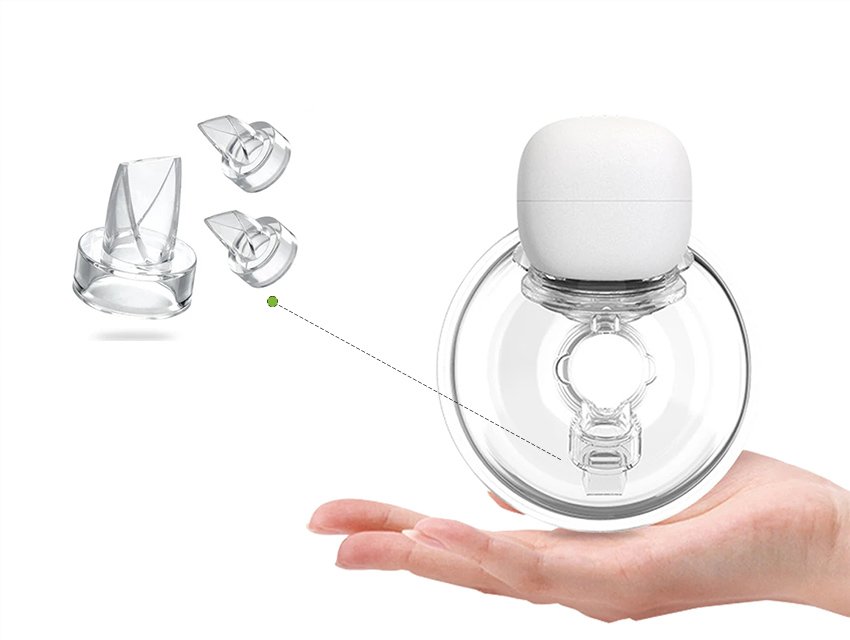
A duckbill valve is a one-piece elastomer check valve with two flexible lips that meet at a central slit. The flattened outlet resembles a duck's bill, which gives the valve its name.
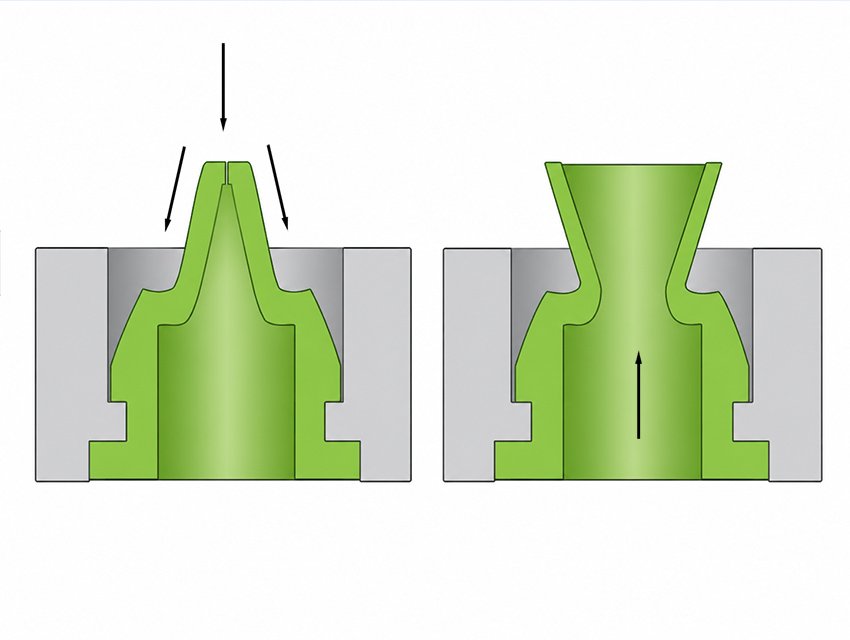
The valve has no spring, hinge, or metal moving parts. Forward pressure separates the lips and opens the flow path. When pressure falls or reverses, the elastomer recovers and the slit closes to prevent backflow.
The elastomer must be soft enough to open at the target pressure and resilient enough to bring the slit back into full contact after repeated cycles.
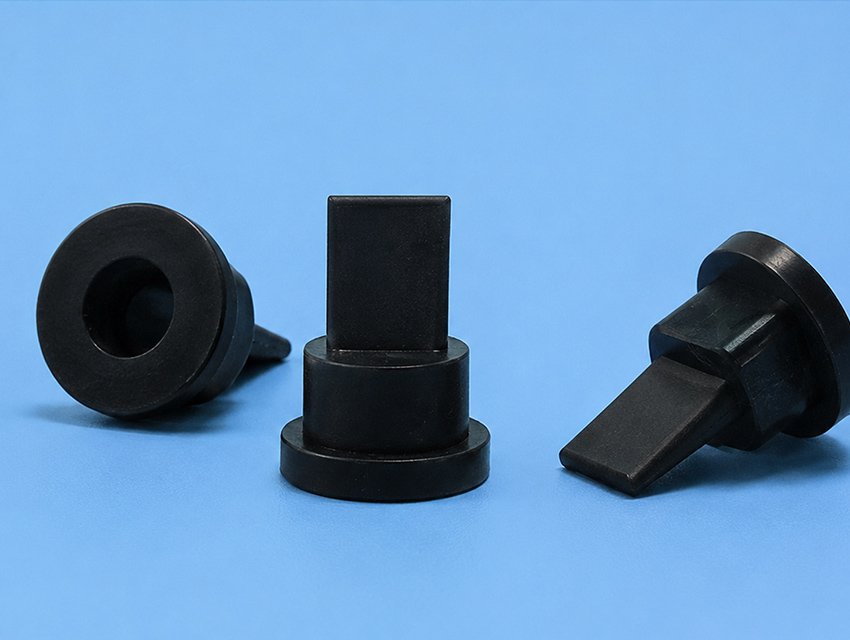
Medical and food-contact designs commonly use platinum-cured LSR. Transparent or translucent grades can also make it easier to observe the fluid path.
FVMQ, EPDM, NBR, and CR can be selected when the valve needs greater resistance to oil, fuel, chemicals, weather, or other operating conditions.
Silicone rubber valves can be manufactured by compression molding and LSR injection molding, depending on the product structure and quantity. The manufacturing process requires precision and expertise to ensure the quality and reliability.
Pressure difference opens the slit in one direction while the elastic lips create a passive seal against reverse flow.
Without forward pressure, the two elastomer lips remain in contact and keep the central slit closed.
When upstream pressure exceeds the cracking pressure, the lips separate and create a passage for fluid or gas.
As pressure falls or reverses, the lips recover and press together again, helping prevent backflow.
Duckbill valves are commonly made by LSR injection molding or silicone compression molding. LSR processing uses accurately metered material and a temperature-controlled precision mold to produce the valve body and thin flexible lips with tight dimensional control.
The two lips at the bill tip must meet evenly to seal. Their molded shape and finish determine how they open under forward pressure and close against reverse flow. Consistent charge weight and cavity filling help reproduce that shape during production.
Liquid or high-consistency silicone is conditioned and precisely metered by weight into charge preforms. Charge accuracy helps control flash and short-shots at the bill tip.
Liquid injection or compression molding at 150-180°C forms the valve body and coapting lips in a precision cavity. The lip feature determines cracking pressure and reverse seal.
A secondary thermal cure drives off cure byproducts and stabilizes extractables, supporting downstream ISO 10993 biocompatibility testing when required.
Parting-line flash around the bill tip, lips, and mounting edge is removed by cryogenic deflash or controlled trimming without risking a nick on the sealing lip.
Every unit is tested for forward cracking pressure and reverse-seal integrity against your spec window before it leaves the line.
Parts can be ultrasonically cleaned and packaged under ISO Class 8 cleanroom controls, also described as Class 100,000 cleanroom conditions, before your EtO or gamma sterilization cycle.
Custom duckbill valve samples showing molded lip geometry, production variations, and application-ready silicone valve details.
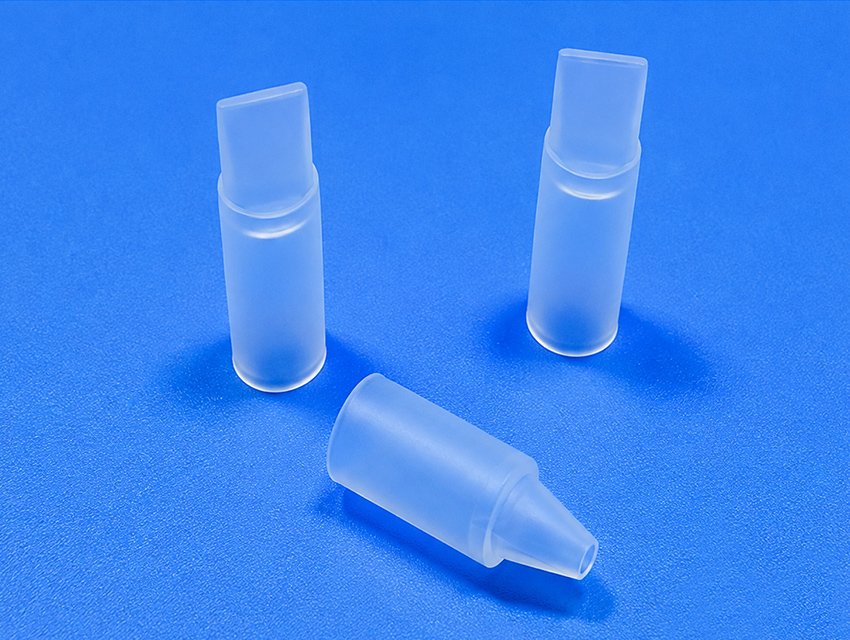
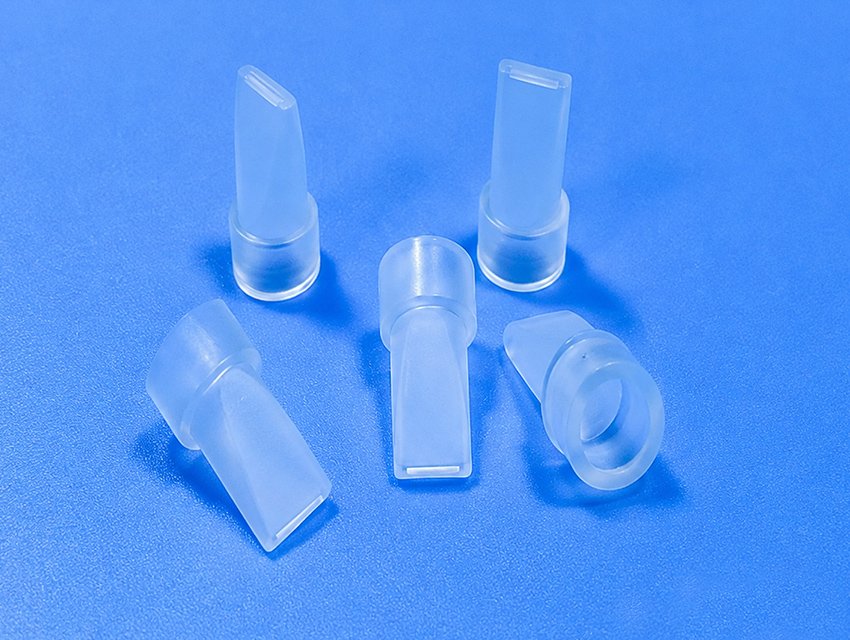
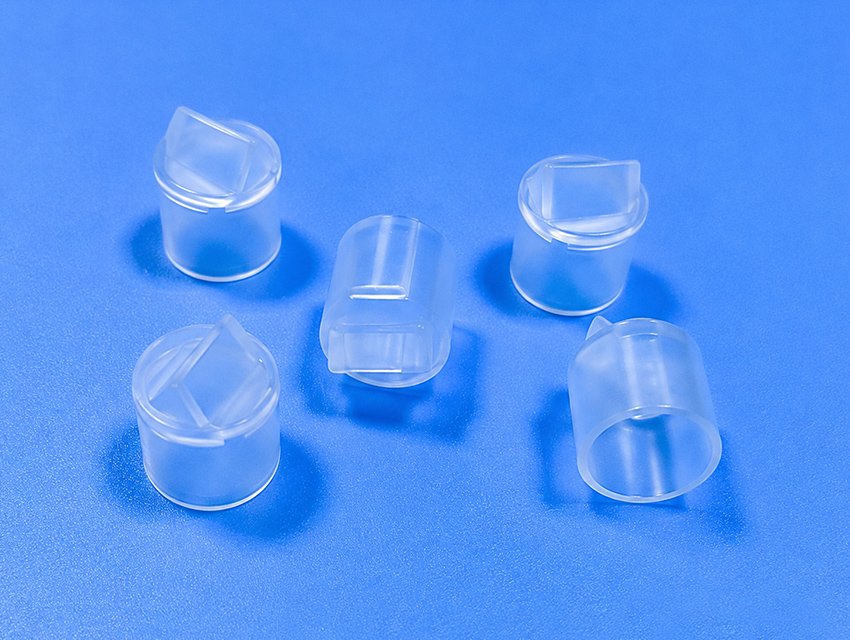
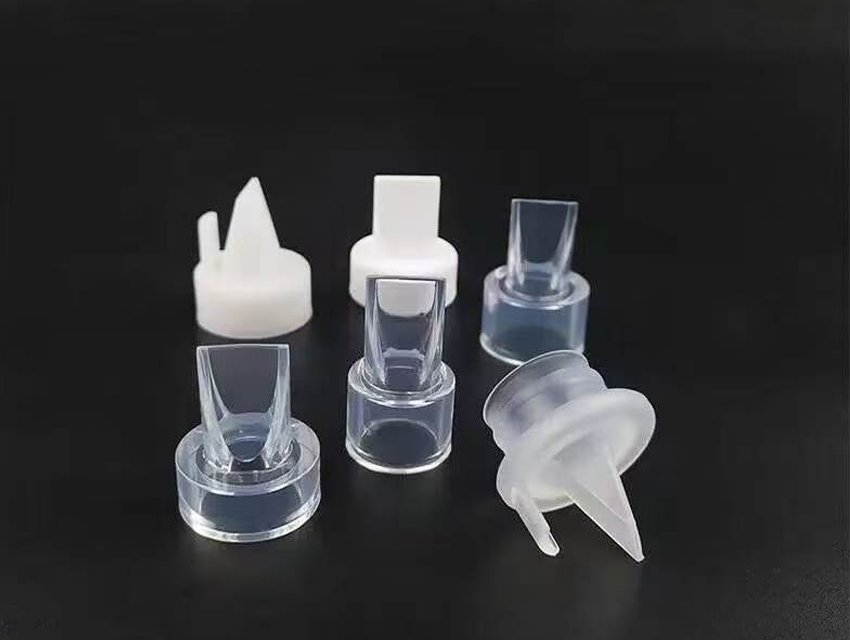
Cracking pressure and reverse sealing are controlled by the slit, lip geometry, hardness, elastic modulus, and installation condition.
| Property | Typical Guidance | Design Meaning |
|---|---|---|
| Cracking Pressure | Common small valves: about 0 to 5 kPa; specialized medical designs can be lower | Longer slits, thinner lips, and softer material generally reduce opening pressure. |
| Reverse Pressure | Application-dependent; source design guidance notes about 100 to 500 kPa for some valves | Reverse sealing depends strongly on lip thickness, slit structure, material, and support around the valve. |
| Hardness | Typically 20 to 70 Shore A | Hardness must balance easy opening with enough elastic recovery for reliable slit closure. |
| Temperature Range | Silicone and FVMQ designs may target about -60°C to 230°C | The final allowable range depends on material grade, fluid, pressure, and service environment. |
| Sterilization | Suitable medical LSR grades may support autoclave, EO, and gamma processes | Sterilization compatibility should be validated on the final valve design and material grade. |
Duckbill valve performance depends on a controlled balance between opening force, slit closure, material recovery, and installation support.
A longer slit or thinner wall lowers cracking pressure, but excessive flexibility can reduce closing force and sealing reliability.
The outlet should provide a stable cutting or molding area. Burrs, rough edges, or off-center slits can create leakage paths.
Very soft material may deform or shift, while overly hard material can raise opening pressure. High resilience and low compression set are important.
Flanges, clamps, and interference fits should hold the valve securely without restricting lip movement or allowing the valve body to invert under pressure.
Duckbill valves are used across small medical fluid systems and large drainage systems because they provide simple one-way control without metal moving parts.
Used in breast pumps, resuscitation and ventilation systems, anesthesia equipment, infusion sets, catheter backflow control, and drainage devices.
Used in liquid dispensing systems, cleaning-equipment tanks, drainage valves, and soap or detergent pumps.
Used in fuel systems, oil separation, washer systems, emissions control, transmissions, and brake-related backflow functions.
Larger duckbill valves can control stormwater, wastewater, tidal backflow, drip irrigation, and fertilizer injection systems.
Share your cracking pressure, reverse pressure, flow, fluid, installation method, and valve size. Fecision can review the lip and slit geometry for your application.