
Reduce air gaps
Soft silicone fills uneven contact surfaces and lowers interface resistance.
Fecision makes thermal silicone pads to fit the gap between your component and cooling surface. Thicknesses from 0.3 to 10 mm can be matched to the required compression, with die-cut shapes for your assembly.

Thermal pads are polymer composite materials made from silicone rubber and thermally conductive fillers. They are used between heat-generating components and heat sinks to fill surface gaps, reduce contact resistance, and keep heat moving through the assembly.
Fecision supports custom thermal pads for multiple industries such as electronics, lighting, automotive, and power devices. We can adjust compound formulation, hardness, thickness, die-cut geometry and packaging around your requirements.
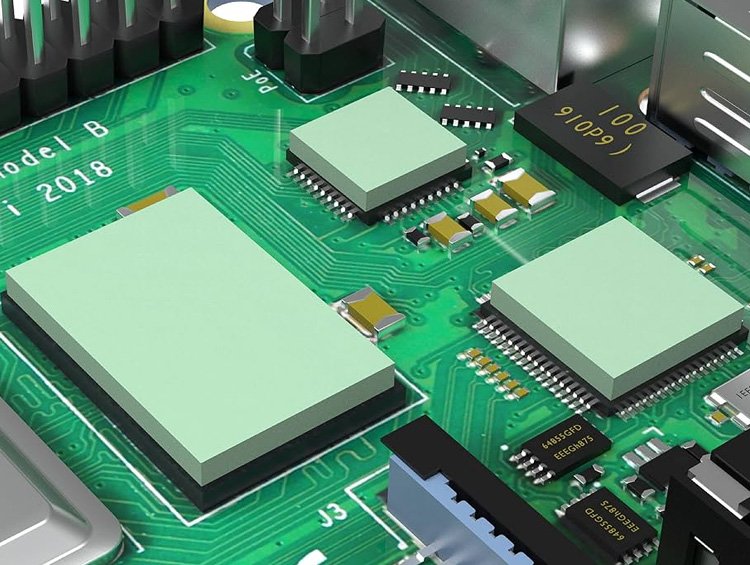
Thermal silicone rubber pads combine a flexible silicone base with thermally conductive ceramic fillers, such as aluminum oxide or boron nitride. The silicone lets the pad conform to the assembly gap while providing electrical insulation. The fillers carry heat through the pad to the heat sink or cooling surface.
Unlike thermal grease, a silicone rubber thermal pad is supplied as a stable sheet or die-cut part. It can fill larger assembly gaps, absorb tolerance stack-up, and reduce handling mess during production. This makes it useful for electronics, LED lighting, battery modules, power supplies, and other assemblies where heat transfer and electrical insulation must work together.
Air is a poor heat conductor. When a chip, power module, LED, or control board is mounted against a heat sink, tiny gaps remain between the two surfaces. A thermal pad fills these gaps and creates a continuous heat transfer path. The pad also keeps the component electrically insulated, which is important in compact electronics where heat transfer and electrical safety must be controlled at the same time.
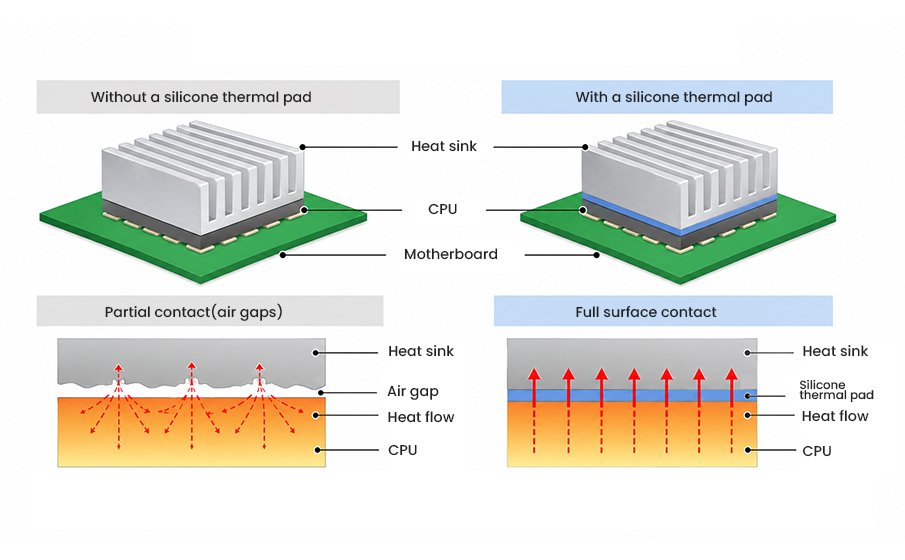
Soft silicone fills uneven contact surfaces and lowers interface resistance.
Conductive fillers create a path from the hot component to the heat sink.
Most thermal silicone rubber pads remain electrically insulating during use.
The elastic pad cushions vibration, tolerance stack-up, and compression load.
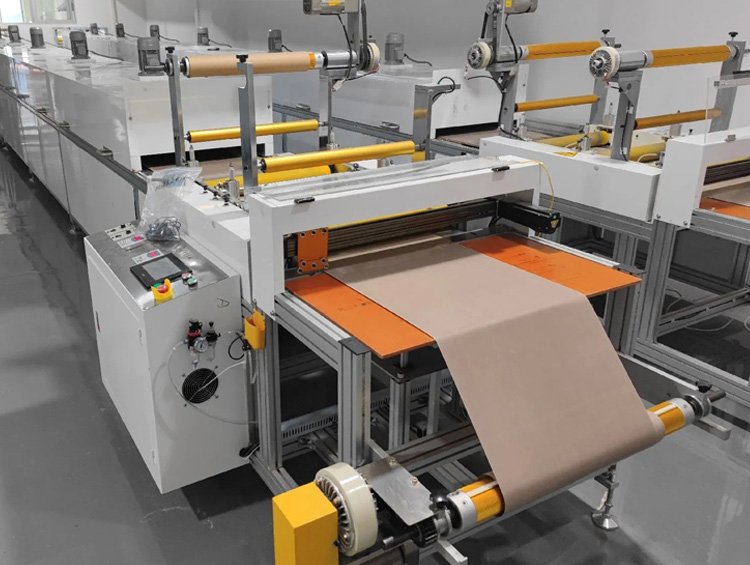
Even filler dispersion helps keep heat transfer consistent across the pad. We control sheet thickness during production, then cure and cut the material to fit the assembly.
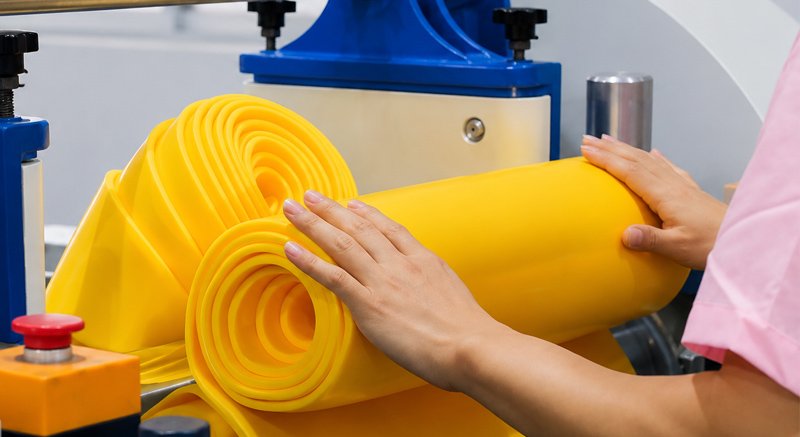
Silicone rubber, thermal fillers, curing agents, pigments, and additives are prepared and mixed to reach the target conductivity, hardness, and insulation level.
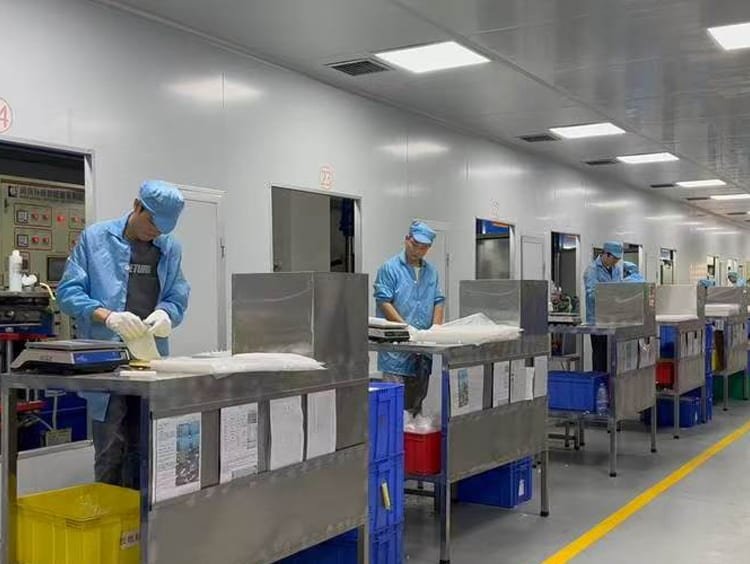
The mixed compound is formed into sheets or molded blanks with controlled thickness, width, and surface consistency before curing.
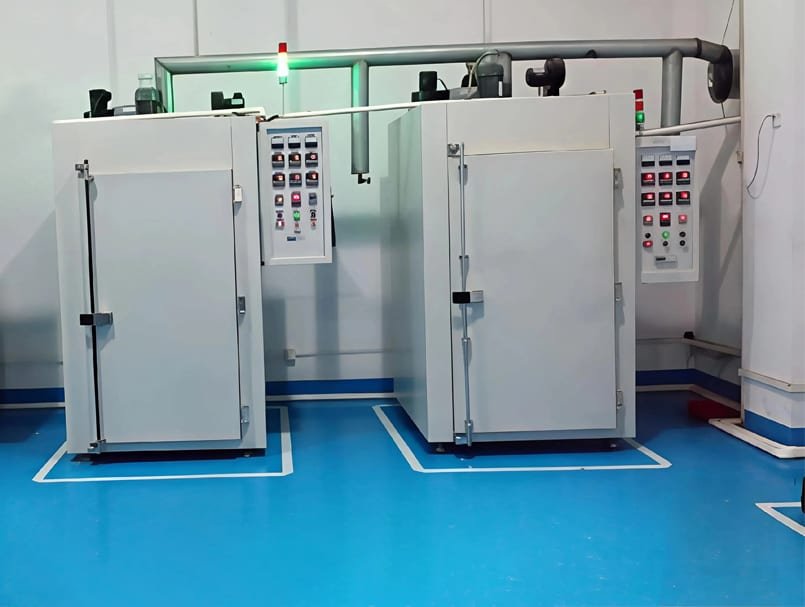
The formed silicone is cured under controlled heat and pressure so the pad reaches stable elasticity, compression recovery, and mechanical strength.
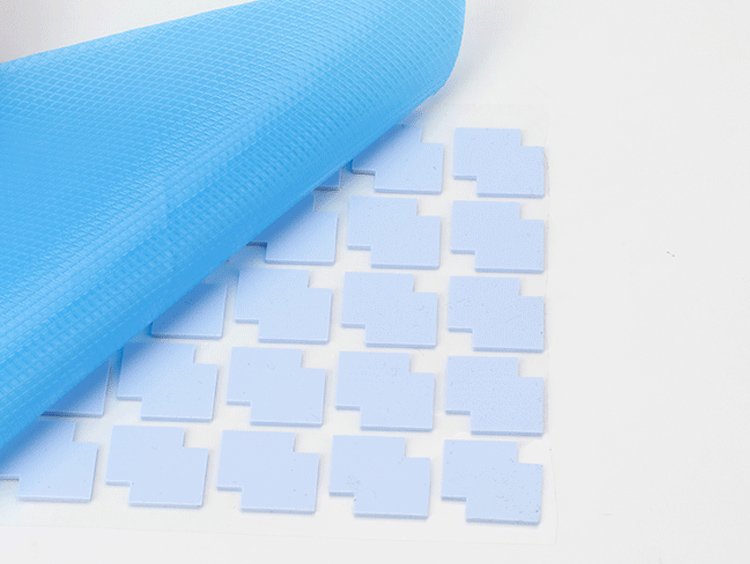
The sheet can be laminated with release film, adhesive backing, protective film, fabric support, or surface treatment depending on assembly and handling needs.
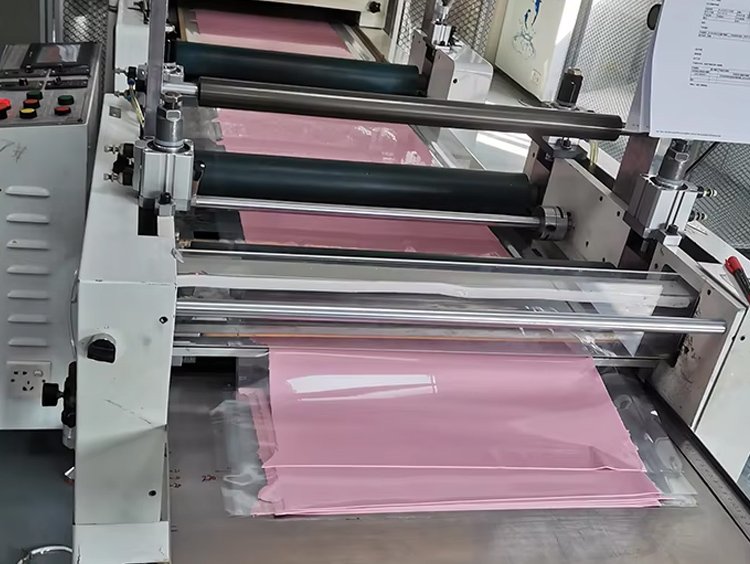
Finished sheets are slit or die cut into custom outlines, holes, tabs, kiss-cut parts, and packaged formats that match the final assembly process.
Choose the pad's uncompressed thickness around the assembled gap and the load the component can tolerate. Fecision can review your drawing and recommend a thermal silicone grade that makes contact without excessive compression.
Measure the gap at its smallest and largest expected dimensions. The pad needs to contact both surfaces throughout that range without applying too much force to the component. Confirm the thickness against the selected grade's compression behavior before ordering.
| Selection Factor | Recommended Guidance |
|---|---|
| Thermal conductivity | Choose a conductivity grade that matches the heat load and available contact area. Higher conductivity can help, but it may increase hardness and cost. |
| Thickness | Select thickness from the real gap. The pad should compress enough to contact both surfaces without overloading the component. |
| Hardness | Softer pads conform better to uneven surfaces. Firmer pads can improve handling and dimensional stability during assembly. |
| Electrical insulation | Confirm dielectric strength when the pad sits near exposed circuits, battery modules, LED boards, or metal housings. |
| Compression recovery | Good recovery helps maintain contact pressure after thermal cycling, vibration, and long-term compression. |
| Environment | Review temperature, flame rating, moisture, oils, chemicals, and aging conditions before selecting the final compound. |
Examples of custom thermal pads we have produced for customer projects.
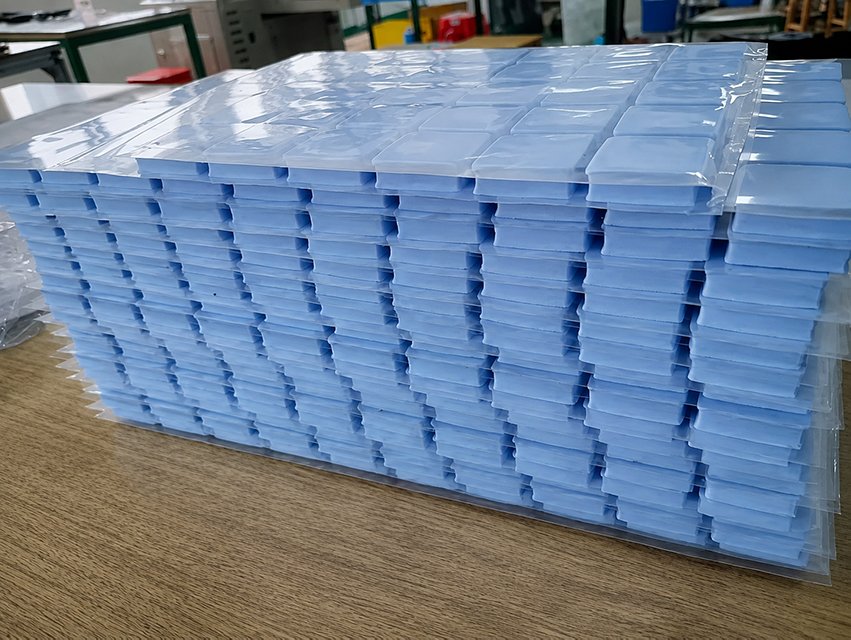
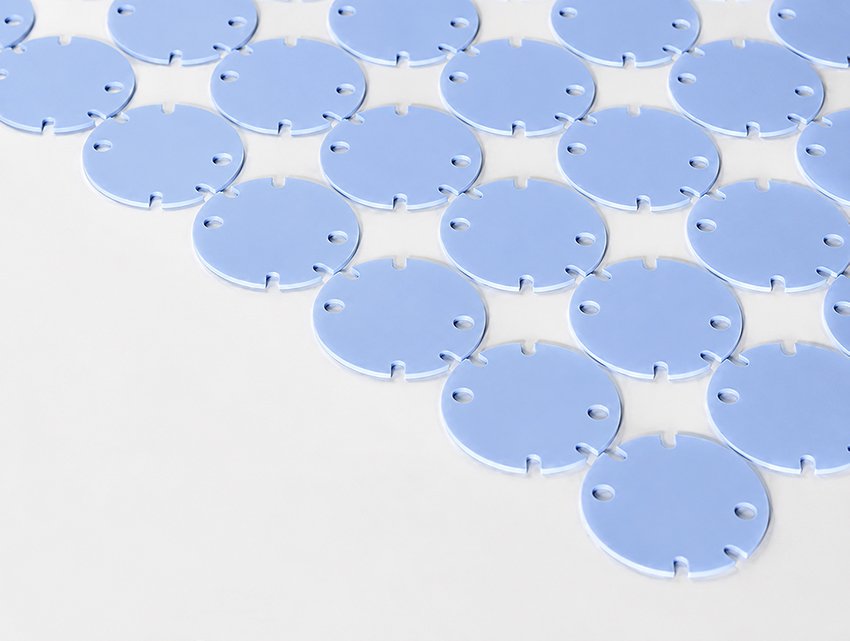
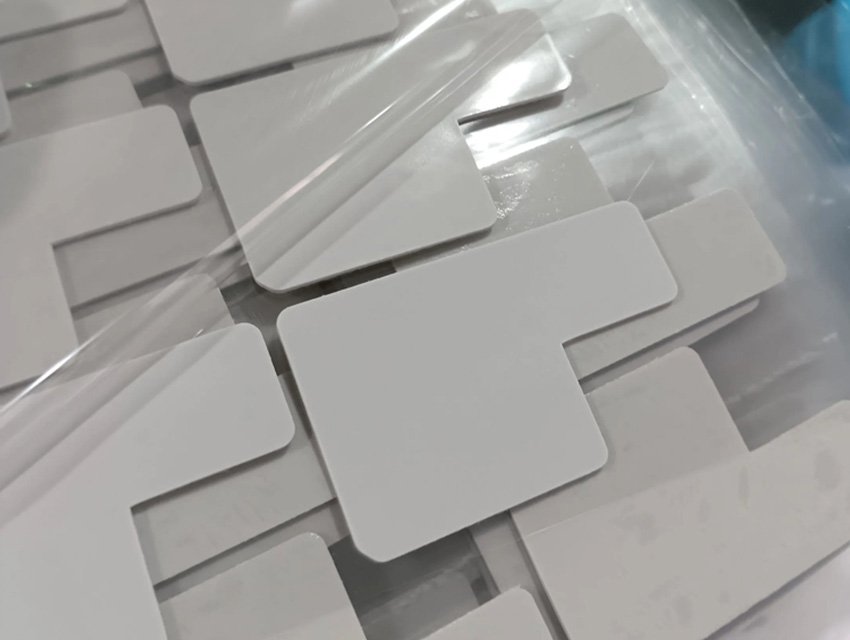
Custom thermal silicone rubber pads are widely used where heat transfer, electrical insulation, and controlled compression must work together.
Used for CPUs, GPUs, memory modules, routers, base stations, and compact heat sink assemblies.
Helps transfer heat from LED strips, modules, drivers, and aluminum housings while keeping insulation stable.
Supports battery packs, power modules, sensors, control units, and charging components exposed to thermal cycling.
Used in chargers, inverters, smart devices, displays, power supplies, and compact electronics with limited space.
Send your drawing and insulation requirement. We can recommend a material and prepare custom samples for review.