
Controlled Wall Thickness
Consistent membrane geometry helps limit uneven inflation, localized strain, and changes in the pressure-volume response.
Fecision manufactures custom silicone test lung bladders for neonatal and infant ventilator testing equipment, CPAP testing systems, and mechanical lung simulators.
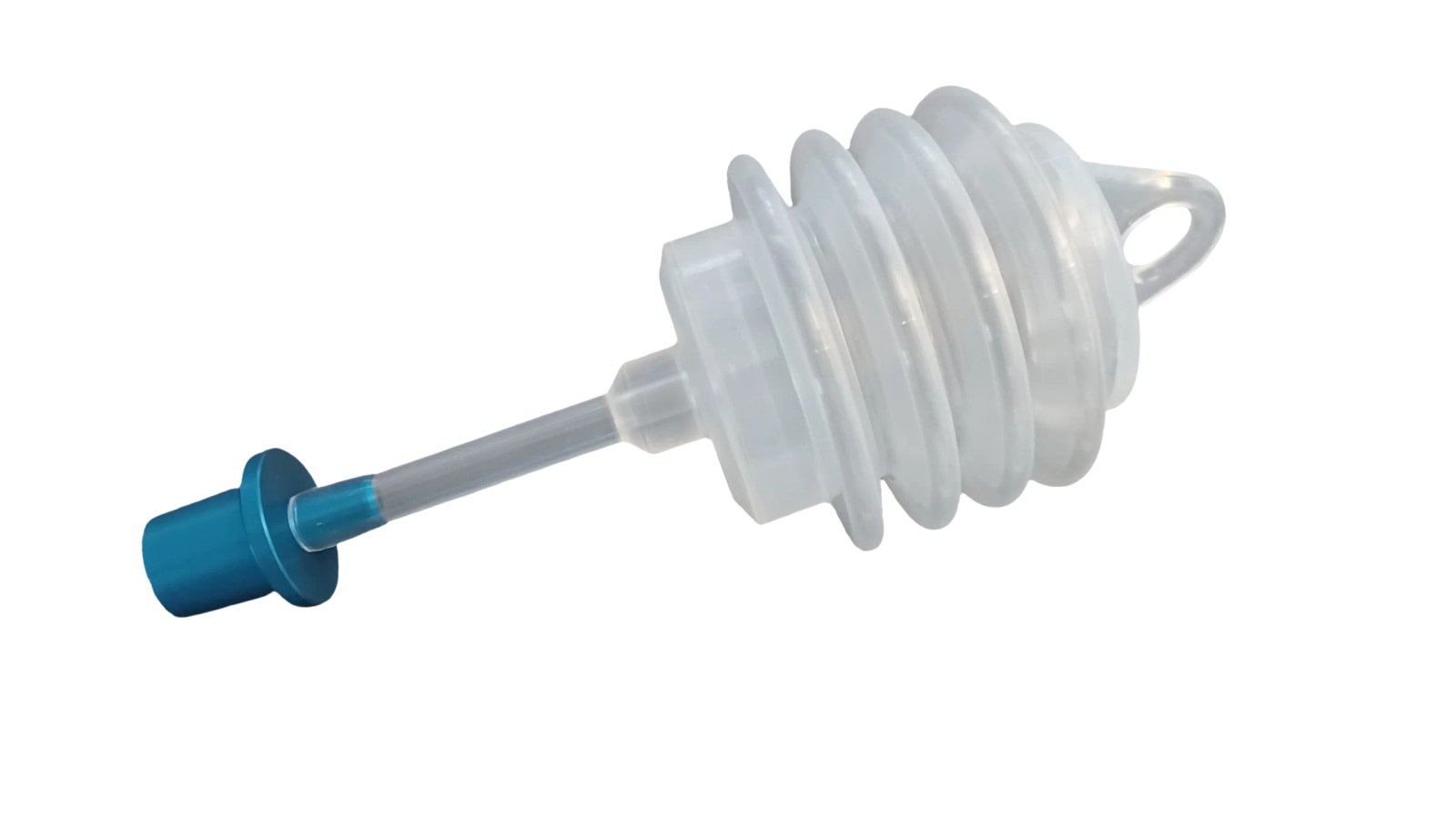
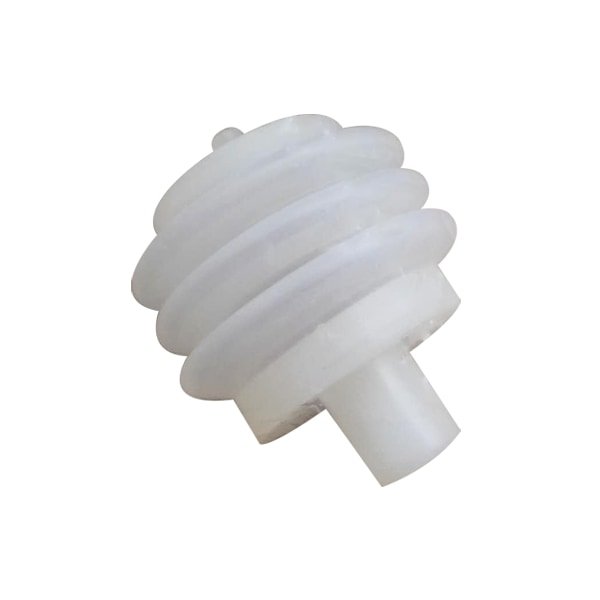
A silicone test lung bladder is a flexible pneumatic component that simulates lung expansion and contraction during mechanical ventilation. It expands as air enters under pressure, then recovers and releases air as pressure decreases.
In neonatal and infant test lungs, small tidal volumes make membrane thickness and leakage particularly important. Minor manufacturing variations can change the pressure-volume response, while repeated breathing cycles place demands on elastic recovery and fatigue resistance.
Fecision supports custom components and assemblies from customer drawings, existing samples, and functional requirements. Our scope covers silicone manufacturing; complete lung simulator design and calibration remain part of the OEM's system development.
The molded membrane, silicone response, and connector interface must work together to support repeatable breathing simulation.
Consistent membrane geometry helps limit uneven inflation, localized strain, and changes in the pressure-volume response.
Material specifications and curing controls help maintain the deformation and recovery behavior established during sample approval.
Neck dimensions, sealing geometry, and retention features are matched to the fitting to control leakage during repeated cycling.
Two bladders with identical external dimensions may inflate differently if their wall thickness varies. Thin walls, deep cavities, and corrugated shapes need an early tooling review to prevent incomplete filling, trapped air, and localized thinning.
Our in-house tooling review considers core alignment, cavity clearance, gate locations, venting, parting lines, and transition radii. Where feasible, gates and prominent parting lines are kept away from highly strained membrane regions and critical sealing surfaces.
Wall thickness and tolerances are established through component design, molding feasibility, and functional testing. The objective is to reproduce the specified membrane consistently.
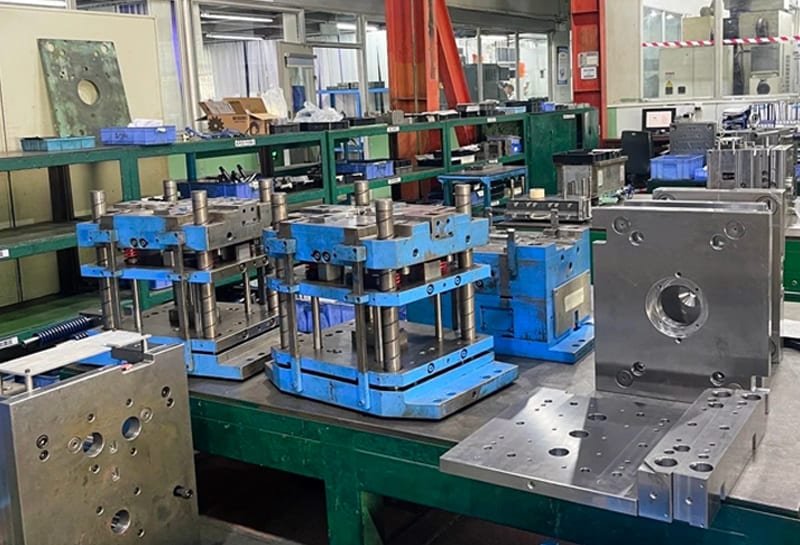
Shore A hardness is only one material characteristic. Silicone formulation, elastic modulus, wall thickness, geometry, curing conditions, and aging all influence the finished bladder's behavior.
We manage the approved silicone grade, supplier specification, material batch identification, mixing and metering parameters, and curing conditions. First article inspection and specified functional checks help compare production parts with approved samples.
Elastomers can respond differently to slow inflation and rapid cyclic loading. Final compliance must therefore be verified in the intended assembled test lung, over the specified pressure, flow, and breathing frequency range.
Inflation and deflation curves, including hysteresis, under defined test conditions.
Elastic recovery and changes in behavior after repeated inflation and deflation.
Response at representative breathing frequencies and loading conditions.
Comparison of production samples with the approved component requirements.
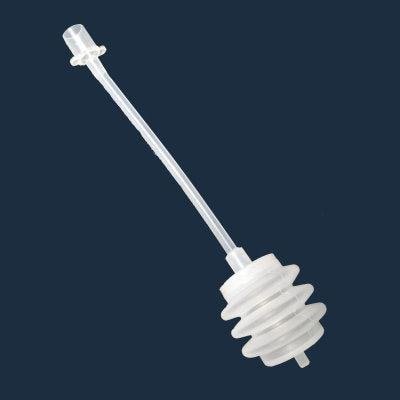
The bladder neck must flex without losing contact with the rigid airway fitting. An unsuitable interface can leak, loosen, or develop local tearing as the membrane cycles.
We manufacture custom collars, retention grooves, sealing lips, reinforced flanges, and locking features. Neck geometry and smooth transitions are reviewed against fitting tolerances, assembly compression, and strain distribution.
Bonded and overmolded assemblies require separate evaluation of material compatibility and adhesion. Reusable connections may also need leakage and retention checks after fatigue testing.
The manufacturing route is selected around bladder geometry, operating pressure, deformation, production quantity, and expected service life.
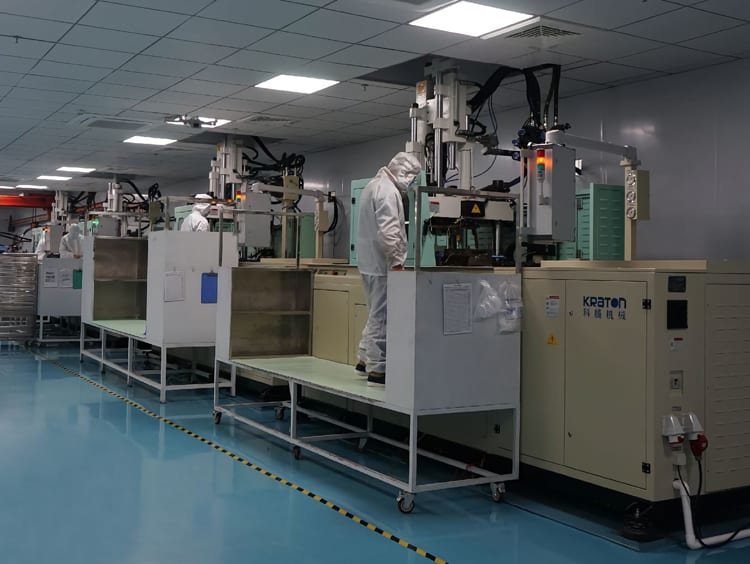
Automated material metering and mixing, controlled injection, and regulated mold temperature support repeatable processing of precision bladders and complex molded features.
Tooling must address thin-wall filling, deep corrugations, venting, and core removal.
Explore LSR Molding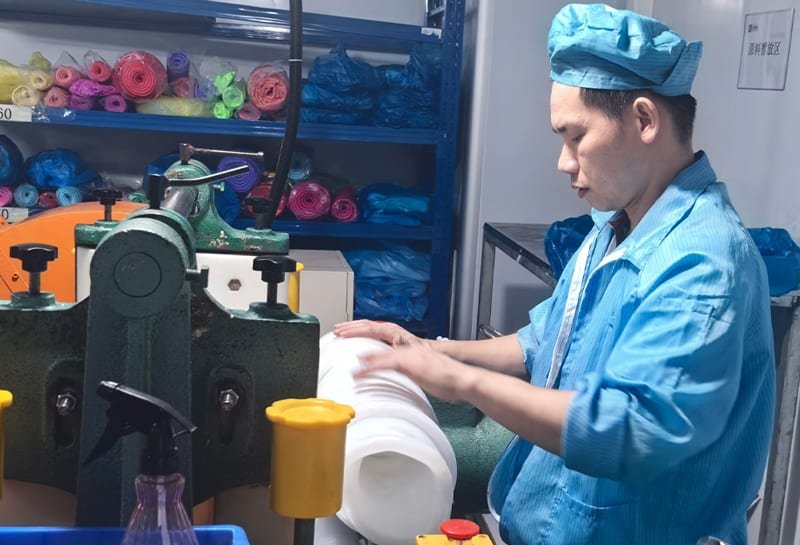
High-consistency silicone rubber offers an alternative for compatible structures and selected prototype or production programs.
Material placement, molding pressure, temperature, vulcanization time, and flash control are managed to maintain geometry and cured properties.
Explore Compression MoldingTranslucent formulations, high-recovery grades, and suitably specified low-volatile or platinum-cured systems may be evaluated. Selection considers tensile strength, elongation, tear resistance, hysteresis, and aging alongside hardness.
Post-curing follows the silicone supplier's or application's requirements and must be verified for dimensions and mechanical behavior. Cleaning, packaging, and any disinfection compatibility are specified for the intended use.
We review customer drawings, CAD models, or existing samples to determine a practical molding and assembly approach.
Expansion relies primarily on elastic membrane deformation. Wall distribution, geometry, and material stiffness influence the inflation pattern and pressure-volume response.
Folds combine material stretching with geometric movement. Fold depth, spacing, wall thickness, and radii are reviewed for moldability and fatigue resistance.
Molded necks, sealing collars, and retention features are matched to rigid fittings and checked for dimensional fit, airtightness, and assembly security.
Visual appearance alone cannot establish bladder performance. Fecision supports project-specific inspection planning based on critical dimensions, material requirements, and the intended test conditions.
Functional acceptance limits should define pressure, measurement duration, breathing frequency, cycle count, assembly configuration, and allowable leakage. Testing beyond standard molding inspection is reviewed separately for project requirements and available capabilities.
View Quality Capabilities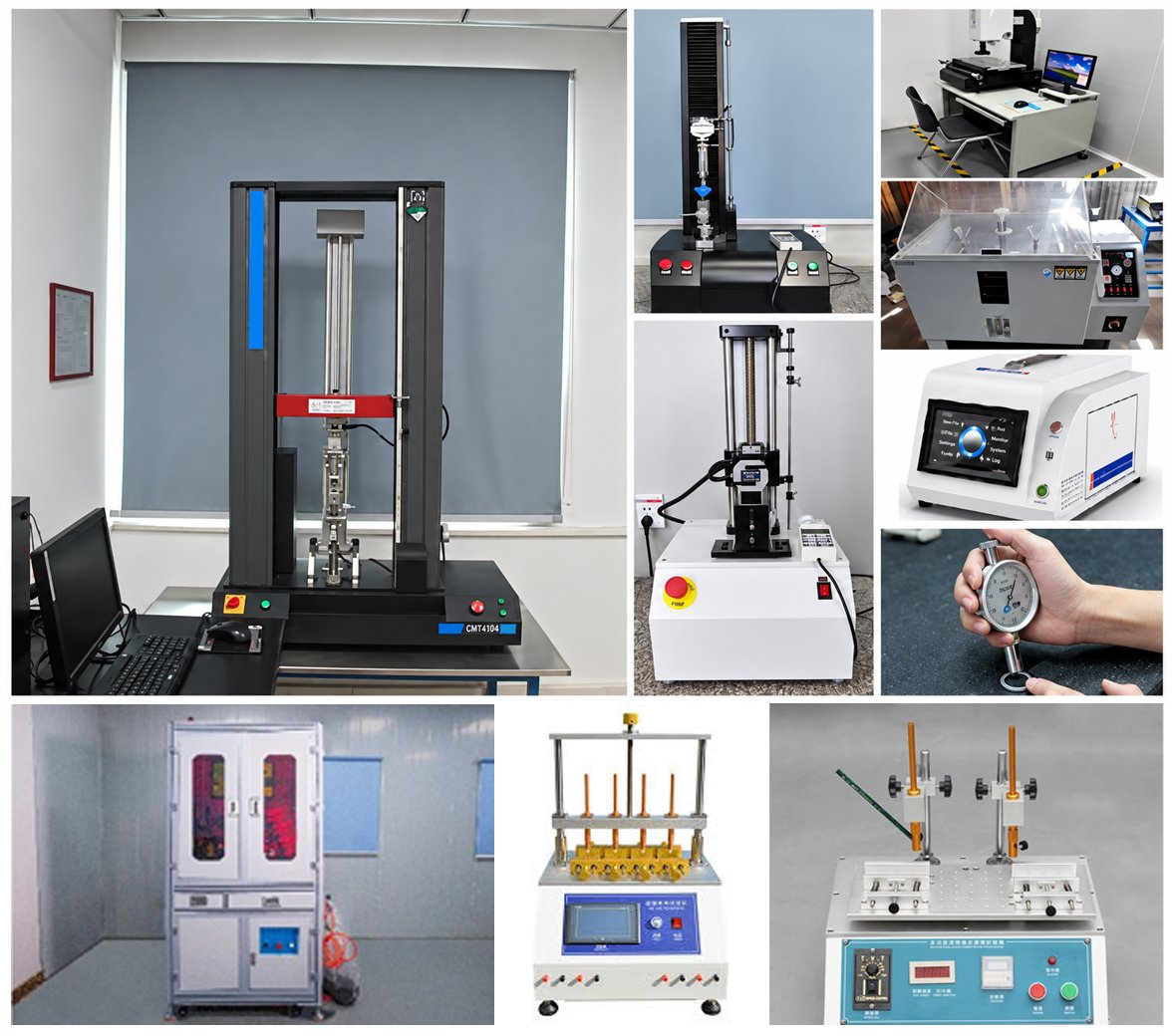
Fecision connects manufacturing review, precision tooling, sample verification, and approved production in one development workflow.
Review CAD, drawings, samples, and functional targets for thin walls, filling, demolding, sealing interfaces, and fatigue-sensitive regions.
Assess the silicone specification and existing sample features. Geometric reproduction alone cannot establish functional equivalence.
Produce samples for fit, leakage, pressure-volume, and recovery evaluation. Refine tooling and processing against the agreed results.
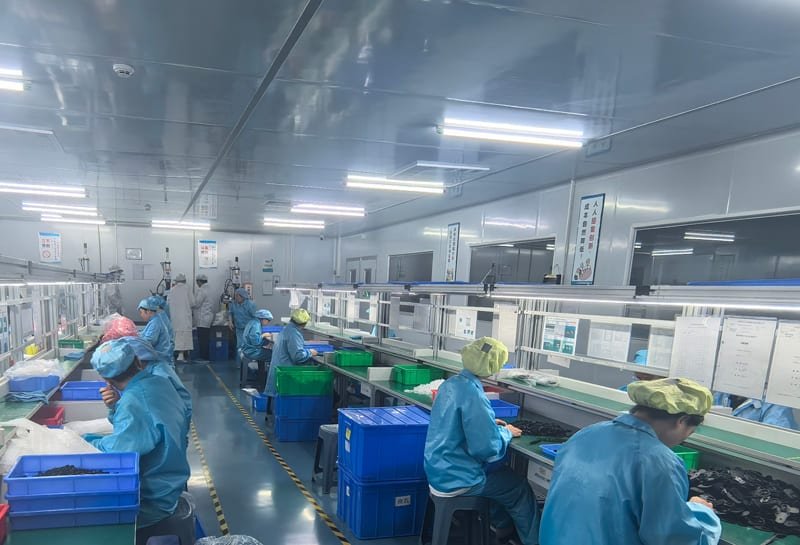
Manufacture to approved specifications and inspection requirements, with material traceability, packaging, and quantity confirmed.
Answers to common questions about custom molding, functional requirements, and quotation inputs.
We evaluate thin-wall designs for LSR injection molding or HCR compression molding. Feasibility depends on the target wall thickness, geometry, material, mold structure, and demolding requirements.
We control the silicone specification, molding and curing conditions, and critical dimensions. Components sensitive to pressure-volume behavior also need defined functional testing.
Sealing geometry, fitting tolerance, material compatibility, and assembly retention are reviewed together. Pressure-decay, pressure-hold, and repeated-cycle tests may be specified to verify the connection.
We support component manufacturing around a customer-defined compliance target. Material selection and geometry require functional verification, and final compliance must be evaluated in the assembled test lung under the intended conditions.
We can evaluate samples for measurement, material review, and tooling development. Functional equivalence needs additional verification because the original formulation and processing history may not be known.
Yes. The manufacturing option is reviewed against the design, tooling, material, and quantity. We can support new designs, existing bladder redesigns, and repeat production programs.
Send available 2D drawings, 3D CAD models, or sample information, plus material requirements, dimensions, and estimated quantity. Target volume, pressure, breathing frequency, compliance, connector dimensions, and service life are useful for performance-sensitive projects.
Send your drawing, sample information, material requirements, and estimated quantity. Fecision can review your component for DFM and quotation.