
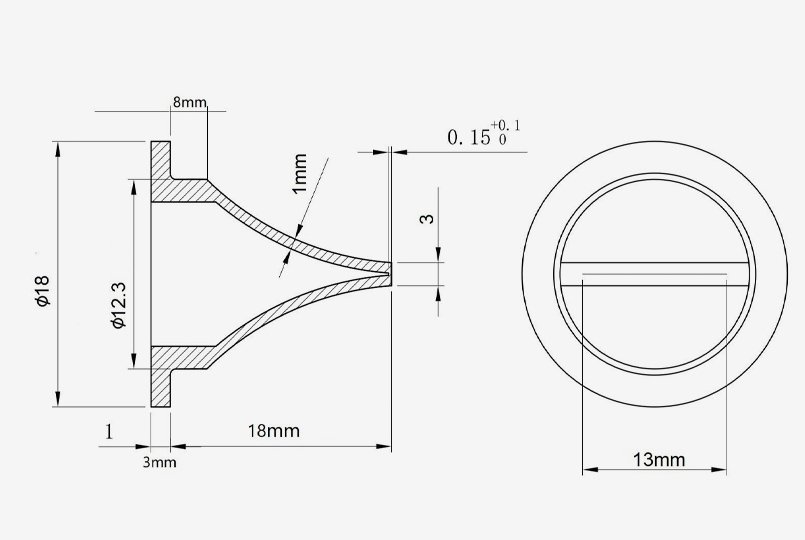
Silicone rubber tolerance is the allowable dimensional variation between the specified drawing dimension and the finished silicone rubber part.
Unlike metal or rigid plastic, silicone rubber is soft and elastic. It can shrink during curing, deform during demolding, and compress during measurement. Because of this, silicone rubber parts usually require a tolerance system designed specifically for rubber products.
A widely used reference is ISO 3302-1:2014 — Rubber — Tolerances for products — Part 1: Dimensional tolerances. For silicone rubber manufacturing, the most relevant sections are the tolerance classes for molded products and extruded products.
Why Silicone Rubber Tolerances Are Different?
The dimensional accuracy of a silicone rubber part is influenced by more than mold machining accuracy.
The main factors are:
- Material shrinkage: silicone changes dimension during curing and cooling.
- Elastic deformation: soft parts may stretch during demolding or compress during inspection.
- Part geometry: thin walls, long sealing lips, undercuts, and large flexible areas are harder to control.
- **Mold closure: dimensions crossing a mold parting line may be affected by flash and mold closing conditions.
- Process stability: mold temperature, cure time, pressure, and material consistency all affect repeatability.
For this reason, specifying extremely tight tolerances on every dimension can increase tooling and production cost without improving part function.
ISO 3302-1 Molded Rubber Tolerance Classes
For solid molded rubber products, ISO 3302-1 defines four tolerance classes:
| Class | Description | Typical Application |
|---|---|---|
| M1 | Precision molding | Critical dimensions requiring very close control |
| M2 | High-quality molding | Most engineered silicone rubber components |
| M3 | Good-quality molding | General molded rubber products |
| M4 | Non-critical molding | Dimensions with limited functional importance |
M1
M1 is the tightest tolerance class. It normally requires precision tooling, close control of the rubber compound and molding process, and more demanding inspection.
It should be used mainly for dimensions that directly affect sealing, assembly, or product function.
M2
M2 provides relatively tight dimensional control while remaining practical for normal production.
For many custom silicone rubber parts, M2 is an appropriate general tolerance, with tighter individual tolerances applied only to critical dimensions.
M3 and M4
M3 is suitable for general-quality molded parts, while M4 is intended for dimensions where close dimensional control is not required.
Fixed Dimensions (F) and Closure Dimensions (C)
ISO 3302-1 separates molded dimensions into fixed dimensions (F) and closure dimensions (C).
Fixed Dimension — F
A fixed dimension is mainly determined by the geometry of one mold section and is not significantly affected by mold closure.
Fixed dimensions can generally be controlled more accurately.
Closure Dimension — C
A closure dimension is affected by the relationship between different mold sections when the mold closes.
Flash thickness, mold alignment, and mold closure variation can influence this dimension. As a result, C tolerances are generally wider than F tolerances.
This distinction is especially important in compression molding.
ISO 3302-1 Molded Product Tolerance Table
The following table shows the tolerance values for molded rubber products. Dimensions are in millimeters.
| Nominal Dimension | M1 F | M1 C | M2 F | M2 C | M3 F | M3 C | M4 F/C |
|---|---|---|---|---|---|---|---|
| 0 to 4.0 mm | ±0.08 mm | ±0.10 mm | ±0.10 mm | ±0.15 mm | ±0.25 mm | ±0.40 mm | ±0.50 mm |
| >4.0 to 6.3 mm | ±0.10 mm | ±0.12 mm | ±0.15 mm | ±0.20 mm | ±0.25 mm | ±0.40 mm | ±0.50 mm |
| >6.3 to 10 mm | ±0.10 mm | ±0.15 mm | ±0.20 mm | ±0.20 mm | ±0.30 mm | ±0.50 mm | ±0.70 mm |
| >10 to 16 mm | ±0.15 mm | ±0.20 mm | ±0.20 mm | ±0.25 mm | ±0.40 mm | ±0.60 mm | ±0.80 mm |
| >16 to 25 mm | ±0.20 mm | ±0.20 mm | ±0.25 mm | ±0.35 mm | ±0.50 mm | ±0.80 mm | ±1.00 mm |
| >25 to 40 mm | ±0.20 mm | ±0.25 mm | ±0.35 mm | ±0.40 mm | ±0.60 mm | ±1.00 mm | ±1.30 mm |
| >40 to 63 mm | ±0.25 mm | ±0.35 mm | ±0.40 mm | ±0.50 mm | ±0.80 mm | ±1.30 mm | ±1.60 mm |
| >63 to 100 mm | ±0.35 mm | ±0.40 mm | ±0.50 mm | ±0.70 mm | ±1.00 mm | ±1.60 mm | ±2.00 mm |
| >100 to 160 mm | ±0.40 mm | ±0.50 mm | ±0.70 mm | ±0.80 mm | ±1.30 mm | ±2.00 mm | ±2.50 mm |
| >160 mm | ±0.3% | ±0.4% | ±0.5% | ±0.7% | ±0.8% | ±1.3% | ±1.5% |
Example
For a 30 mm fixed dimension:
- M1: ±0.20 mm
- M2: ±0.35 mm
- M3: ±0.60 mm
- M4: ±1.30 mm
If the same dimension is a closure dimension, the tolerance becomes wider.
Silicone Rubber Extrusion Tolerance Classes
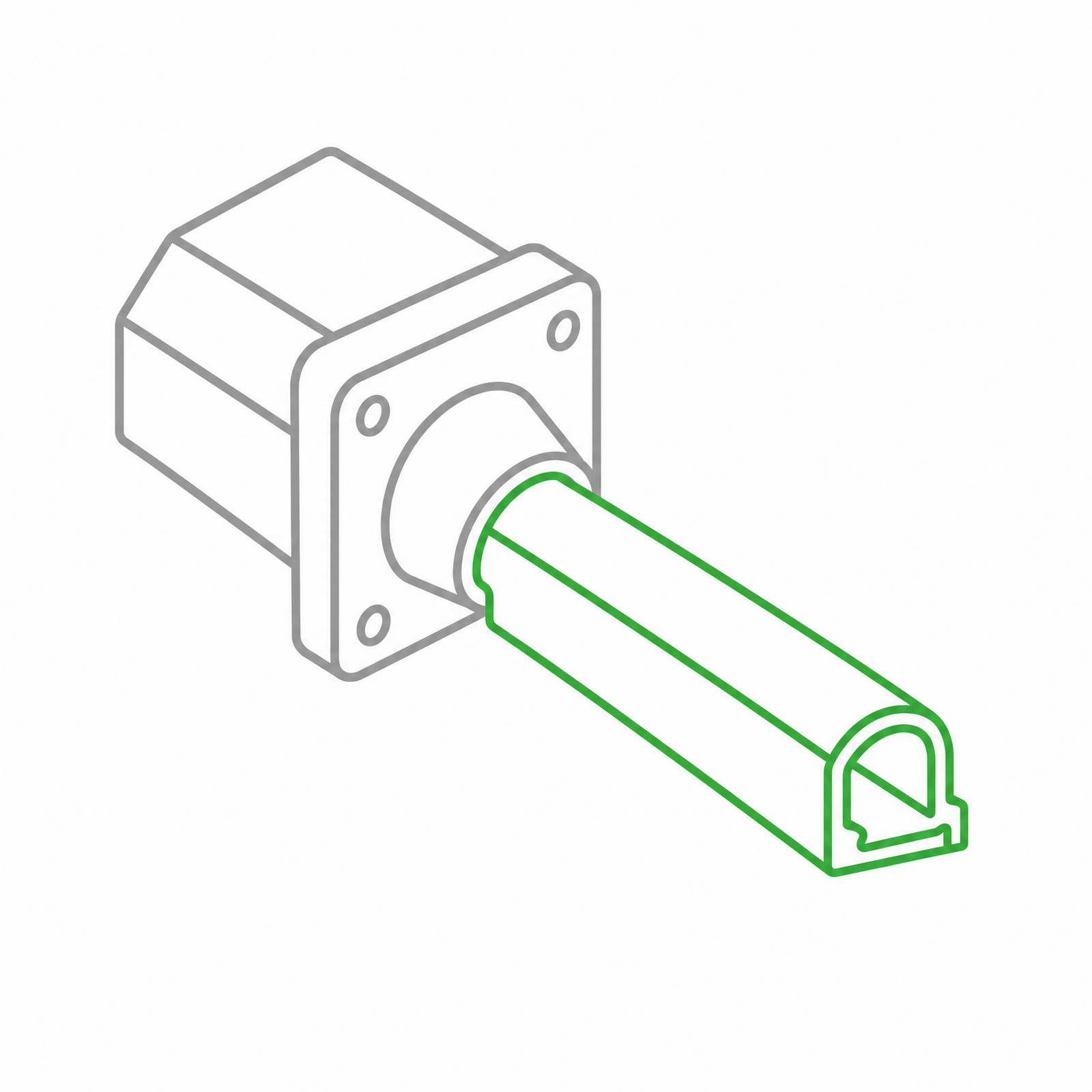
The M1-M4 classes are intended for molded products. Silicone rubber extrusion uses separate tolerance classes.
For unsupported extruded profiles, ISO 3302-1 uses:
- E1 — high quality
- E2 — good quality
- E3 — non-critical
| Nominal Cross-Section Dimension | E1 | E2 | E3 |
|---|---|---|---|
| 0 to 1.5 mm | ±0.15 mm | ±0.25 mm | ±0.40 mm |
| >2.5 to 4.0 mm | ±0.25 mm | ±0.40 mm | ±0.70 mm |
| >6.3 to 10 mm | ±0.40 mm | ±0.70 mm | ±1.00 mm |
| >16 to 25 mm | ±0.70 mm | ±1.00 mm | ±1.60 mm |
| >40 to 63 mm | ±1.00 mm | ±1.60 mm | ±2.50 mm |
| >100 mm | ±1.3% | ±2.0% | ±3.2% |
ISO 3302-1 also uses additional extrusion classes for specific dimensions, including:
- EN1 / EN2 / EN3 — internal dimensions of mandrel-supported extrusions
- L1 / L2 / L3 — cut length
- EC1 / EC2 / EC3 — thickness of cut sections
For silicone rubber tubing or complex extrusion profiles, ID, OD, wall thickness, cross-section, and cut length may therefore require different tolerance definitions.
How to Specify Silicone Rubber Tolerance
A practical drawing specification is to use a general tolerance class and separately identify critical dimensions.
For molded silicone rubber parts:
General tolerances: ISO 3302-1 Class M2 unless otherwise specified.
Critical sealing, mating, or assembly dimensions can then be individually toleranced where necessary.
For extruded silicone rubber products:
Extruded cross-section tolerances: ISO 3302-1 Class E2 unless otherwise specified.
Cut-length tolerance should be specified separately when required.
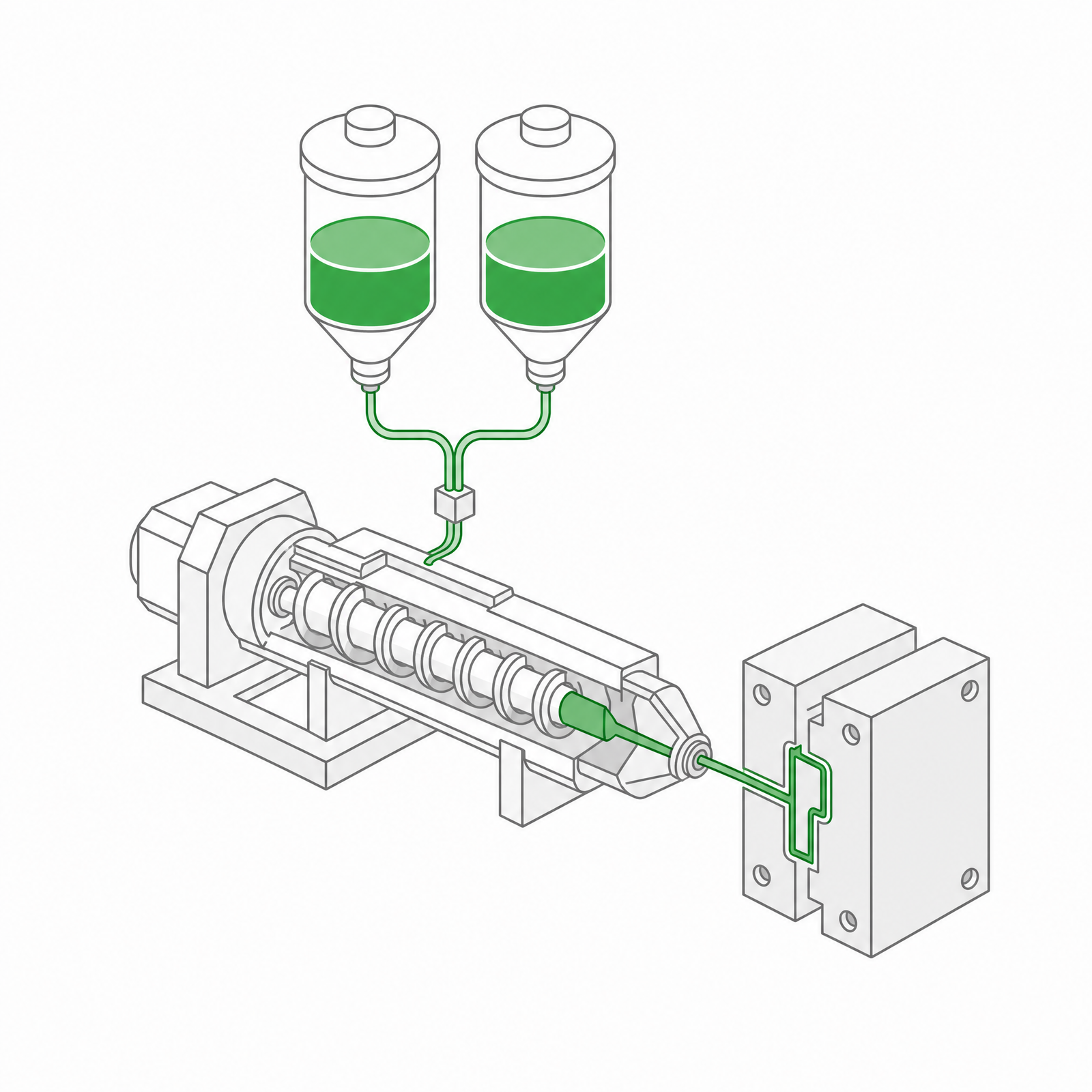 LSR Injection Molding
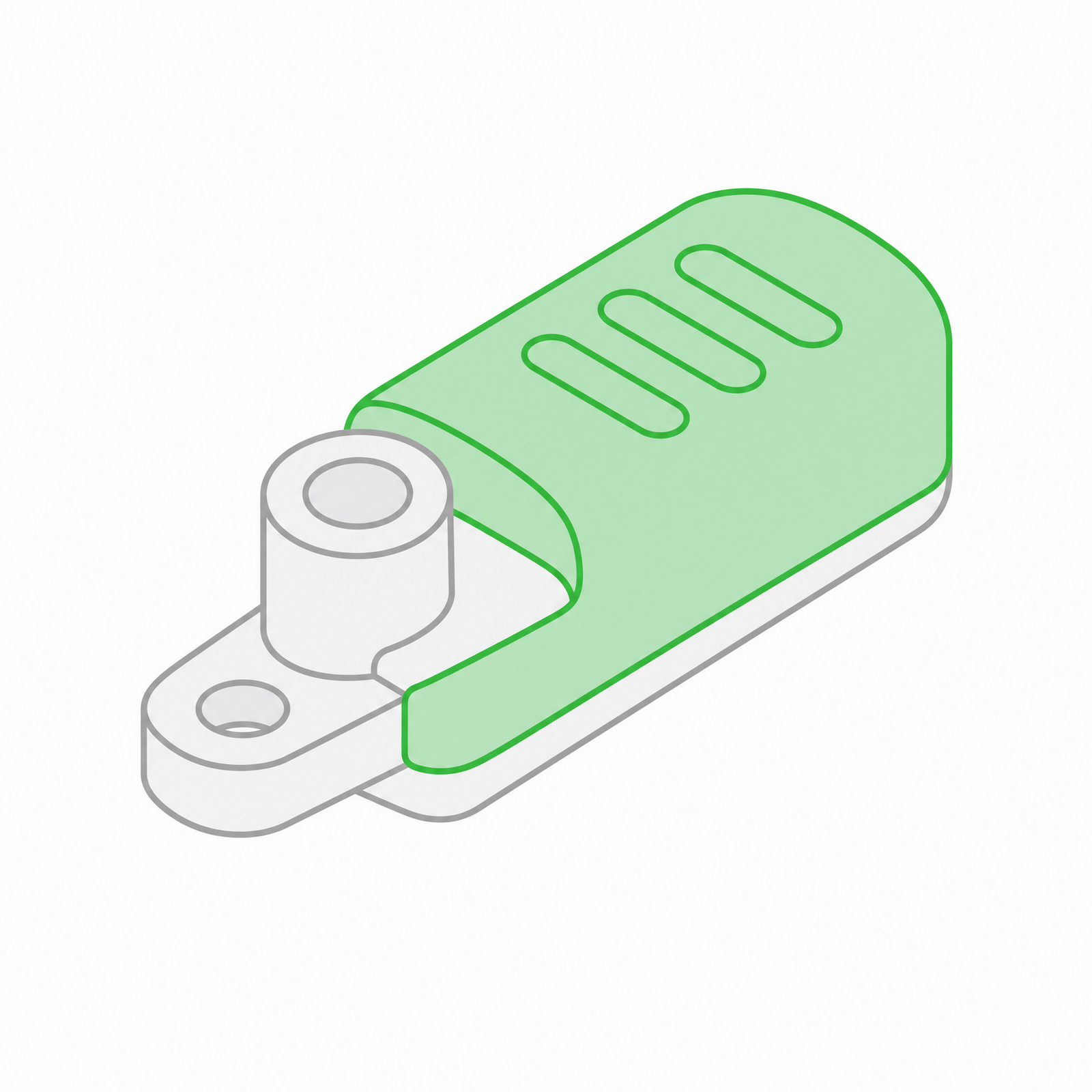 Silicone Rubber Overmolding
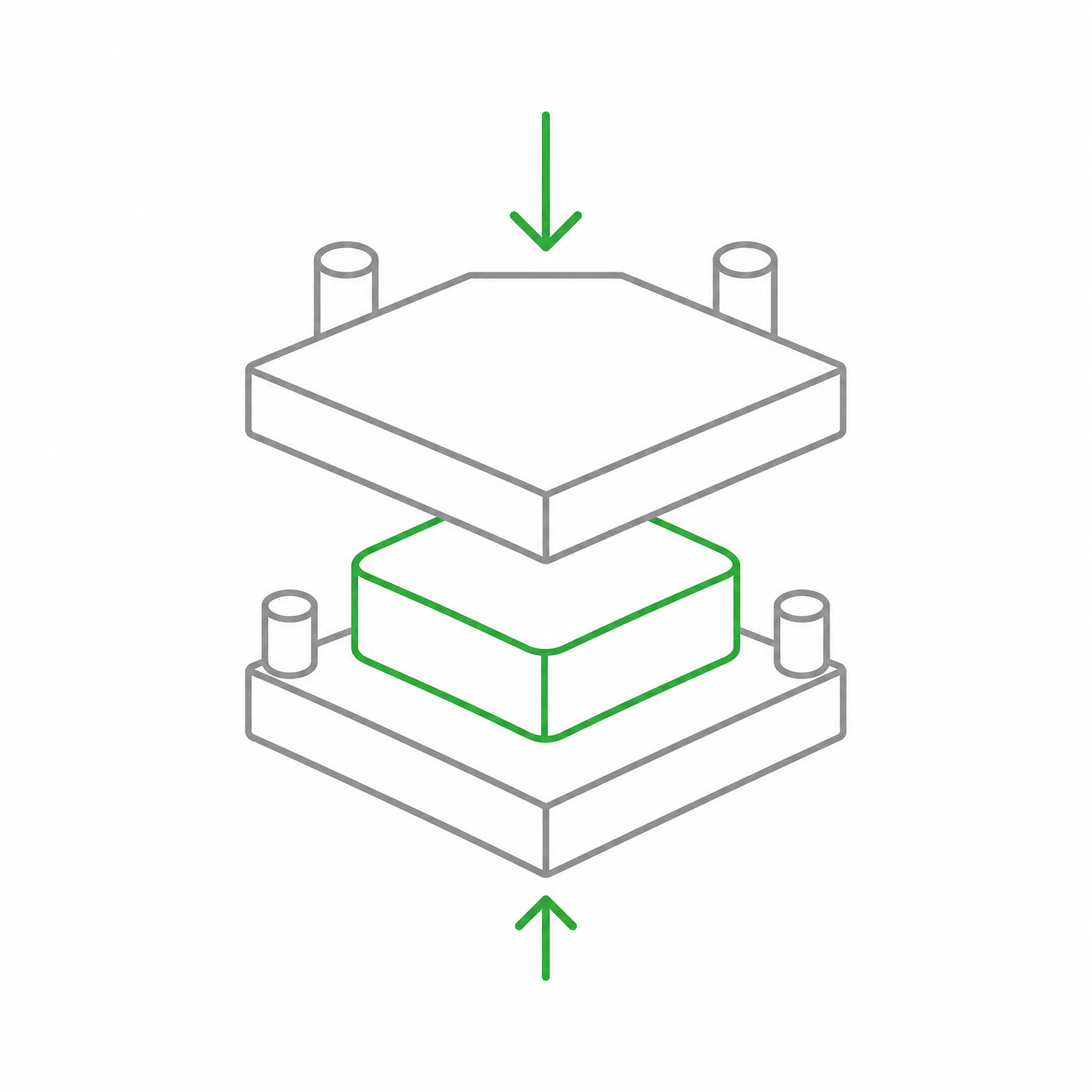 Compression Molding
 Silicone Rubber Extrusion
 In-house Tooling