

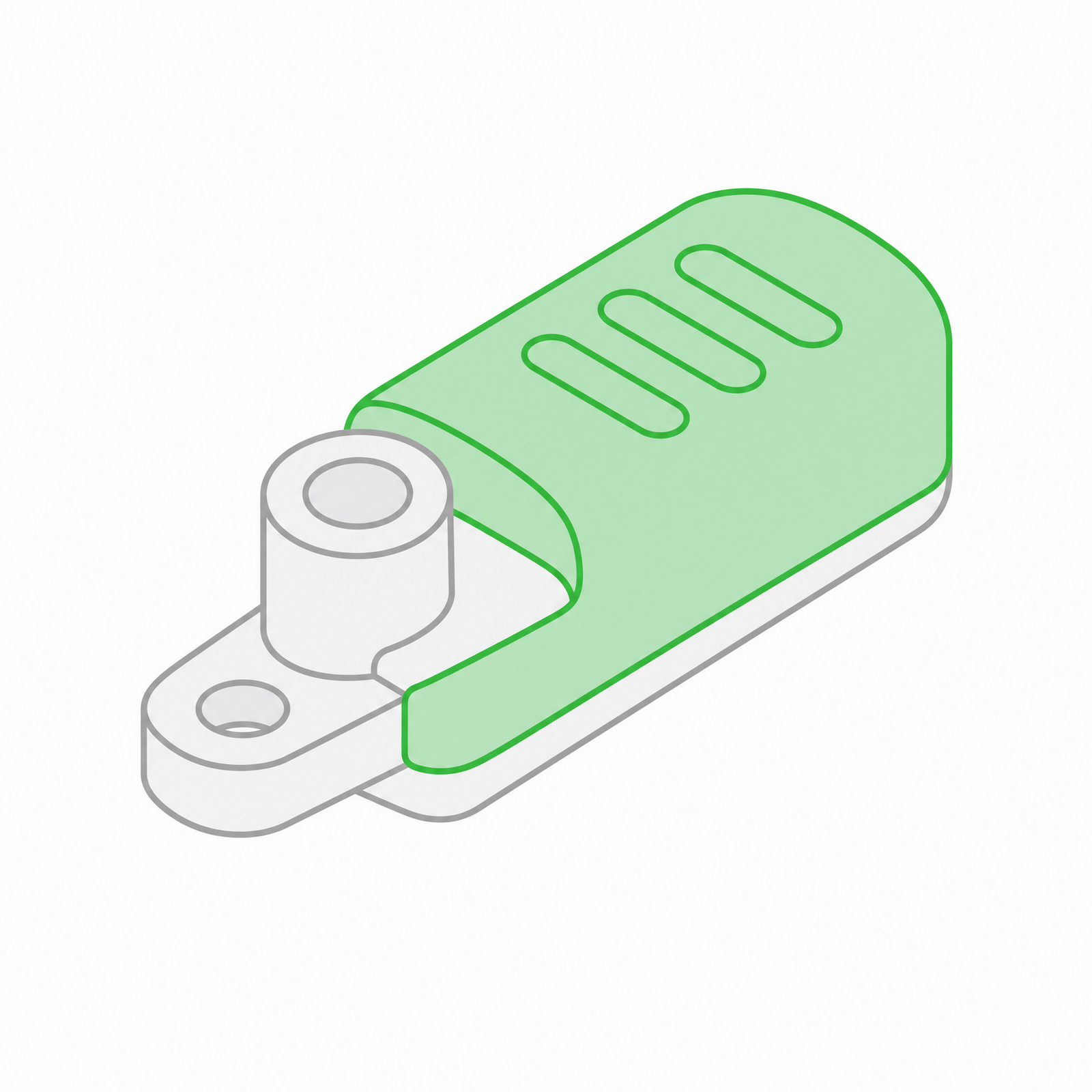
Silicone overmolding with magnets is used when magnetic attraction, positioning needs to be integrated directly into a soft molded component. Instead of assembling a magnet into a rigid housing after molding, the magnetic insert is placed into the mold and partially or completely encapsulated by silicone. This structure is increasingly useful in wearable electronics, magnetic sensor assemblies, medical devices and robotic tactile components because the silicone can provide sealing, cushioning, electrical isolation or controlled deformation while the magnet performs a separate magnetic function.
The manufacturing challenge is that a magnet cannot be treated like an ordinary metal insert. Its position and orientation may determine the magnetic response of the finished product, its surface coating affects silicone adhesion, and the heat used to cure silicone may reduce the magnetic strength of a pre-magnetized insert. Strong magnets can also interact with steel tooling during loading, making accurate placement more difficult.
Processes for Silicone Overmolded Magnets
The two main silicone molding routes are HCR compression molding and LSR injection molding. Both can be used to encapsulate magnetic inserts, but their production characteristics are different.
HCR Compression Molding
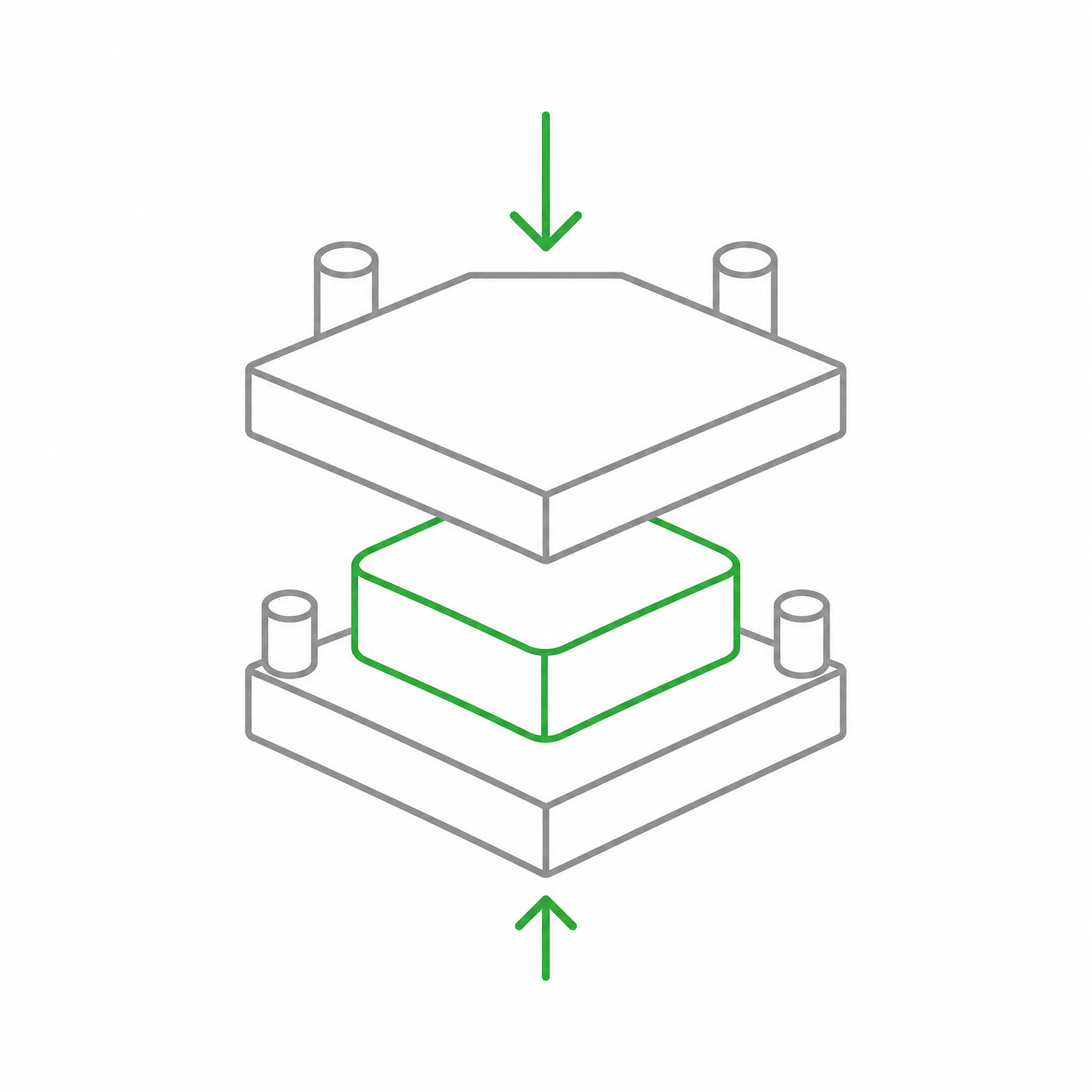
In an HCR process, high-consistency silicone rubber is mixed and prepared as a controlled preform. The magnetic insert is cleaned and, when bonding is required, treated using an appropriate surface-preparation or primer system. The insert is positioned in the mold before the silicone is loaded and cured under heat and pressure.
HCR compression molding is particularly practical for relatively large components, thicker silicone sections, prototype production and low-to-medium production volumes. During development, engineers can often adjust insert positioning, preform weight and local material distribution without building a highly automated insert-loading system.
It is therefore a useful process for products where the magnetic insert is large or the silicone geometry is substantial. When the magnet is located by properly machined mold features rather than manual placement alone, its final position can still be controlled within a defined tolerance.
LSR Injection Molding
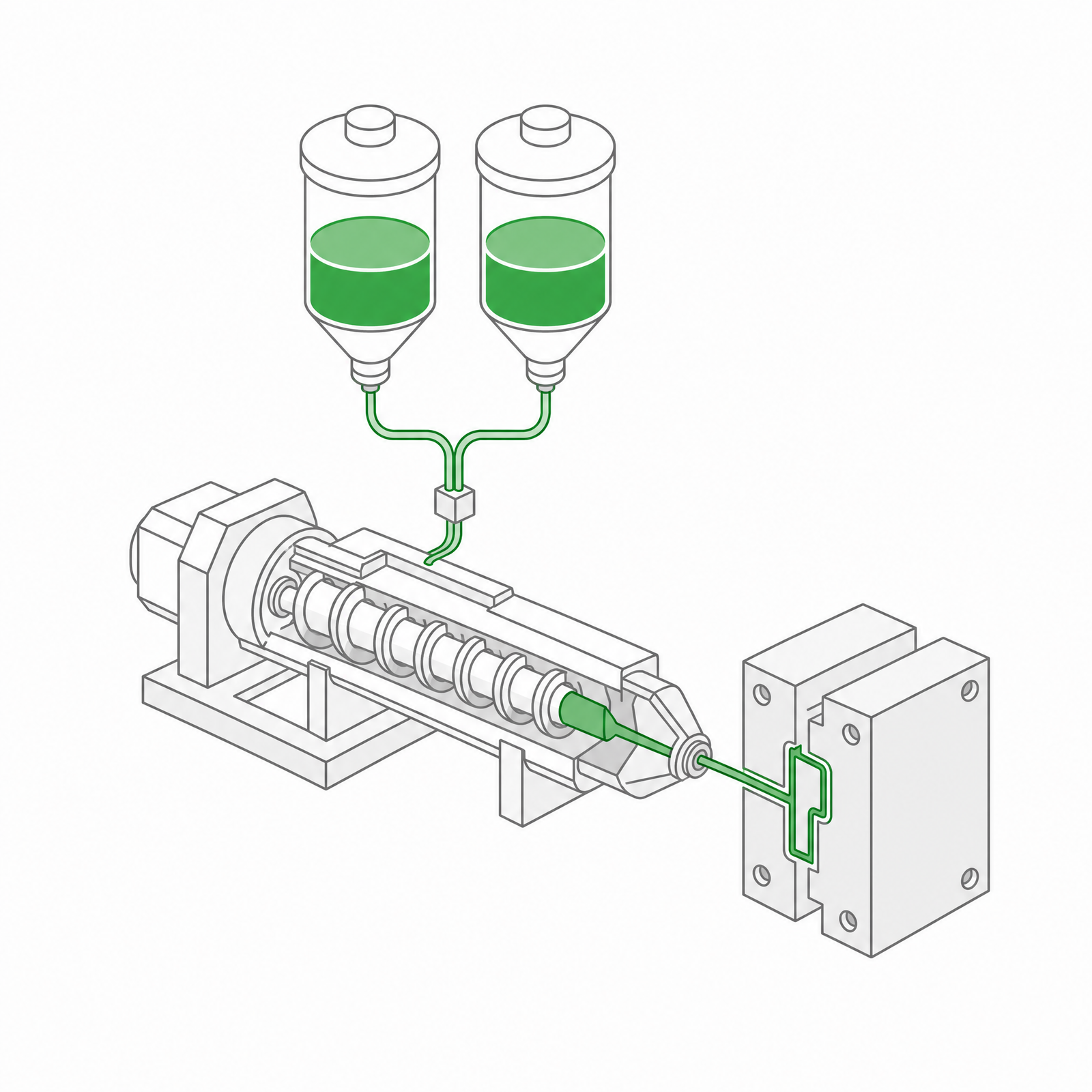
Liquid silicone rubber uses a two-component material that is metered, mixed and injected into a heated mold. The magnet is placed in the cavity before injection and must remain stable while the LSR flows around it and cures.
LSR becomes more attractive when the molded component is small, thin or geometrically detailed, particularly when production volume justifies multi-cavity tooling and automated insert handling. Wearable components, miniature sensor structures, medical assemblies and robotic sensing parts are typical examples.
The process can provide good repeatability. For small parts, a magnet location tolerance about ±0.05 mm can be possible.
Post Mold Magnetization of Overmolded Magnets
A common process sequence is to mold an unmagnetized magnetic blank and magnetize the finished silicone component afterward.
The first reason is handling. Silicone molds are normally made from steel. A strong permanent magnet placed close to the tooling can be pulled toward nearby steel surfaces rather than remaining in its locating feature. When several magnets are installed in one part, the magnets may also attract or repel each other during loading.
An unmagnetized NdFeB blank is still a ferromagnetic material, but it does not carry the strong permanent field of the finished magnet. This makes mold loading, positioning and demolding considerably easier.
The second reason is thermal. Silicone curing requires elevated mold temperatures. Depending on magnet material and grade, this thermal exposure can reduce the magnetic strength of an already magnetized insert. By molding the magnetic material before final magnetization, the manufacturer avoids having to preserve the magnet’s full initial magnetic state through the curing process.
After molding, the entire silicone-magnet assembly can be placed inside a magnetizing coil. Silicone is non-magnetic and does not act as a conventional magnetic shield, so an embedded magnet can generally be magnetized through the surrounding elastomer if the magnetizing fixture can generate the required field at the insert.
Two temperatures are particularly important, they are the maximum operating temperature of the selected magnet grade and its Curie temperature. They describe different physical limits and should not be used interchangeably.
The maximum operating temperature is the practical temperature above which a magnet may experience an unacceptable irreversible loss of magnetic output under the specified magnetic-circuit conditions. It is not a universal number for all magnets made from the same material. Magnet grade, geometry, length-to-diameter ratio, surrounding steel and other parts of the magnetic circuit all affect the real limit.
Curie temperature is a much more fundamental material property. Around this temperature, the ferromagnetic material loses the magnetic ordering that allows it to behave as a permanent magnet.
This distinction matters because silicone mold temperatures may overlap with or exceed the recommended operating temperature of standard magnet grades even though they remain far below the material’s Curie temperature.
| Magnetic material | Approx. Curie temperature | Maximum operating temperature |
|---|---|---|
| Sintered NdFeB | 310°C | 80–230°C |
| Bonded NdFeB | 360°C | 80–150°C |
| SmCo 1:5 | 727°C | About 250°C |
| SmCo 2:17 | 825°C | About 300°C |
| AlNiCo | About 890°C | 450–550°C |
| Ferrite / ceramic | About 460°C | About 250°C |
These figures are useful for comparison, but they should not be used directly as molding-process limits. The exact allowable temperature must come from the selected magnet grade and magnetic design.
A magnet that has suffered some irreversible magnetic loss from thermal exposure may often be restored by remagnetization if the magnetic material itself has not been permanently damaged. This is one reason post-mold magnetization works well for many overmolding projects.
Heating near or beyond the Curie region is a different situation. At that point, the magnetic ordering of the material is lost. Whether the component can subsequently be restored to its original specification depends on the material, thermal history and whether the magnet has also suffered oxidation or other irreversible material changes. For manufacturing purposes, reaching this region should not be treated as an acceptable process followed by routine remagnetization.
Complete Encapsulation
This is a two-stage molding strategy. The first molding operation establishes and locates the insert, while the second closes the remaining support area so the magnet becomes completely surrounded by silicone.
Complete encapsulation is especially useful for soft silicone parts, wearable products and other applications where a loose magnet would create a reliability or safety problem.
Silicone-to-Magnet Adhesion
A neodymium magnet is rarely presented to the silicone as bare NdFeB. The magnet may have nickel-based plating, zinc coating, epoxy protection or another surface system.
The molding supplier is therefore bonding silicone to the magnet coating. That distinction affects surface preparation and primer selection. Oil, fingerprints, plating residue and contamination can reduce bond strength, so controlled cleaning is normally required. Depending on the coating and silicone chemistry, additional plasma treatment or a silicone-to-metal primer may be used.
Silane-based adhesion promoters can also be useful. These treatments modify the interface so that the curing silicone can form a stronger chemical interaction with the treated surface. The exact bonding mechanism depends on the magnet coating, adhesion promoter and silicone cure chemistry, so a silane primer should not be assumed to work equally well with every magnetic insert.
This is particularly important with platinum-cured LSR because incompatible chemicals or contaminants can interfere with curing at the interface.
Applications of Silicone Overmolded Magnets
Silicone overmolding becomes most valuable when the magnet and elastomer perform complementary functions. The magnet can provide holding force or a measurable magnetic field while the silicone provides sealing, cushioning, human contact or controlled deformation.
Consumer Electronics
Wearable and consumer electronic products often require magnetic retention without exposing a hard magnet surface directly to the user. Typical examples include magnetic watchband components, wearable-device closures, charging interfaces, TWS earphone structures, AR/VR components and magnetic accessory interfaces.
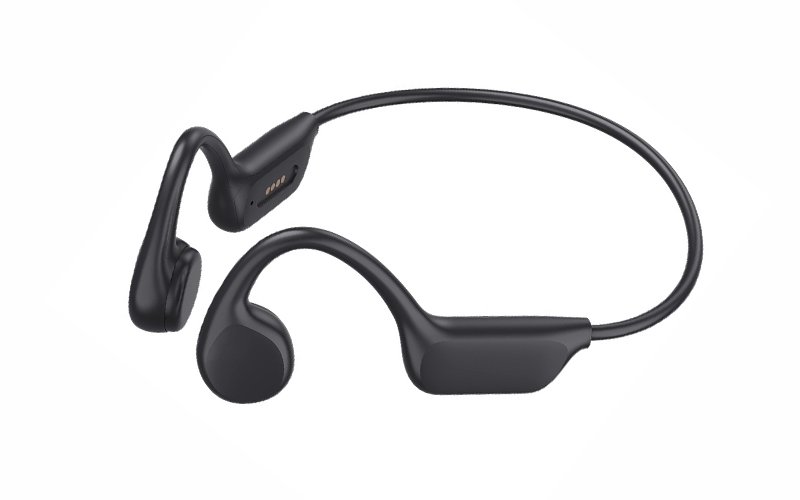
The silicone can create a soft contact surface and integrate sealing or cushioning features into the same molded component. At the same time, the embedded magnet can provide attachment, alignment or position sensing.
The embedded magnet may also sit close to a charging coil, Hall sensor or another magnetic component, so insert position and polarity often need tighter control than in a simple mechanical closure.
Silicone encapsulation can also remove an exposed assembly interface and contribute to environmental sealing. It does not, by itself, guarantee an IP67 or IP68 rating. Waterproof performance must be evaluated at finished-assembly level.
Robotic Tactile and Perception Fingers
Robotic tactile fingers are one of the more technically interesting uses of silicone overmolding with magnets because the molded structure itself becomes part of the sensing system.
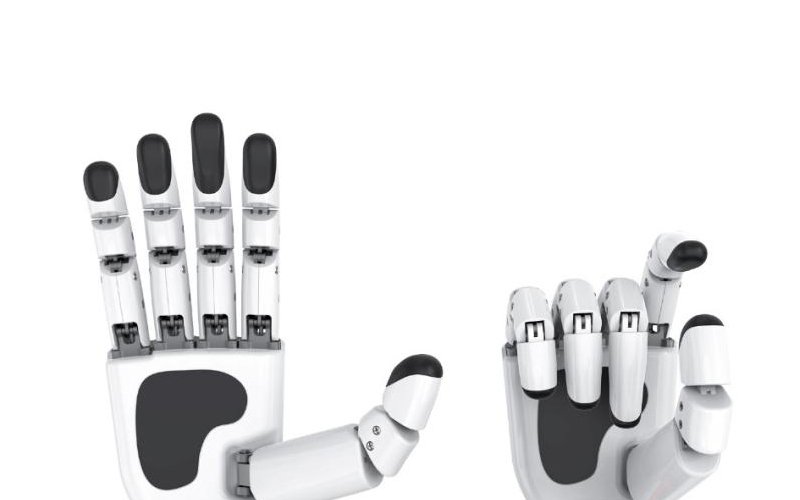
A magnetic tactile sensor can place a small permanent magnet inside a deformable silicone fingertip, with a Hall-effect or magnetic-field sensor positioned beneath it. When the fingertip contacts an object, the silicone deforms and the embedded magnet moves relative to the sensor.
The sensor measures the resulting change in magnetic field. With appropriate calibration, this change can be used to estimate normal force, shear loading, contact direction or other tactile information.
 LSR Injection Molding
 Silicone Rubber Overmolding
 Compression Molding
 Silicone Rubber Extrusion
 In-house Tooling