
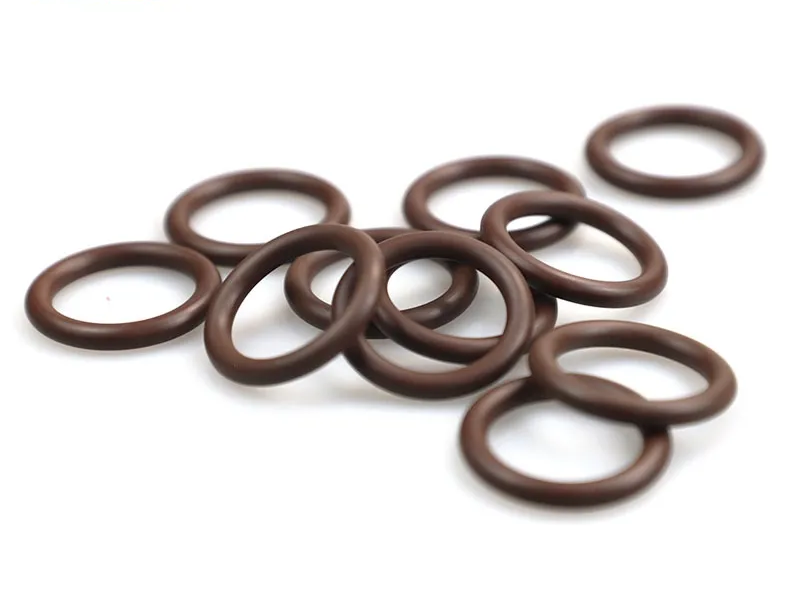
Selecting O-rings for semiconductor equipment starts with the seal location, process chemistry and temperature. FKM can serve many conventional vacuum positions. Plasma-resistant FFKM grades are used where aggressive process exposure exceeds the capability of FKM. EPDM is commonly considered for compatible cooling-water circuits.
During preventive maintenance, or PM, a technician may identify a white ring as FFKM and reject a black ring as ordinary fluoroelastomer. That shortcut can put the wrong compound into a chamber. Black FFKM and colored FKM both exist. Fillers, pigments and the rest of the formulation determine the appearance, so color does not establish the polymer family, purity or plasma resistance.
Before installation, check the replacement part number, compound designation, dimensions and specification revision against the approved parts list. Even two FFKM rings of the same size can have different temperature, contamination and plasma-performance limits.
What Semiconductor O-Rings Must Resist
CVD, etch and PVD equipment place seals in different environments. A chamber-lid seal, a shielded valve seal and a process cooling water seal can be on the same tool while requiring different compounds. The operating conditions at each position establish the material requirement.
Vacuum and Pressure Differential
A chamber may operate at millitorr pressures while the outside remains near atmospheric pressure, approximately 760 Torr. The seal must maintain contact across this pressure difference during pump-down, processing and venting.
Vacuum performance also involves gas permeation through the rubber and outgassing from the compound. A joint can pass a leak check yet still release moisture or other volatile species that delay pump-down. Material formulation, cleaning, conditioning and surface finish therefore matter alongside groove geometry.
Process and Cleaning Chemistry
The exposure record should include both deposition or etch gases and the cleaning recipe. Examples include silane, ammonia, nitrous oxide and TEOS in deposition processes, and NF3, CF4 or SF6 in fluorine-based processes or chamber cleaning.
Plasma activation produces reactive species, including fluorine radicals. A seal protected during deposition may encounter these species during a clean. A seal downstream of a remote plasma source can also experience radical attack even when it is outside the visible plasma region.
Temperature at the Seal
Use the temperature at the O-ring groove throughout processing, cleaning, bakeout and cooling. A CVD heater may operate at several hundred degrees Celsius while a cooled chamber flange remains much cooler. The heater or wafer setpoint therefore cannot be used directly as the seal temperature.
Record continuous temperature, peak temperature and the duration of each peak. Thermal cycling changes both the rubber properties and the available groove space. A material that seals while hot may leak during cooling if it has lost recovery force.
Direct Plasma and Particle Generation
Direct plasma exposure adds energetic-particle bombardment to chemical attack. Remote plasma and downstream positions can be dominated more by reactive radicals. These exposures can produce different erosion rates in the same compound.
Seal position and shielding affect the exposure, but the compound also changes the result. Particle generation, surface recession, cracking and outgassing must be considered with leakage. An O-ring can contaminate the process before it develops a measurable leak.
FKM, FFKM and EPDM for Semiconductor Equipment
FKM (fluoroelastomer), FFKM (perfluoroelastomer) and EPDM (ethylene propylene diene rubber) identify elastomer families. The finished compound also includes a cure system and other formulation ingredients. A trade name or a general material label cannot replace the exact compound designation.
The ranges below are useful for initial screening. They describe typical material capabilities, with selected higher-temperature grades identified separately. The approved compound specification establishes the working range for a particular seal.
| Material | Temperature Reference |
|---|---|
| FKM | Around -20 to 200°C |
| FFKM | Upper limits around 260 to 300°C |
| EPDM | Around -40 to 150°C |
Selected FKM grades permit higher temperatures or limited excursions toward 250°C. Selected FFKM grades reach 320 to 327°C, while their low-temperature limits vary by grade. Selected EPDM water or steam grades have different limits from the common screening range.
FKM O-rings
FKM O-rings combine heat resistance with resistance to many oils, fuels and chemicals. Suitable low-outgassing compounds can serve conventional vacuum joints where the gas chemistry and temperature remain within their limits.
Standard FKM has limitations with prolonged hot water or steam, certain polar solvents, and aggressive plasma exposure. A material selected for a pump-side oil seal does not automatically suit a chamber seal that sees radicals, ammonia or cleaning chemicals.
FFKM O-rings
The fully fluorinated polymer structure of FFKM provides broad chemical resistance and supports demanding thermal service. Semiconductor compounds are further formulated for properties such as low metal content, low outgassing and reduced erosion.
These properties do not rise together in every grade. One compound may emphasize high-temperature recovery, another low particle generation in a particular plasma. Compare erosion and particle results under relevant chemistry and exposure conditions, together with thermal and sealing-force data.
FFKM generally costs substantially more than FKM. A fixed price multiplier is unreliable because compound, size, cleanliness, processing and order volume all affect cost. For a critical chamber seal, compare replacement cost with maintenance frequency, lost tool time and contamination risk.
EPDM O-rings
EPDM is often a practical option for water, compatible glycol coolants and selected steam service. In process cooling water, or PCW, circuits, confirm the coolant composition, treatment chemicals, temperature and cleaning procedure.
Petroleum oils and hydrocarbon fuels are generally unsuitable for EPDM. Ordinary cooling-water grades require separate qualification for fluorine-plasma service.
FKM can be appropriate for some low-temperature water circuits, but it should not be treated as interchangeable with EPDM for hot water or steam. The cooling fluid and its additives determine which compound is suitable.
Selecting O-Rings for Fluorine Plasma and Heat
For an elastomer seal exposed to aggressive fluorine radicals or direct plasma, select a semiconductor-grade, plasma-resistant FFKM supported by data for the actual recipe and seal position. Retain an existing equipment-qualified compound unless a replacement has passed the required qualification.
In FKM, carbon-hydrogen-containing segments in the partially fluorinated polymer and other compound ingredients provide sites for chemical attack. Fluorine radicals can degrade the polymer system. The damage can appear as surface hardening, cracking or powdering, with loss of strength and elastic recovery. As the sealing surface deteriorates, particle release can increase and the chamber may struggle to reach or hold its specified base pressure.
The fully fluorinated base polymer in FFKM removes many of these hydrogen-containing attack sites. Its crosslinks and other ingredients can still be affected, and ion bombardment can erode the surface. A plasma-resistant FFKM grade can extend service under an exposure that damages standard FKM, but the life must be established for that recipe and seal position.
The presence of NF3 in a gas line does not establish the same exposure as an O-ring downstream of activated NF3 plasma. Record whether the seal contacts the feed gas, radicals, direct plasma or reaction by-products. For a shielded position, confirm how effectively the shield limits exposure during the full process and cleaning sequence.
Temperature is then checked against the selected compound. Prolonged heat can alter the polymer chains and crosslink network, while oxygen exposure can add oxidative aging. Compression set can increase and sealing force can fall. A removed ring may retain a flattened cross-section instead of recovering, and the installed seal may lose contact when the joint cools or moves, even without plasma attack.
Compression set testing helps compare dimensional recovery after heat and loading. Stress-relaxation testing addresses the force retained while the seal remains compressed.
At a measured seal temperature above about 200°C, ordinary FKM is approaching or exceeding its usual continuous-service range. This calls for a grade-specific thermal review and often an FFKM candidate. It does not mean that every FFKM grade can operate at 300°C, or that every brief excursion above 200°C automatically requires the same replacement.
For a cool, shielded vacuum flange with compatible chemistry, a qualified FKM may provide the required service. For a compatible cooling-water joint, EPDM may be sufficient. Material cost can be controlled by assigning compounds to the conditions at each seal position.
O-Ring Squeeze and Installation During PM
An O-ring creates contact pressure when its cross-section is compressed between the groove and the mating surface. Insufficient squeeze can leave a leak path. Excessive squeeze increases assembly load, restricts space for thermal expansion or swelling, and can accelerate permanent deformation or damage.
For a simple static face seal, the nominal calculation is:
Squeeze (%) = [(d - h) / d] x 100
Here, d is the O-ring cross-section and h is the closed gland height. A 3.53 mm cross-section compressed to 2.65 mm has approximately 24.9% nominal squeeze.
Around 20% to 30% can be an initial design range for many static vacuum face seals. The equipment drawing and compound guidance establish the actual target. Radial seals, moving valve seals and small cross-sections can require different values.
For a static face seal designed around 20% to 30% squeeze, an installed value below about 15% can leave inadequate contact pressure and allow microleakage. Squeeze above roughly 30% to 35% can produce excessive stress, poor recovery and early damage, particularly when heat or swelling further fills the groove. These values are review points rather than universal failure thresholds. Geometry, hardness, cross-section and operating conditions establish the allowable range.
Calculate minimum and maximum squeeze using the cross-section and gland-depth tolerances. Also account for stretch-induced cross-section reduction, groove fill, thermal expansion and chemical swelling. Switching from FKM to FFKM at the same nominal size can require a fresh groove review because hardness, compression force and thermal behavior may change.
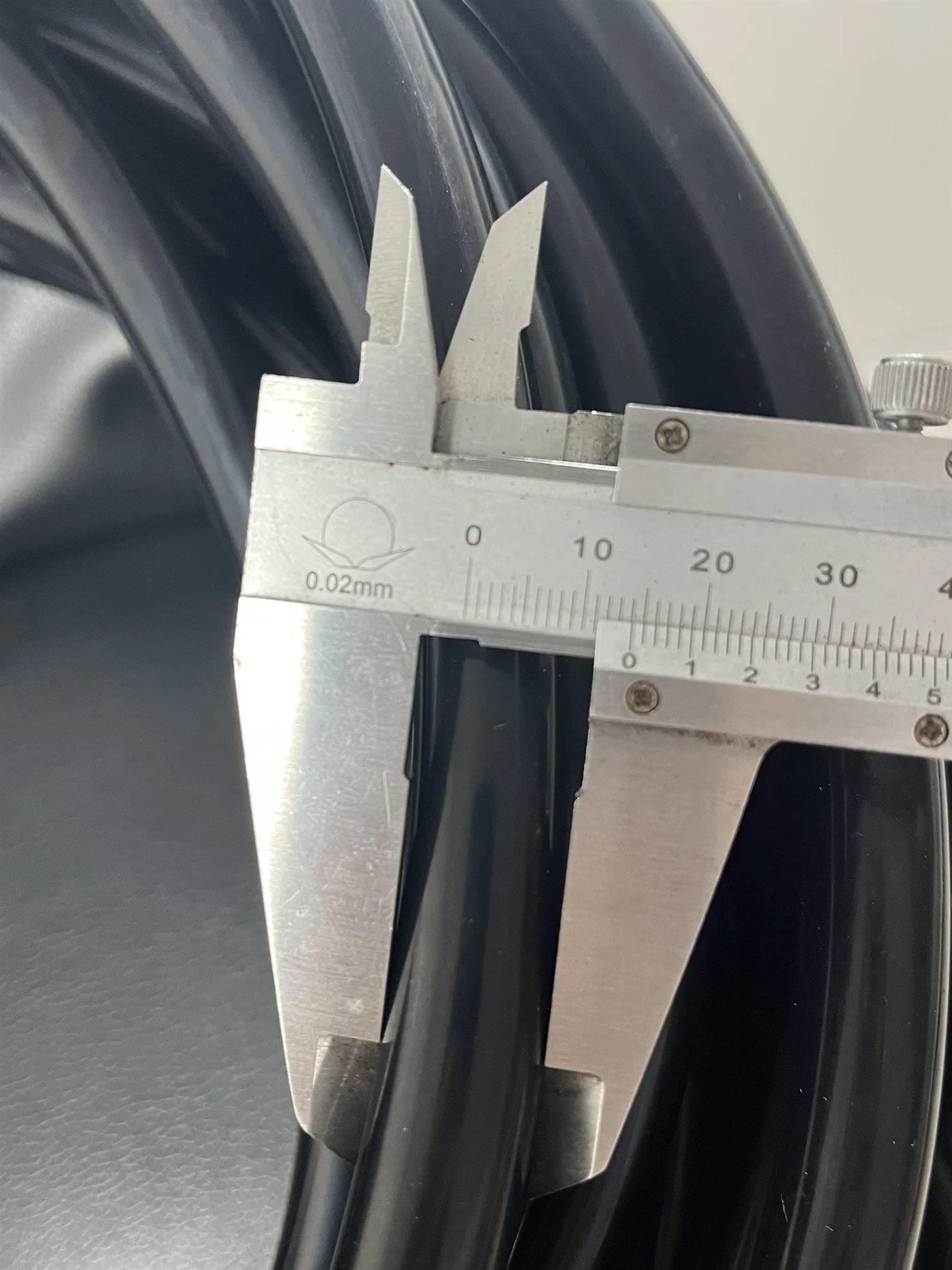
During PM, old rubber or process deposits left in the groove change the local gland height and squeeze. Particles can also hold mating surfaces apart or cut the replacement seal. Clean the groove and inspect the sealing faces before fitting a ring with the specified cross-section and inside diameter. A ring that is too thin reduces squeeze, while one that is too thick can overfill the gland. A thicker ring should not be used to compensate for a damaged groove.
Install without twisting, rolling or overstretching the ring. A twisted cross-section creates uneven contact and concentrated stress that can lead to early cracking. Protect the seal from sharp edges and close the joint evenly to its specified position or torque. Use the specified cleaning and lubrication procedure because excess lubricant can add contamination and outgassing.
A rising base pressure after PM can also come from contamination, outgassing or another vacuum-system fault. Use the specified leak check and pump-down procedure to locate the problem before changing the material.
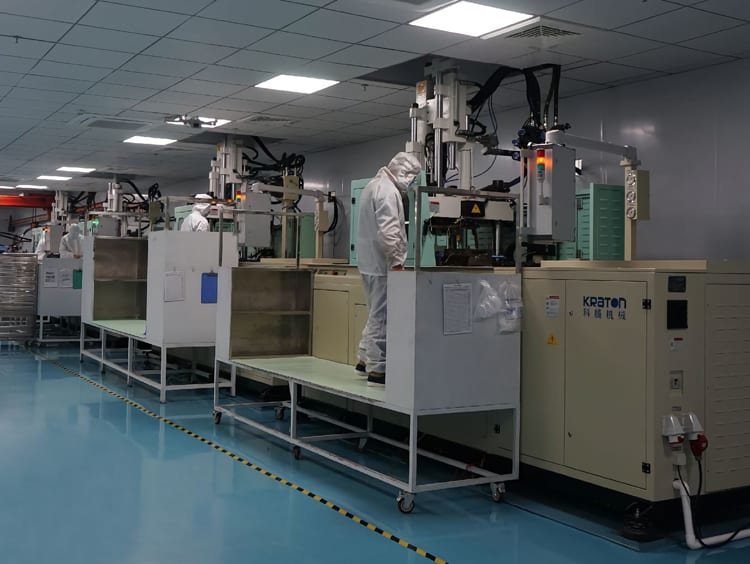 LSR Injection Molding
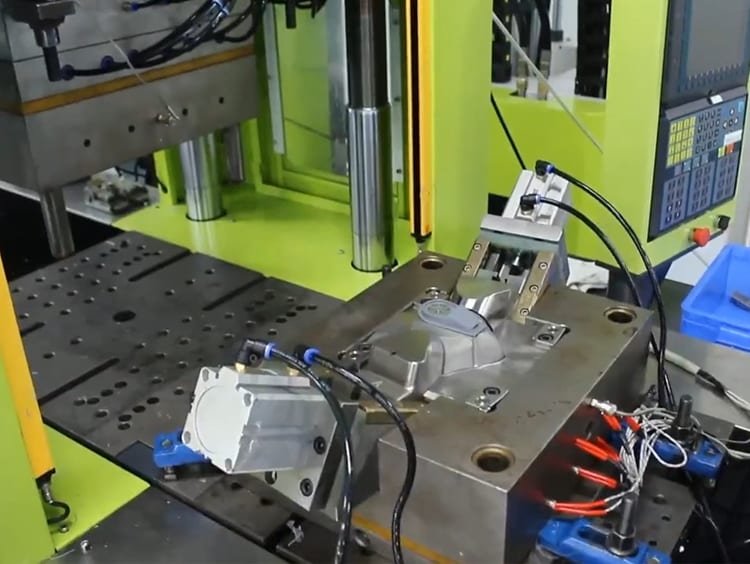 Silicone Rubber Overmolding
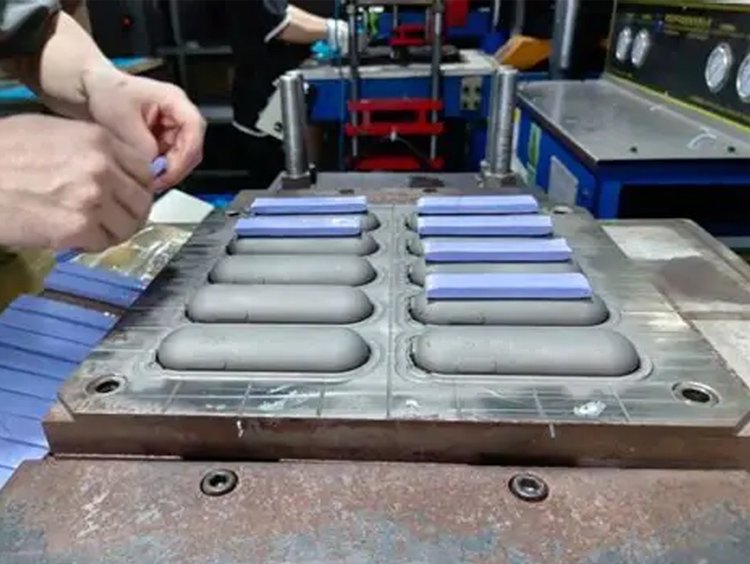 Compression Molding
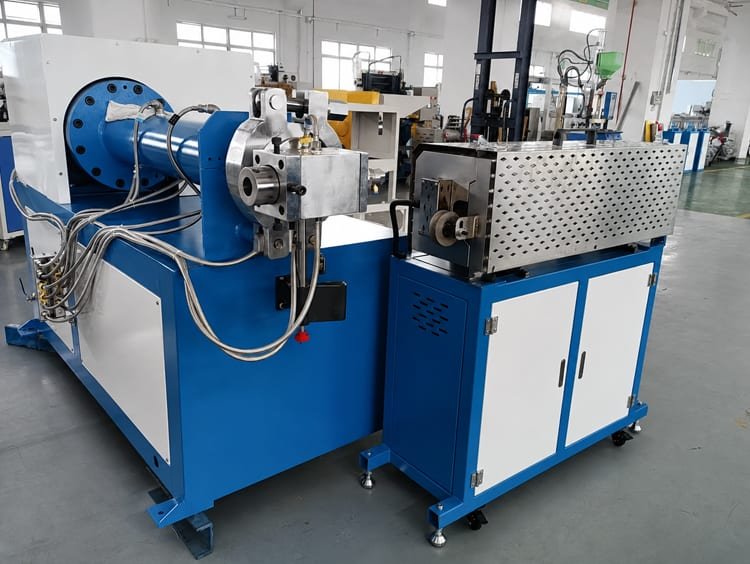 Silicone Rubber Extrusion
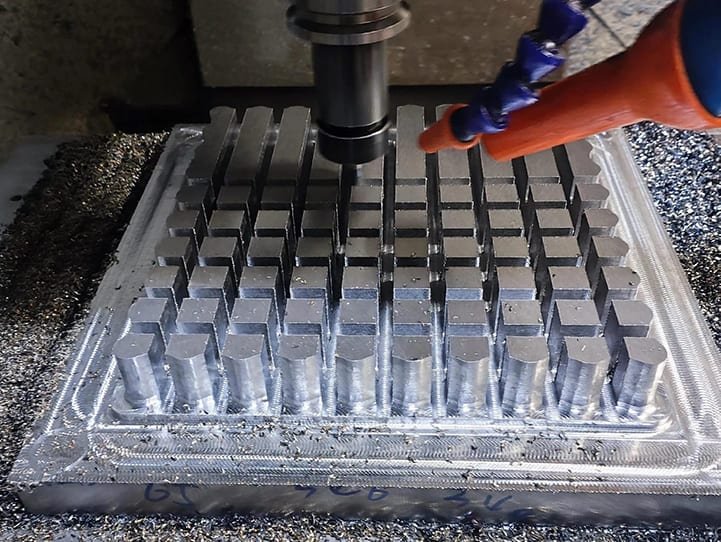 In-house Tooling