
Silicone to metal overmolding combines a rigid metal insert and molded silicone rubber into one component. The metal typically provides structural strength, threads, electrical conductivity, dimensional stability or a mounting interface, while the silicone provides sealing, insulation, cushioning, grip, strain relief or elastic movement. Typical parts include silicone-covered surgical and instrument handles, metal-supported diaphragms, sealed sensor components, connector inserts, valve parts, threaded inserts and metal-reinforced seals.
The basic process is straightforward: the metal insert is placed into the mold and silicone is molded around selected areas. Production becomes more demanding when the insert must remain within a tight positional tolerance, electrical contacts or threads must remain completely free of silicone, or the silicone-to-metal joint must survive temperature cycling, humidity, vibration, repeated movement or chemical exposure. For these parts, the metal alloy, final surface condition, silicone grade, bonded area, exposed area and service loads should be defined before tooling begins.
What is Silicone to Metal Overmolding?
Silicone overmolding on metal is process in which a premanufactured metal component is loaded into the mold before the silicone is cured around it. Liquid silicone rubber can be injection molded around the insert, while high-consistency silicone rubber can be compression molded around it. After curing, the flexible silicone and rigid metal remain integrated as one component.
The interface does not always rely on the same retention method. Some inserts are held mainly by geometry, such as silicone passes through holes, wraps around a shoulder or completely surrounds part of the metal so that the insert cannot be removed without deforming or tearing the rubber. Other designs require direct adhesion because the interface must also prevent water, process fluids or contaminants from traveling along the metal surface. Components exposed to torque, pull-out or repeated bending often use chemical bonding and mechanical retention together.
LSR vs. HCR for Metal Overmolding
Both LSR injection molding and HCR compression molding can be used for metal inserts. HCR is often practical for larger inserts, thicker silicone sections and prototype-to-medium-volume production. The insert is positioned in the mold, a prepared silicone charge is placed around it, and the material is cured under heat and pressure. The process is flexible when inserts are relatively large, difficult to automate or still being modified during development.
LSR injection molding is better suited to smaller inserts, detailed silicone geometry and higher-volume production. Metered two-component LSR is injected around the preloaded insert and cured in a heated mold. Multi-cavity tooling, loading nests and robotic insert placement can be introduced as volume increases. The insert still needs positive location in the tool; otherwise material flow and injection pressure can produce position variation or uneven silicone thickness.
Metal inserts also affect cavity filling. An insert can divide the flow into separate fronts, create a last-to-fill region behind the metal or reduce the available venting path. Gate position, insert support and venting therefore need to be considered together, particularly for detailed custom silicone parts. Areas such as electrical contacts, threads and sensor surfaces that must remain exposed also need accurate mold shut-off to prevent a thin silicone film or flash from covering the functional surface.
Can Silicone Bond to Metal?
Silicone can bond directly to metal, but the result depends on the actual surface presented to the silicone. It may be a 304 stainless steel or aluminum product, while the production surface may be machined, polished, passivated, anodized or plated. Cutting fluid, corrosion-prevention oil, polishing residue, fingerprints and other contamination can change adhesion without changing the alloy.
For bonding trials, the insert should therefore represent the final production condition. Polished and passivated stainless steel should not automatically be treated as equivalent to a freshly machined surface, and anodized aluminum should not be treated as equivalent to bare aluminum. If an insert supplier changes its machining coolant, polishing process or final finish, the dimensions may remain unchanged while adhesion changes.
Surface preparation should remove these contamination that can separate the silicone or primer from the substrate. Depending on the bonding system, controlled abrasion, blasting or plasma treatment may also be used to modify the surface. These treatments should be controlled rather than applied simply to produce the roughest possible surface, especially on thin inserts or dimensionally critical areas.
Commercial self-bonding LSR grades are available for selected stainless-steel and aluminum substrates, and other silicone systems can be used with steel, brass and additional metals. However, material data for a self-bonding LSR does not replace testing on the actual production insert. Alloy, coating, surface finish, cleaning process and molding conditions should all be represented during qualification.
Silicone-to-metal parts usually use primer-assisted bonding, self-bonding silicone, mechanical retention, or a combination of these methods.
Primer-Assisted Bonding
A primer or adhesion promoter is applied to the prepared metal before molding and promotes bonding as the silicone cures. Primer systems are available for metals including aluminum, stainless steel and iron, allowing conventional silicone compounds to be used with metal inserts that would otherwise show limited adhesion.
Primer application needs to be controlled as part of the production process. A representative sequence may include machining and deburring the insert, cleaning the bonding area, applying any required surface activation, applying primer, allowing the coating to dry or cure as specified, and then molding the silicone. Primer should generally form a controlled and uniform film; excessive or uneven application does not automatically increase bond strength and can reduce consistency. The time and handling conditions between cleaning, priming and molding should also be controlled to limit recontamination.
Self-Bonding LSR
Self-bonding LSR contains adhesion-promoting chemistry in the silicone formulation and can bond to selected substrates during molding without a separate primer operation. Removing the primer step can be useful in automated production, particularly when a large number of small metal inserts must be processed.
The metal surface still needs to be clean and repeatable. A self-bonding formulation that performs well on clean stainless steel may behave differently if the insert carries cutting fluid, uses a different passivation process or comes from a supplier with a different surface finish. Production-representative inserts should therefore be used during adhesion qualification.
Mechanical Interlocking
Mechanical retention uses the insert geometry to physically lock the metal into the silicone. Holes, slots, grooves, shoulders or undercuts allow silicone to flow through or around the metal and form a mechanical connection after curing. These features are particularly useful when the part is exposed to torque, axial pulling or repeated movement because the structural load does not have to be carried by adhesion alone.
The geometry around the edge of the metal also affects durability. Silicone is much more flexible than metal, so bending and twisting can concentrate strain where the elastomer meets a rigid edge. Rounded metal edges, sufficient silicone thickness and gradual transitions reduce the risk of tearing and edge delamination. Where possible, the design should transfer loads through bulk silicone, shear, compression or mechanical engagement rather than repeatedly peeling a thin silicone layer away from the insert.
For heavily loaded parts, a bonded interface combined with holes, grooves or shoulders is generally more tolerant than a smooth metal surface that depends entirely on chemical adhesion.
Metals Used in Silicone Overmolding
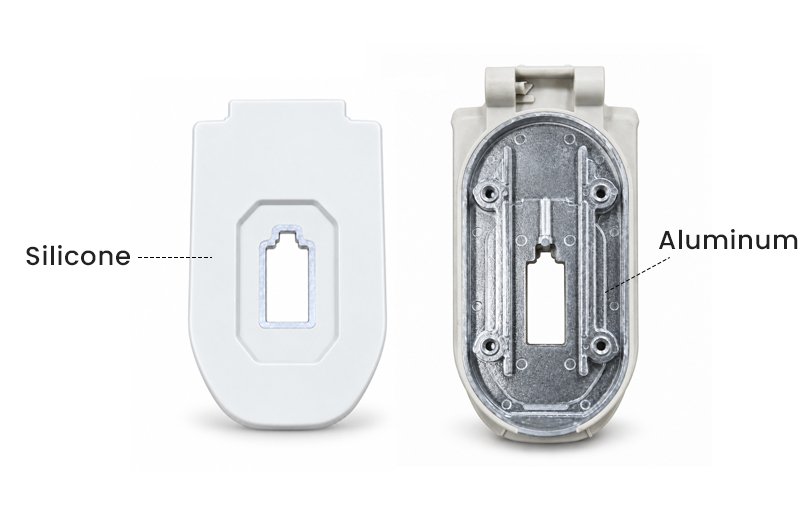
Stainless steel and aluminum are common substrates for silicone overmolding. Stainless steel provides corrosion resistance and is widely used in medical instruments, food-contact equipment and industrial components that require repeated cleaning. Aluminum provides lower weight and good machinability, making it useful for electronic components, handheld devices and lightweight assemblies.
Steel, brass and other metals can also be overmolded when the silicone system and surface condition are suitable. Bondability should not be the only reason for selecting the metal. Strength, corrosion resistance, electrical conductivity, operating temperature, mass and cost still need to match the application, and the final plating, anodizing, passivation or other finish should be included in adhesion testing.
Applications of Silicone to Metal Overmolding
Medical and Surgical Instruments
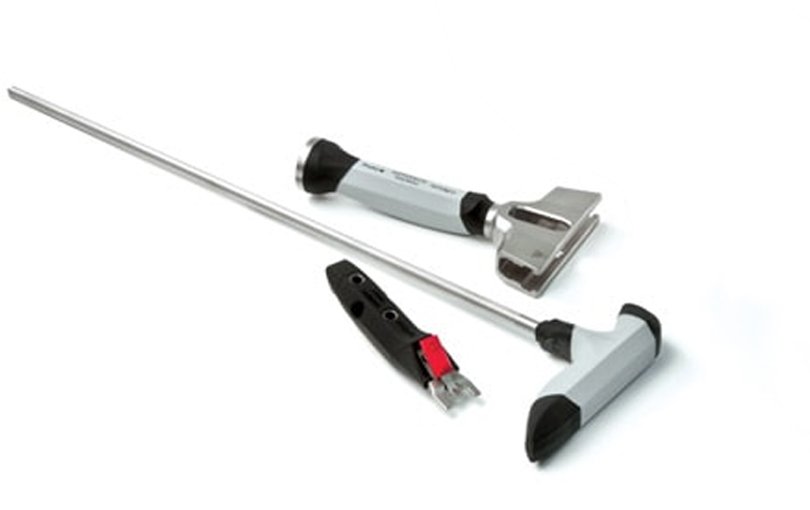
Medical and surgical hand instruments frequently combine a rigid metal core with a molded silicone grip. Stainless steel can provide stiffness and dimensional control while silicone creates the ergonomic surface, improves grip and isolates the user’s hand from the rigid structure. Direct overmolding can also remove a separate grip-assembly operation.
For reusable devices, initial adhesion is not sufficient to qualify the part. The silicone-to-metal interface may be exposed repeatedly to heat, moisture, cleaning chemistry and mechanical loading during reprocessing. Validation should therefore reflect the intended cleaning and sterilization method rather than relying only on a room-temperature pull test.
Automotive Sensors
Automotive components use silicone over metal inserts for sealing, vibration isolation, strain relief and temperature resistance. Applications include sensor structures, actuator components, electrical terminals and metal-supported seals exposed to moisture, vibration, oils, coolants or other automotive fluids.
Temperature cycling deserves particular attention because metal and silicone have different thermal expansion behavior. Repeated heating and cooling place cyclic stress on the interface even when no external mechanical load is applied. Components exposed to vibration or pull-out loads can therefore benefit from mechanical retention in addition to chemical bonding, while qualification may include thermal cycling, vibration and media exposure according to the application.
Electrical and Connector Components
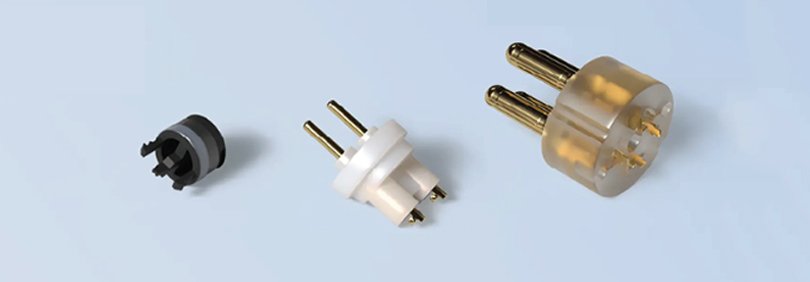
Electrical contacts, terminals and structural inserts can be molded directly into silicone components. One part of a terminal may need to be fully sealed while another surface must remain free of silicone for electrical contact, mating or subsequent assembly.
This makes insert location and tool shut-off important functional requirements. A very thin silicone flash layer on an electrical contact can cause a failure even when the rest of the molded component meets dimensional requirements. Silicone can also be shaped around the transition from a rigid terminal to a cable or flexible conductor to provide strain relief.
Handles, Shafts and Control Components
Metal shafts, levers and structural frames can be overmolded with silicone for grip, vibration damping or surface protection. Although these parts may look simple, repeated torque and axial force can gradually cause a smooth insert to slip or delaminate.
Grooves, holes, shoulders or similar retention features allow these loads to transfer into the silicone body instead of depending entirely on the bonded surface. The interface can then be designed primarily for sealing and local retention rather than carrying every mechanical load.
Sealing Components
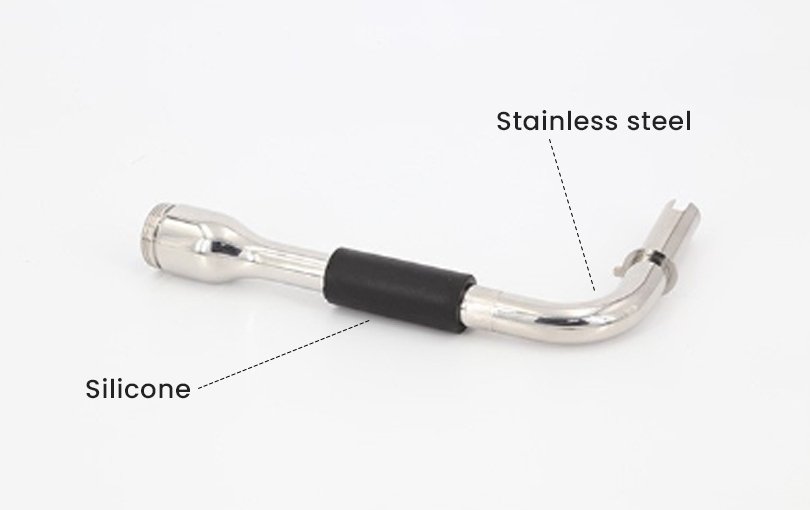
Metal carriers are used when the sealing component needs more installation stiffness or dimensional control than an unsupported silicone part can provide. The metal can define bolt locations, mounting geometry and structural stiffness, while molded silicone forms the sealing bead or flexible sealing surface.
Local separation between the silicone and carrier can become a leakage path even when the silicone itself has not torn. For this reason, carrier-supported seals often use chemical bonding together with mechanically interlocked regions around the metal.
Common Failures and Bond Validation in Overmolding
Failure analysis should distinguish between problems at the silicone-to-metal interface, failures within the silicone itself and molding defects around the insert. Clean separation that leaves the metal largely exposed normally points toward surface contamination, incompatible surface treatment, inadequate primer coverage or poor substrate compatibility. Delamination concentrated at the edge of the insert is more likely to involve peel loading, sharp geometry or insufficient local silicone thickness. If silicone remains attached to the metal while the rubber tears, the interface may already be stronger than the surrounding elastomer.
Insert movement, uneven silicone thickness or exposed metal usually points toward inadequate mold location or support. Flash on threads, contacts or other exposed metal surfaces requires investigation of shut-off design, insert dimensional variation and tooling condition. Air trapped behind or around an insert may require changes to filling pattern or venting rather than changes to the silicone formulation.
Validation should reproduce the main service conditions of the component. A silicone grip over a metal shaft may require pull and torque testing, a metal-supported seal may require pressure or leakage testing, an automotive insert may require thermal cycling, vibration and media exposure, while reusable medical components may require repeated cleaning or sterilization cycles. Examining the fracture surface after testing is important because a high maximum pull force alone does not identify whether failure occurred at the interface or inside the silicone.
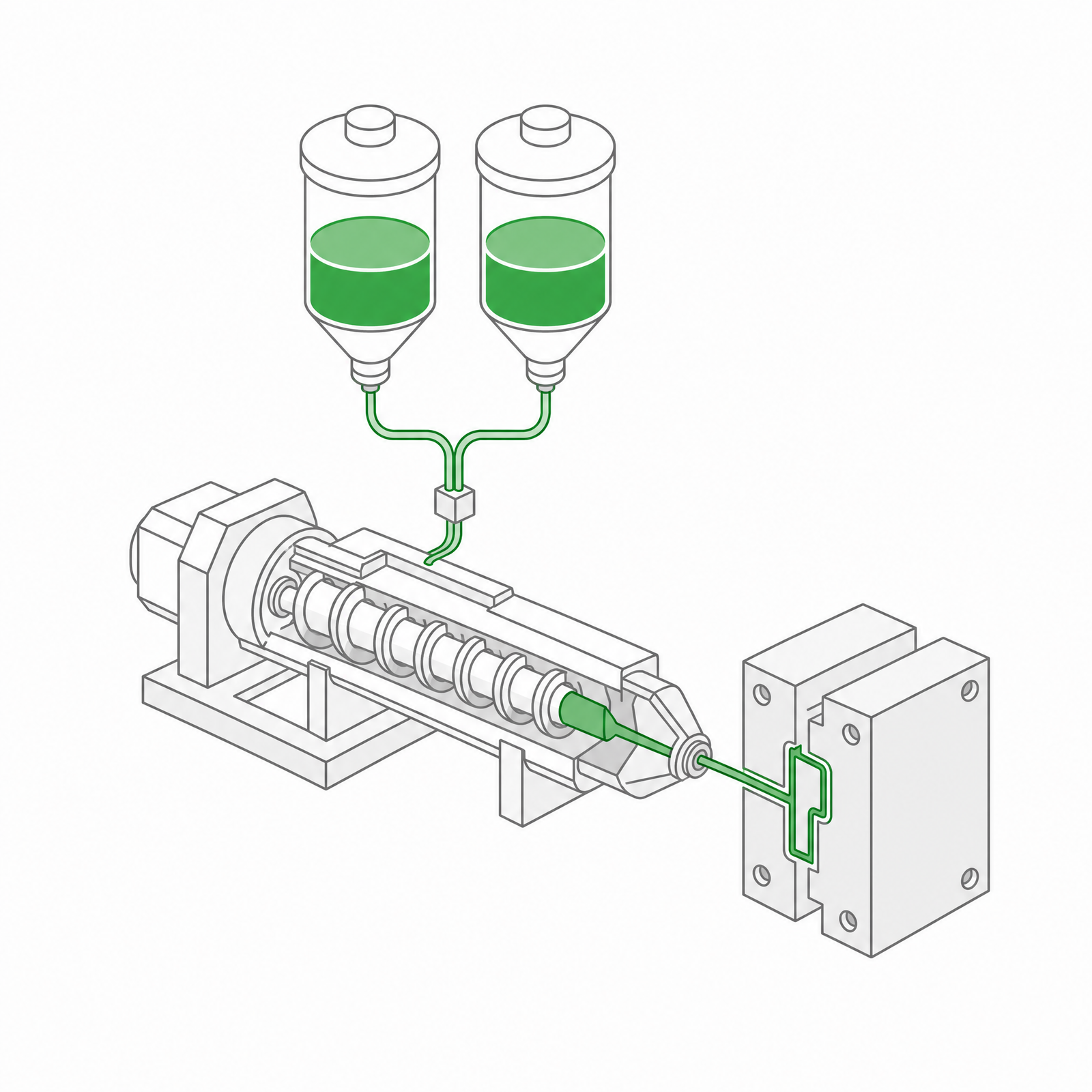 LSR Injection Molding
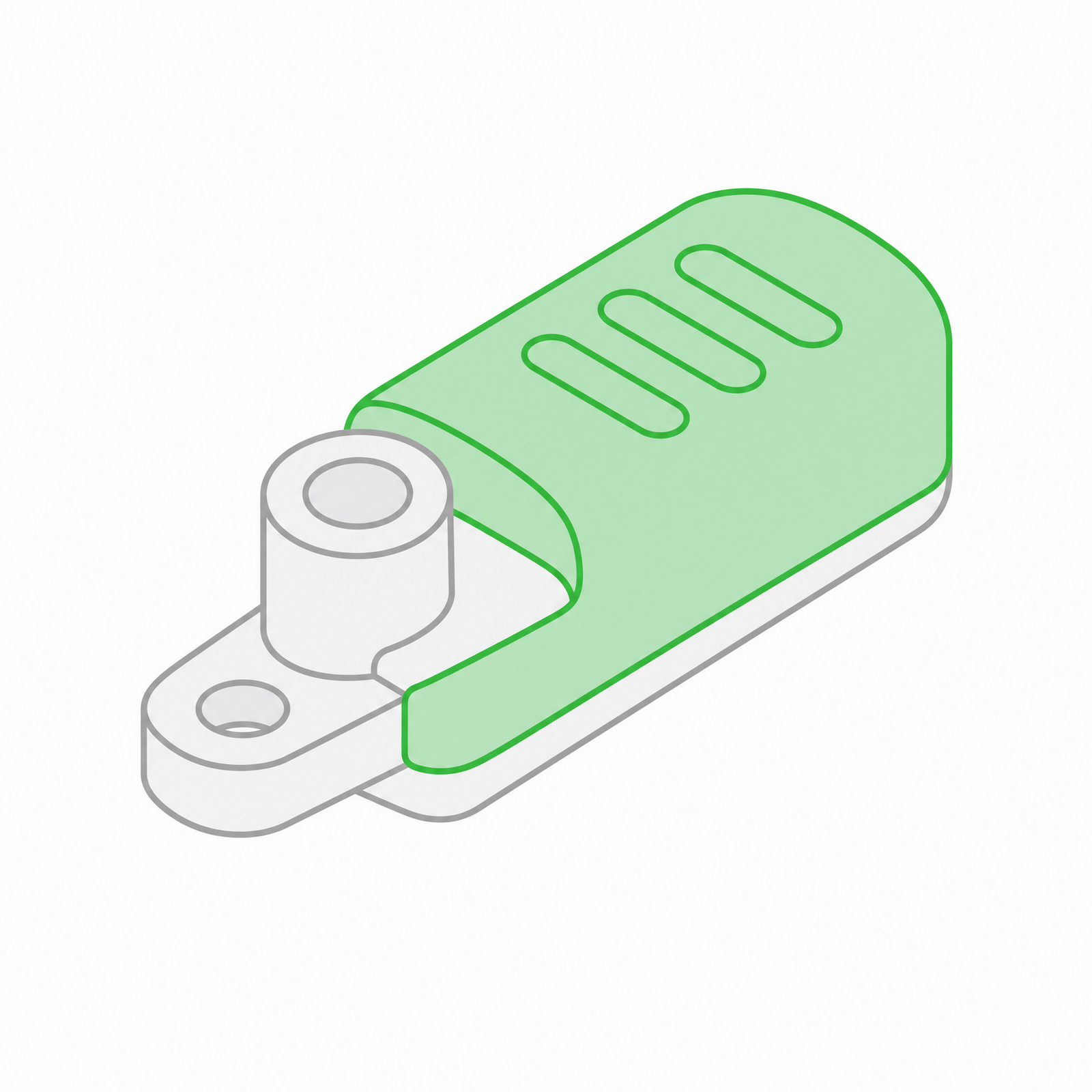 Silicone Rubber Overmolding
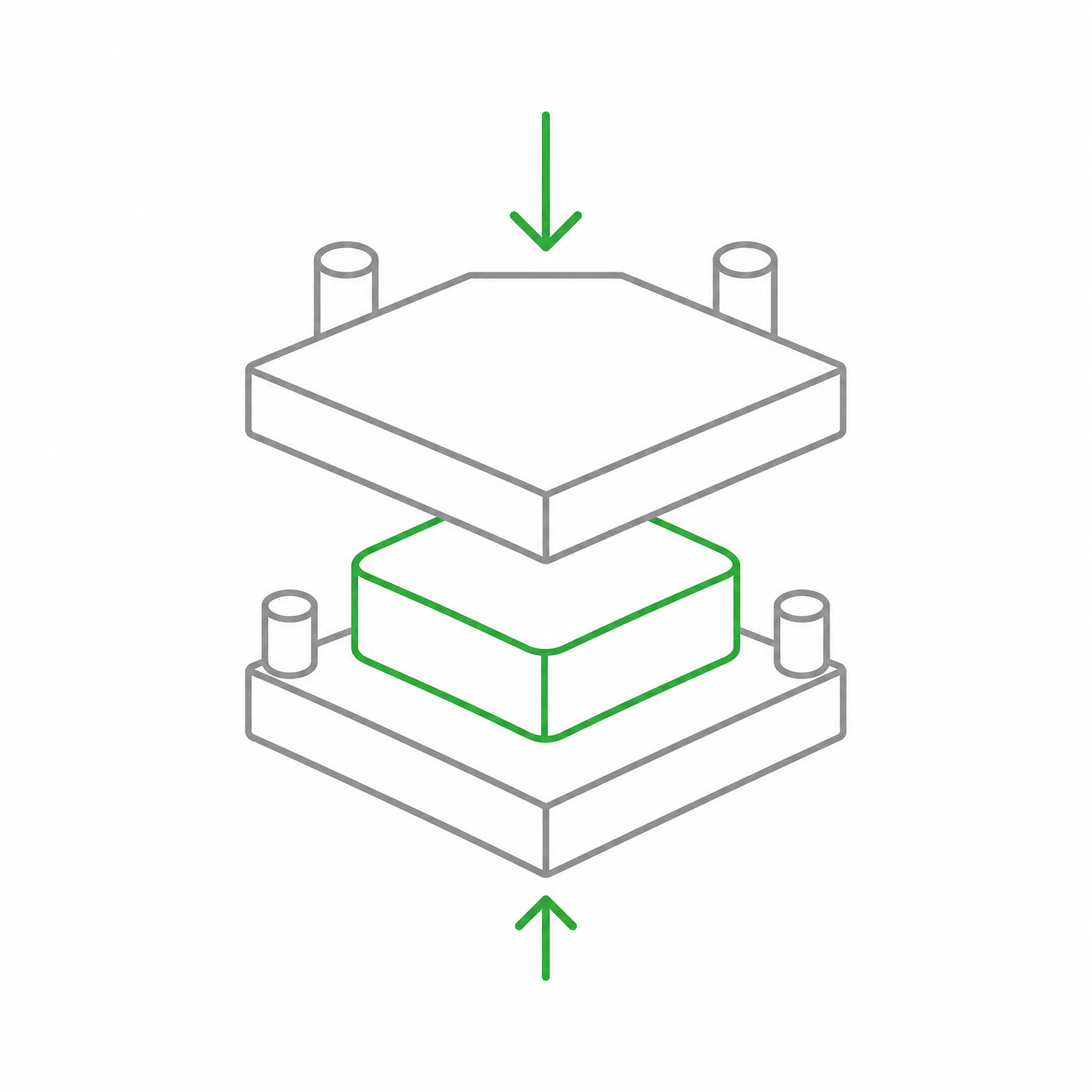 Compression Molding
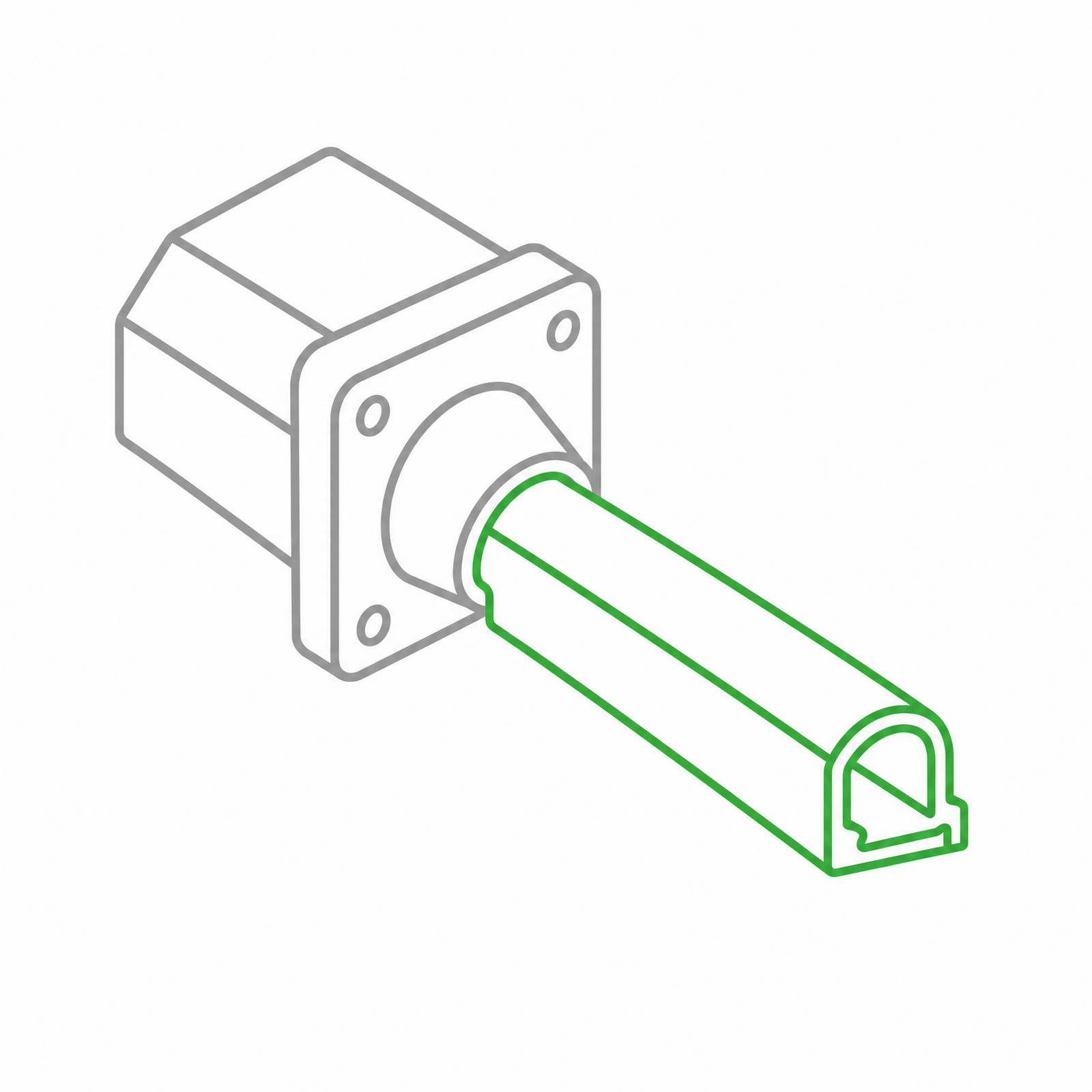 Silicone Rubber Extrusion
 In-house Tooling