
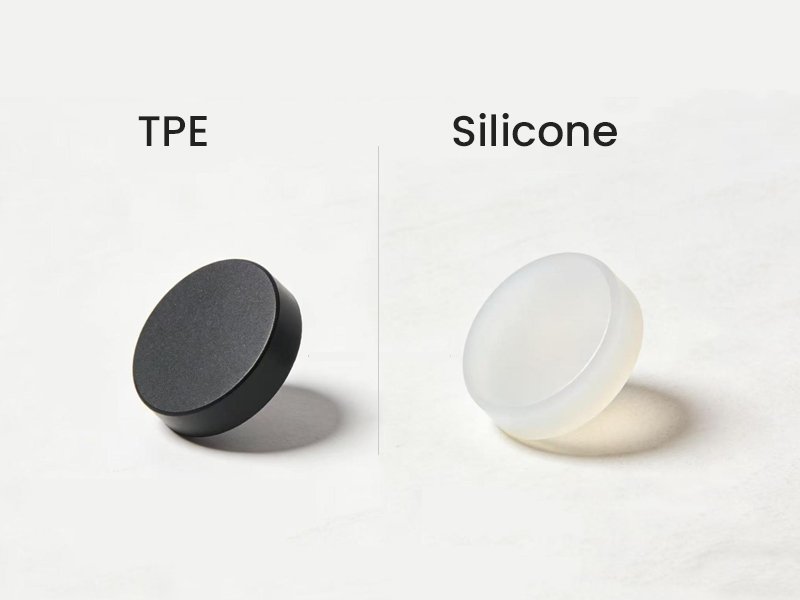
TPE and silicone are both used to make flexible parts. Either can provide a soft contact surface or a seal, but their behavior during processing and service differs.
They are still very different materials. TPE behaves more like a plastic that can be melted and molded again. Silicone rubber is a chemically crosslinked elastomer. Once it is cured, it keeps its permanent elastic network and will not melt again under heat.
The difference affects both manufacture and service. It determines whether the material can be remelted and changes how it responds to heat or sustained compression. Those behaviors influence the process choice and part cost.
What Is TPE?
TPE stands for thermoplastic elastomer. It is not one single material. It is a family of materials that combine rubber-like elasticity with thermoplastic processing.
Common TPE families include:
- TPS: Styrenic thermoplastic elastomers, such as SBS and SEBS.
- TPO: Thermoplastic polyolefin elastomers.
- TPV: Thermoplastic vulcanizates.
- TPU: Thermoplastic polyurethane.
- TPC: Thermoplastic polyester elastomers.
- TPA: Thermoplastic polyamide elastomers.
TPE is a family of materials, not a single performance grade. A compound selected for abrasion resistance may behave differently under sustained compression. Check the exact formulation against the application before choosing it.
TPE softens or melts when heated. It can be processed by injection molding, extrusion, and other thermoplastic methods. After cooling, it regains elasticity. If the material has not been badly degraded or contaminated, scrap can often be ground and reused at a controlled ratio.
What Is Silicone Rubber?
In this article, silicone means silicone rubber used to make molded or extruded parts. The two most common forms are:
- LSR: Liquid silicone rubber.
- HCR or HTV silicone: Solid silicone rubber used for high-temperature vulcanization.
Silicone rubber is based on a polysiloxane backbone. The main chain is made of alternating silicon and oxygen atoms, with methyl groups or other organic groups on the side chains.
During curing, silicone rubber forms a chemically crosslinked three-dimensional network. After this network is formed, the part will not melt again. This structure gives silicone rubber strong high-temperature stability and good resistance to compression set.
TPE vs. Silicone: Quick Comparison
| Selection Factor | TPE | Silicone Rubber |
|---|---|---|
| Material type | Thermoplastic elastomer | Thermoset elastomer |
| Typical form | Solid pellets | LSR is a two-part liquid; HCR is a solid rubber compound |
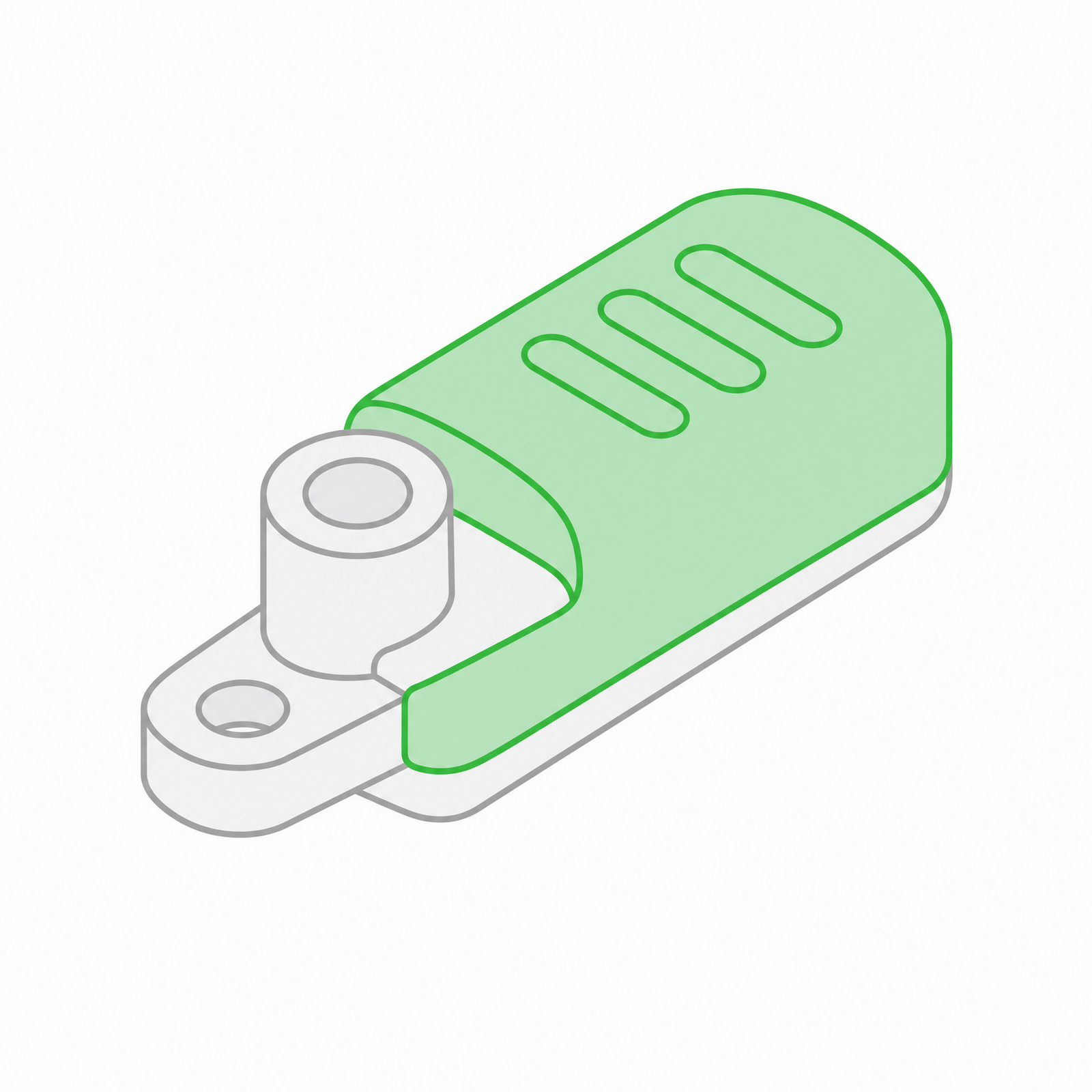
| Processing methods | Injection molding, extrusion, blow molding, and overmolding | LSR injection molding, compression molding, extrusion, and silicone rubber overmolding |
| How the shape is fixed | Melts under heat, then sets after cooling | Cures through a crosslinking reaction under heat |
| Typical temperature range | About -40°C to 80°C | About -50°C to 250°C |
| Compression set | Can perform well at room temperature; more likely to creep under long-term heat and compression | Usually better for high-temperature and long-term sealing |
| Wear and tear resistance | TPU grades often offer strong wear and tear resistance | Standard silicone has limited wear resistance, but high-tear grades are available |
| Weather and UV resistance | Depends on the polymer system and stabilizers | Excellent resistance to UV, ozone, and outdoor aging |
| Gas barrier performance | Usually better than silicone | Higher gas permeability; silicone is a relatively breathable elastomer |
| Recycling | Scrap can often be reprocessed after validation | Cannot be melted and reused directly after curing |
Key Differences Between TPE And Silicone
Temperature Resistance
Silicone rubber usually has a wider operating temperature range. This is one of the clearest differences between TPE and silicone.
General TPE grades are often used from about -40°C to 80°C. Special compounds can raise the upper range to about 120°C. Under continuous heat and load, the thermoplastic phase in TPE may soften or creep.
Silicone rubber works across a broader range. Many silicone compounds can operate from about -50°C to 250°C. The final limit still depends on the compound, stress level, service time, and contact media.
Compression Set
Compression set shows how well a material returns to its original thickness after it has been compressed for a period of time.
Initial softness does not always mean long-term sealing reliability. If a gasket or seal slowly becomes thinner under load, it can lose contact pressure even if the surface does not crack.
At room temperature, both high-quality TPE and silicone can show good compression set performance. At higher temperatures, TPE is more likely to show thermoplastic creep. Silicone usually keeps more stable rebound and sealing pressure.
This is why silicone rubber is often selected for long-term gaskets, O-rings, connector seals, and parts that stay compressed during service.
Chemical Resistance
Silicone rubber usually has good resistance to water, ozone, weathering, and oxidation. It is not suitable for every oil, fuel, or organic solvent. Standard silicone may swell in non-polar hydrocarbon media.
TPE chemical resistance varies widely. TPU, TPV, and SEBS-based compounds can react very differently to oils, alcohols, cleaners, acids, and alkalis. Media resistance may also drop as service temperature increases.
For either material, chemical compatibility should be checked against the real fluid, concentration, temperature, and exposure time.
Gas And Water Vapor Barrier Performance
TPE usually has better gas and water vapor barrier performance. Silicone rubber is more permeable.
High gas permeability can be useful in breathable membranes, respiratory parts, wound-care products, and some medical devices. It can also be a weakness in packaging or sealing systems that need to block oxygen or water vapor.
If the design needs a strong barrier, do not assume silicone is the best choice. If the part needs flexibility, heat resistance, and controlled breathability, silicone may be a better fit.
Manufacturing Process
TPE is usually supplied as pellets. The pellets are heated in a barrel, melted, injected into a mold, and cooled into shape. TPE can also be extruded or used in overmolding on compatible substrates.
Main process advantages of TPE include:
- Standard thermoplastic injection molding or extrusion equipment can often be used.
- Cycle times are usually short.
- Regrind can sometimes be reused after validation.
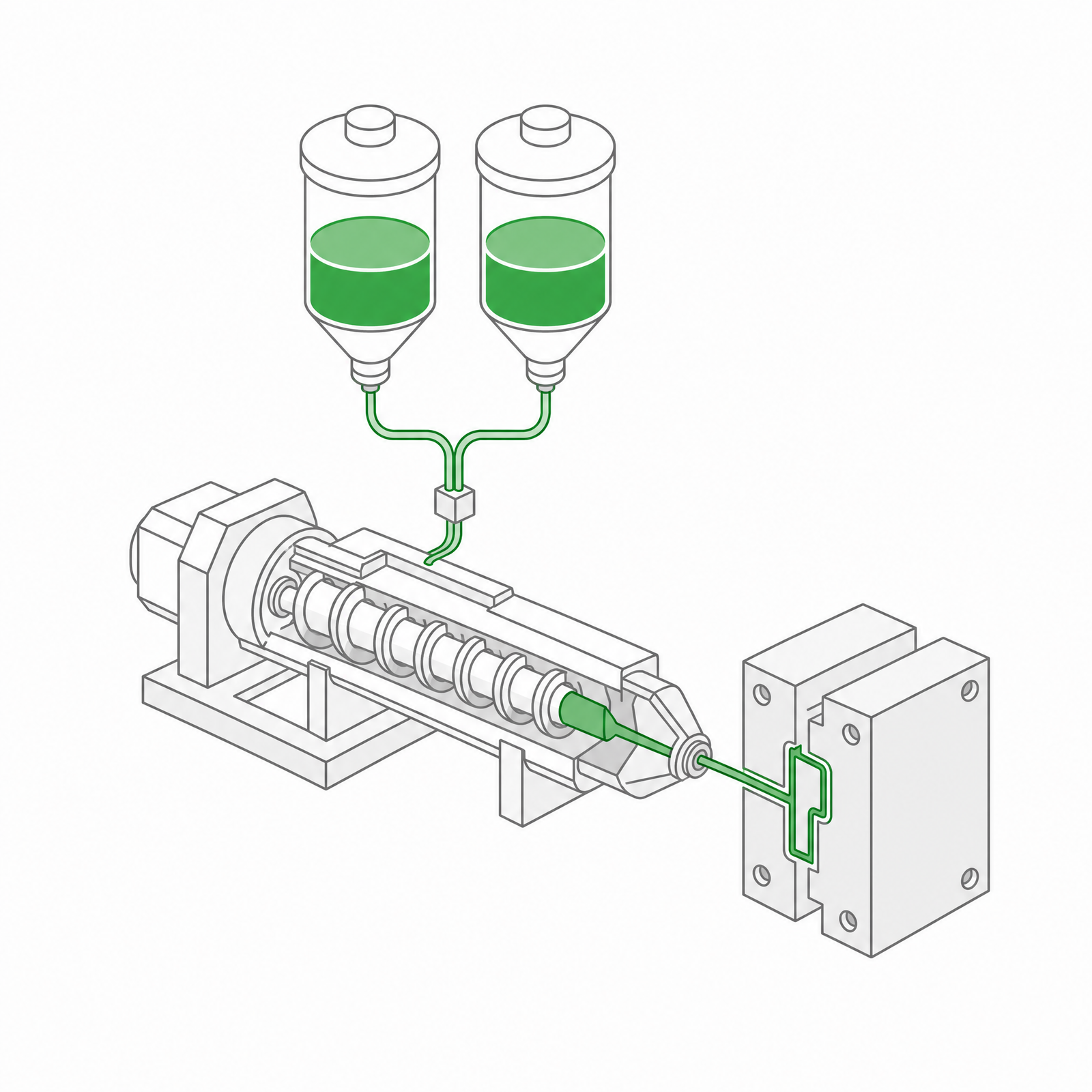
Silicone processing depends on the material type. LSR is usually supplied as A and B components. These two components are metered, mixed, and injected into a heated mold, where the rubber cures. HCR is usually mixed first, then processed by compression molding, transfer molding, or extrusion.
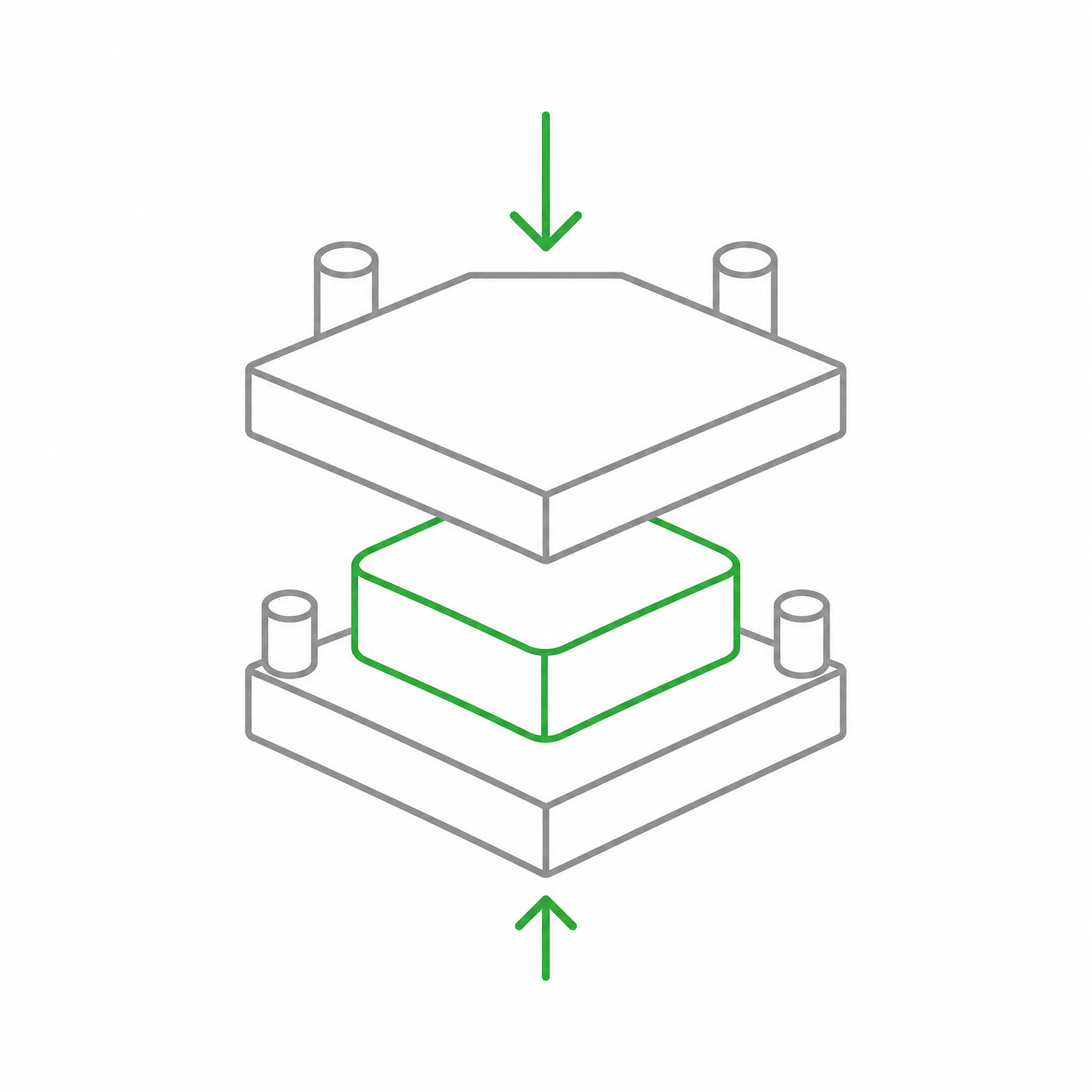
For complex silicone rubber parts, LSR injection molding is often used because it supports repeatable molding, fine details, and stable dimensions. For thicker parts, lower-volume parts, or high-consistency compounds, silicone rubber compression molding may be more practical.
Sustainability And Recycling
TPE is easier to recycle inside a thermoplastic production flow. Clean runners, rejected parts, or trimmed scrap can often be ground and added back into production at a controlled percentage.
Silicone cannot be remelted after curing. This makes direct production recycling less simple. It does not mean silicone has no recovery route. The industry has been exploring grinding, reuse as filler, pyrolysis, and chemical depolymerization to recover siloxane materials.
For many projects, the better sustainability choice depends on more than recycling. Service life, failure risk, scrap rate, weight, and replacement frequency should also be considered.
How To Choose Between TPE And Silicone
There is no universal winner. TPE and silicone are suited to different working conditions.
Before asking a molding supplier for a quote, prepare the following information:
- Minimum and maximum service temperature.
- Contact media, including liquids, gases, oils, fuels, and cleaning agents.
- Whether the part will stay compressed for a long time.
- Target hardness and surface feel.
- Food-contact or medical compliance requirements.
- Cleaning, disinfection, or sterilization method.
- Expected annual volume and cost target.
- Required service life.
Choose TPE when the part needs short cycle time, thermoplastic processing, easy regrind reuse, and moderate service temperature. Choose silicone when the part needs high-temperature stability, long-term compression recovery, weather resistance, or medical and food-grade performance.
Conclusion
TPE can be melted again, which makes production scrap easier to reprocess. Cured silicone cannot be remelted in the same way, but it is often selected for elasticity across a wider temperature range. Compare the materials under the part’s actual load and fluid exposure, then weigh those results against production cost and application requirements.
 LSR Injection Molding
 Silicone Rubber Overmolding
 Compression Molding
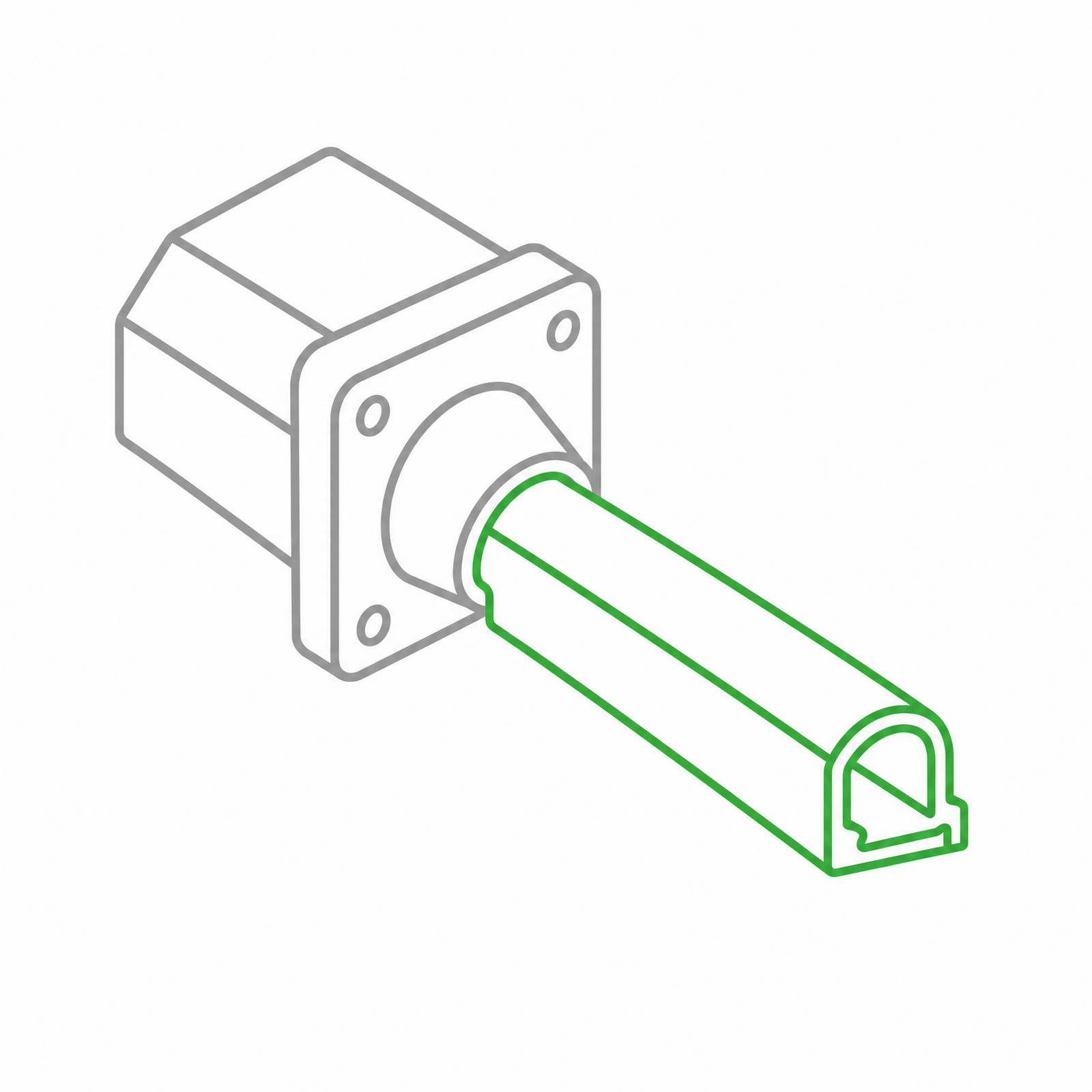 Silicone Rubber Extrusion
 In-house Tooling