
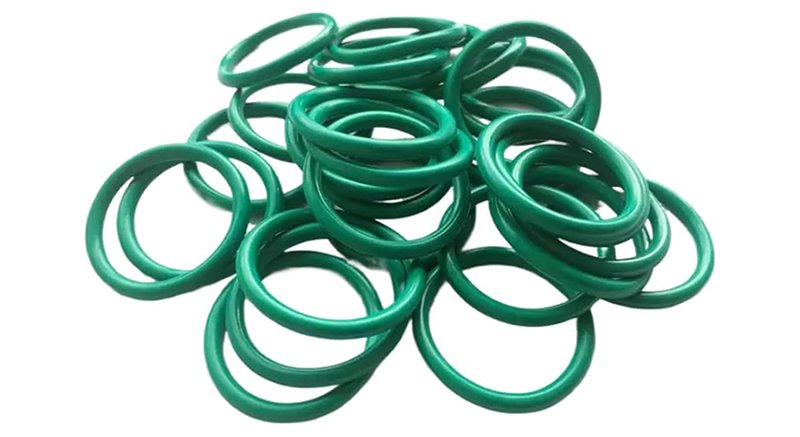
Overiew of O-Ring
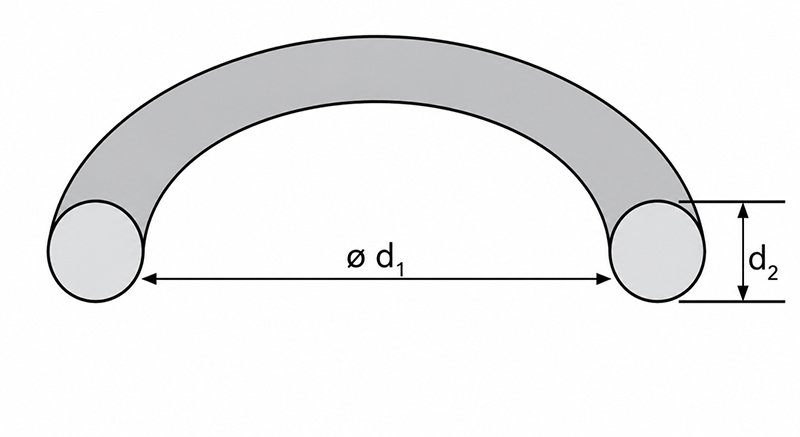
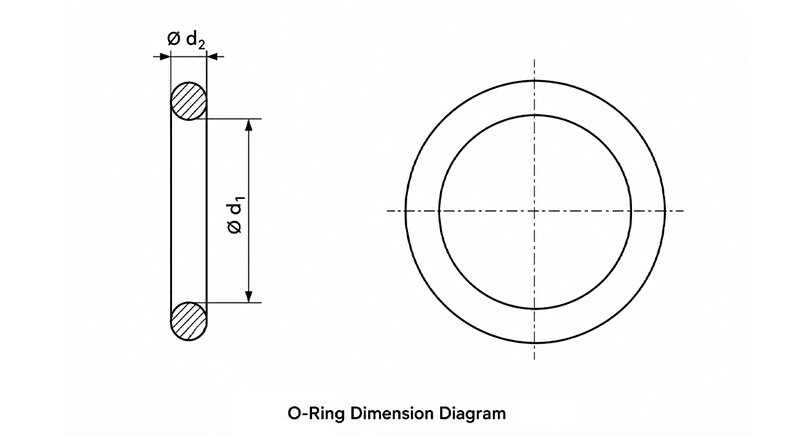
An O-ring is a circular ring, usually made of elastomeric rubber, named after the “O” shape of its cross section. Its size is defined by two dimensions: the inside diameter d1 and the cross-section diameter d2.
As a sealing element with a round cross section, the O-ring is used in a vast range of machinery to seal against liquids or gases within specified temperature and pressure limits. Because it is inexpensive, simple to manufacture, reliable in service, and easy to install, the O-ring has become the most common sealing element in mechanical design. It works in static sealing as well as in dynamic applications where components move relative to one another, such as rotary pump shafts and hydraulic cylinder pistons.
How an O-Ring Seals?
An O-ring seals through the elastic deformation of its cross-section diameter d2 inside a properly designed gland. The round cross section is squeezed into an oval shape, closing off the gaps between the mating surfaces and the gland bottom. The resulting surface compression is the key to achieving the required sealing performance. More specifically, the sealing mechanism relies on the following aspects:
Squeeze (Initial Sealing)
When installed in its gland, an O-ring is compressed both radially and axially. With no system pressure applied, the initial seal comes entirely from the contact pressure created by this pre-compression. As internal pressure rises, the medium pushes the O-ring further against one side of the gland, pressing it even more tightly against the sealing surfaces — the seal gets tighter as pressure climbs. This is known as the “self-energizing effect,” and it is exactly what allows O-rings to withstand pressures of tens of megapascals.
Elastic Recovery
O-ring compounds are highly elastic and snap back to their original shape after compression. This recovery allows the ring to follow minor runout and eccentricity of moving surfaces, maintaining a reliable seal even in dynamic service.
Surface Lubrication
The surface of an O-ring generally has some lubricity, which helps reduce friction and wear during motion. In oil-free applications such as pneumatic systems, additional grease should be applied to improve long-term sealing stability and minimize leakage.
Media Compatibility
The O-ring material must be compatible with the working medium. Proper compatibility prevents degradation, swelling, or hardening of the compound, preserving sealing performance throughout its service life.
Advantages and Limitations
Compared with other sealing elements, O-rings offer the following advantages:
- Simple gland design, compact installation space, and light weight.
- Self-energizing behavior — a single ring usually does the whole sealing job.
- Excellent sealing performance: virtually zero leakage in static service, and only slight leakage at high speeds in dynamic service.
- Low running friction, with good adaptability to fluctuating pressure.
- Standardized ring sizes and gland dimensions — low cost, widely available, easy to select and source.
They also have three limitations:
- High breakout friction at the start of movement.
- In pneumatic applications, lubricant must be added to prevent wear.
- Strict tolerances are required on mating components — the running surface, gland dimensions, and clearance gap.
How O-Ring Sizes Are Designated
O-ring size is normally defined by inside diameter and cross-section diameter. For example, in ISO 3601-1 (one of the O-ring dimensional standards published by the International Organization for Standardization), the size 15.6 × 1.78 (d1 × d2) means an inside diameter d1 = 15.6 mm and a cross-section diameter d2 = 1.78 mm.
The major international O-ring dimensional standards are:
| Standard | Region | Notes |
|---|---|---|
| ISO 3601 | International | ISO standard covering size series and tolerances |
| AS568 | USA | Aerospace standard using inch dimensions; used worldwide |
| GB/T 3452 | China | Chinese national standard, close to the ISO system |
| JIS B 2401 | Japan | Japanese industrial standard |
Size series do not match exactly across standards — always verify the inside diameter, cross-section, and tolerances when substituting between systems.
5. Common O-Ring Materials
Material selection depends mainly on the working medium, temperature range, and sealing type (static or dynamic). Common elastomers and their properties:
| Material | Suitable Media | Service Temp. °C (Dynamic) | Service Temp. °C (Static) | Remarks |
|---|---|---|---|---|
| Nitrile rubber (NBR) | Mineral oil, gasoline, benzene | 80 | -30 to 120 | The most widely used, lowest-cost oil-resistant seal material |
| Chloroprene rubber (CR) | Air, water, oxygen | 80 | -40 to 120 | Excellent weathering resistance; use with care in dynamic service |
| EPDM | Steam, brake fluid, weak acids/alkalis | 80 | -50 to 150 | Not for mineral oils |
| Silicone rubber (VMQ) | High/low-temp oils, oxygen, weak acids/alkalis | -60 to 200 | -60 to 230 | Not for steam; avoid dynamic service |
| Fluorocarbon rubber (FKM) | Hot oil, steam, mineral acids, halogenated solvents | 150 | -20 to 200 | Outstanding heat and chemical resistance |
| Polyurethane rubber (PU) | Water, oil | 60 | -30 to 80 | Wear- and pressure-resistant; avoid high-speed and high-temperature use |
| Perfluoroelastomer (FFPM) | Nearly all chemical media | — | Up to approx. 300 | Top performance but expensive; mainly used in the semiconductor industry |
How O-Rings Are Manufactured
O-rings are produced mainly by compression molding, injection molding, or transfer molding. The core process chain includes compounding, molding, vulcanization (curing), deflashing, and inspection.
Rubber Compounding
Raw rubber is blended with curatives, reinforcing fillers, plasticizers, antioxidants, and other additives in an internal mixer or on an open mill to produce a homogeneous compound. The formulation directly determines the key properties of the finished part — hardness, temperature resistance, and media resistance.
Molding and Curing
- Compression molding: Pre-formed blanks are placed directly into the mold cavity and cured under heat and pressure in a platen press. Tooling is simple and inexpensive, making this method ideal for large sizes and low-volume production.
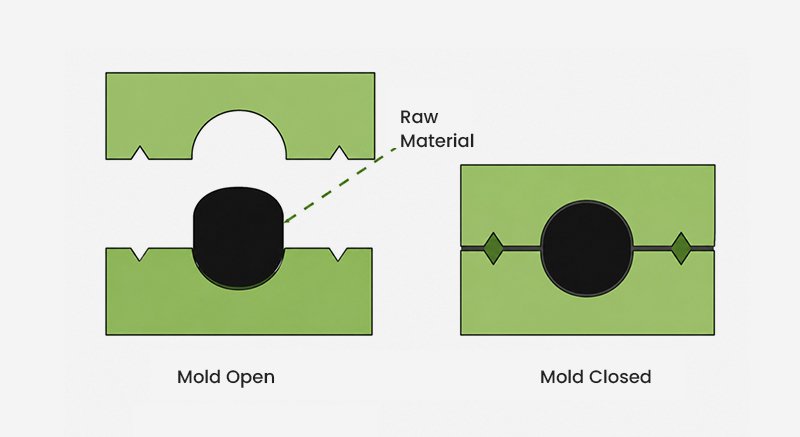
- Injection molding: The compound is plasticized and injected under high pressure into a closed, heated mold. It offers high automation, tight dimensional accuracy, and minimal flash — well suited to high-volume, high-precision parts. Silicone O-rings are commonly produced by liquid silicone rubber (LSR) injection molding.
- Transfer molding: The compound is preheated in a pot and then forced through sprues into the mold cavity to cure. It produces dense, high-integrity parts and sits between compression and injection molding — a good fit for complex shapes or insert-molded products.
Deflashing
Cured parts carry flash along the parting line. Common deflashing methods include manual trimming, die cutting, tumbling, and cryogenic deflashing. Cryogenic deflashing uses liquid nitrogen to embrittle the flash, which is then removed by blasting media — efficient and gentle on the part, and the mainstream method for mass production.
Post-Curing
O-rings made from silicone or fluorocarbon rubber usually require post-curing in an oven to drive off volatiles and low-molecular residues, stabilizing properties such as compression set. This step is essential for food-grade and medical-grade products.
Inspection of O-Rings
Accurate measurement is the foundation for selection, replacement, and quality acceptance. Common measuring tools and their applications:
| Tool | Accuracy | Application |
|---|---|---|
| Vernier caliper | ±0.02 mm | OD, ID, and cross-section; suitable for medium-sized O-rings |
| Micrometer | ±0.01 mm | Higher precision; suitable for smaller O-rings |
| Optical comparator | ±0.01 mm | High-precision measurement, especially for ID |
| Laser scanner | ±0.002 mm | Cross-section measurement of dynamic O-rings |
| Gauges (O-Sizer, Pi-Tape, etc.) | — | Dedicated ID measurement for large O-rings |
| Microscope | — | Very small O-rings, especially ID and cross-section |
Keep the O-ring in a natural, relaxed state during measurement — stretching or squeezing it will distort the reading.
Typical Applications
Thanks to their simplicity and reliability, O-rings appear in virtually every industry:
- Hydraulics and pneumatics: Cylinder piston and rod seals, pump and valve seals — the classic O-ring application.
- Automotive: Seals throughout engines, fuel systems, transmissions, braking systems, and refrigerant lines.
- Electronics and appliances: Waterproofing in smartphones, connectors, and battery packs, mostly in silicone rubber.
- Medical and food: Food-grade and medical-grade silicone O-rings in water dispensers, coffee machines, and medical pumps and valves.
- Aerospace and semiconductor: FKM and FFPM O-rings in fuel systems, vacuum chambers, etching equipment, and other extreme-duty service.
Conclusion
O-ring is a widely used sealing element nowadays. The reliability of an entire sealing system often comes down to this one little rubber ring, choose the right material, specify the right size, and design the gland correctly, and it will deliver years of dependable sealing at minimal cost; get any of these wrong, and it becomes a leak waiting to happen. Understanding how an O-ring works and how to select one is essential knowledge for every mechanical design engineer.
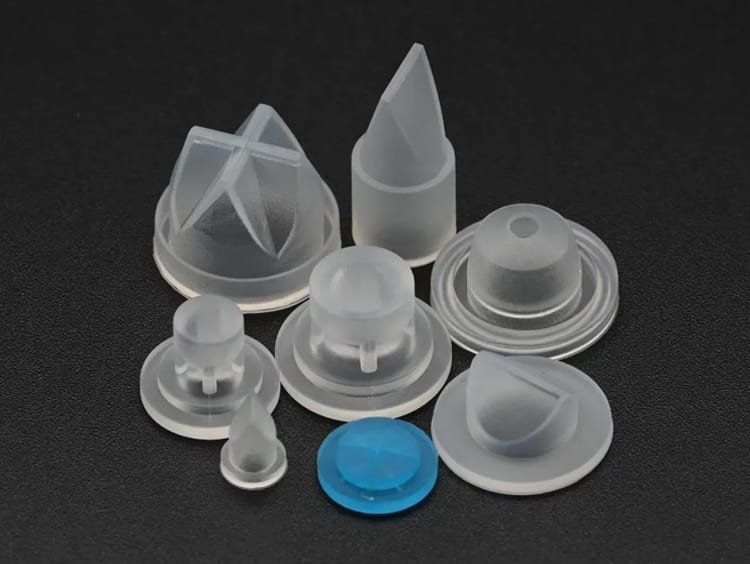 LSR Injection Molding
 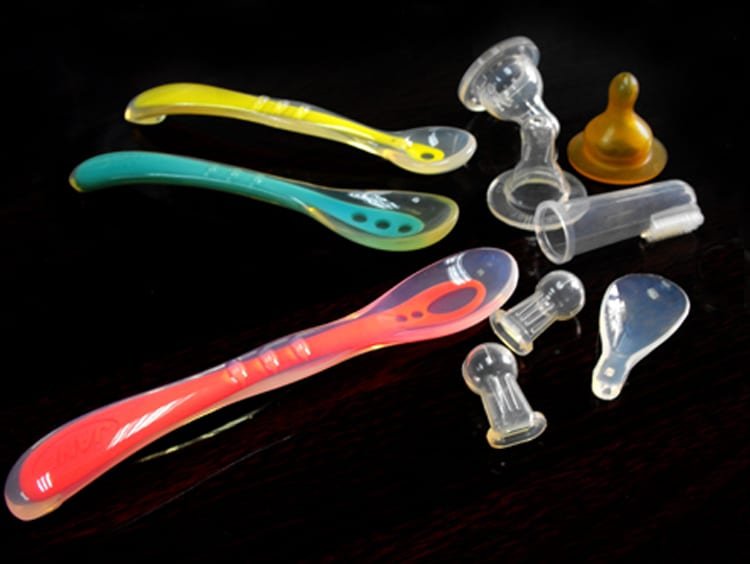 Silicone Overmolding
 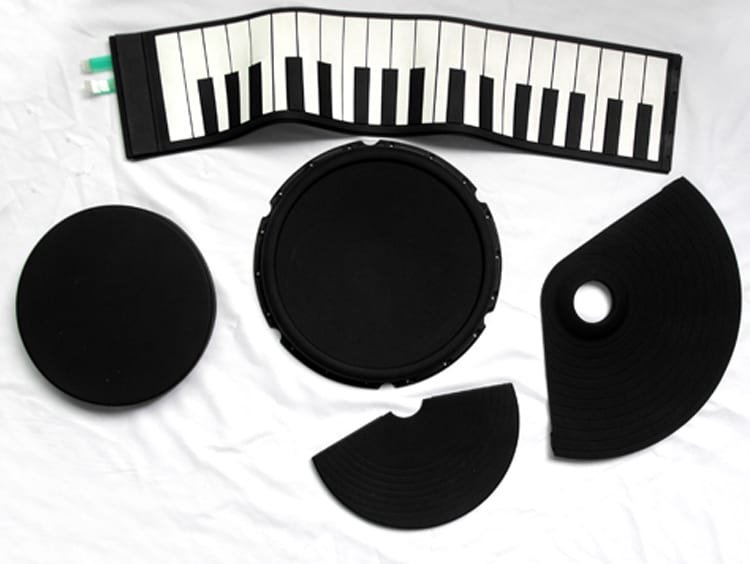 Compression Molding
 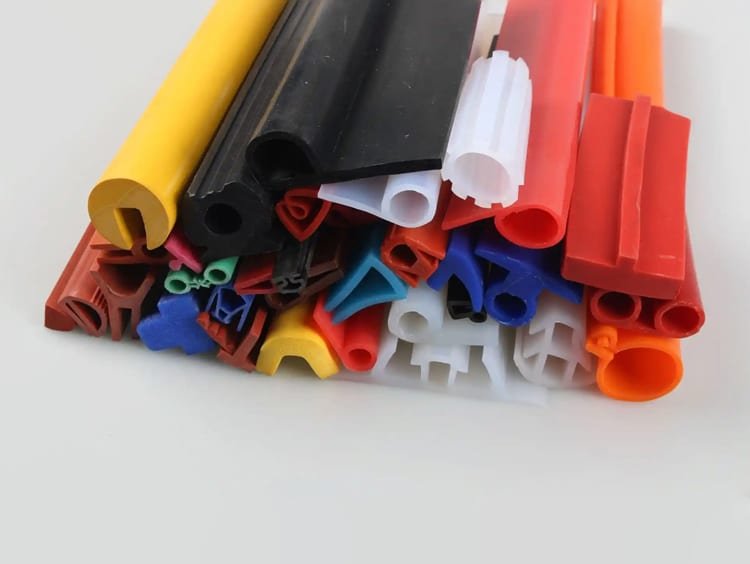 Silicone Extrusion
 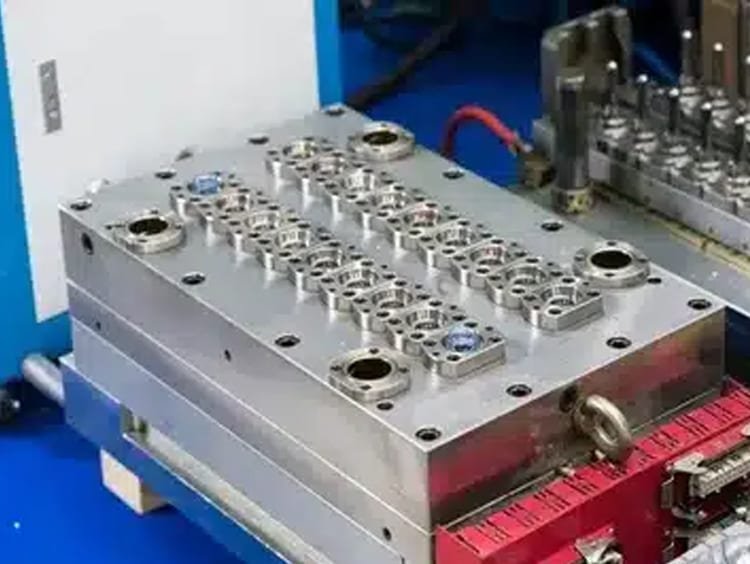 In-house Tooling