
Background
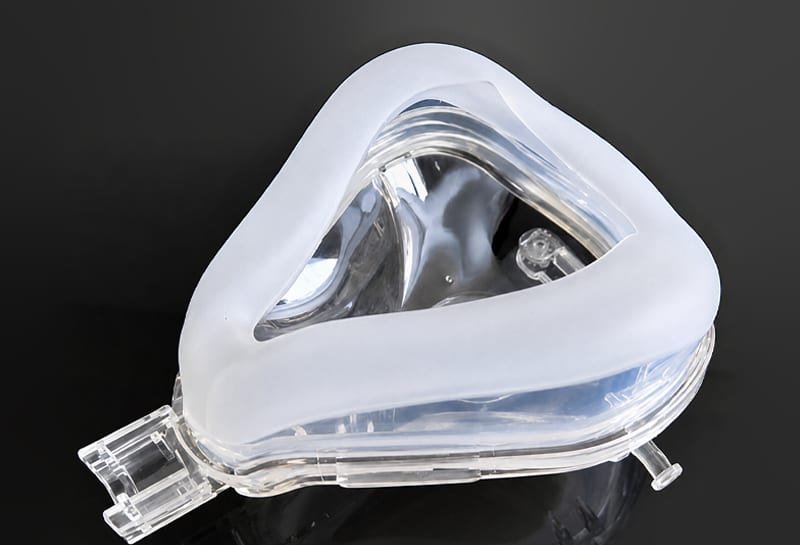
The client makes respiratory care equipment for export to international market. They needed a ventilator mask that seals against the patient’s face with a soft silicone edge while keeping the main body transparent so clinicians can monitor airflow and fit.
The mask is a two-material part: a rigid, optically clear PC frame that holds the shape, and a soft liquid silicone rubber seal that runs around the perimeter to create a comfortable, airtight interface against the skin.
Challenge
The part looks simple, but two requirements make it genuinely difficult.
First, the sealing line has to be extremely fine. The silicone is overmolded directly onto the edge of the transparent PC frame. If the mold parting line is even slightly imperfect, silicone flash spills onto the clear optical surface. On a fully transparent part, that flash is immediately visible and unacceptable.
Second, there is no safety net. On many overmolded parts, a small amount of flash can be cleaned up with a trimming operation. Here, that is not an option. The PC is optical-grade and relatively soft; any contact with a blade or deburring tool will leave scratches on the transparent surface. Once that happens, the part is scrap. So the mold has to produce a zero-flash part straight out of the machine, every time.
What We Did
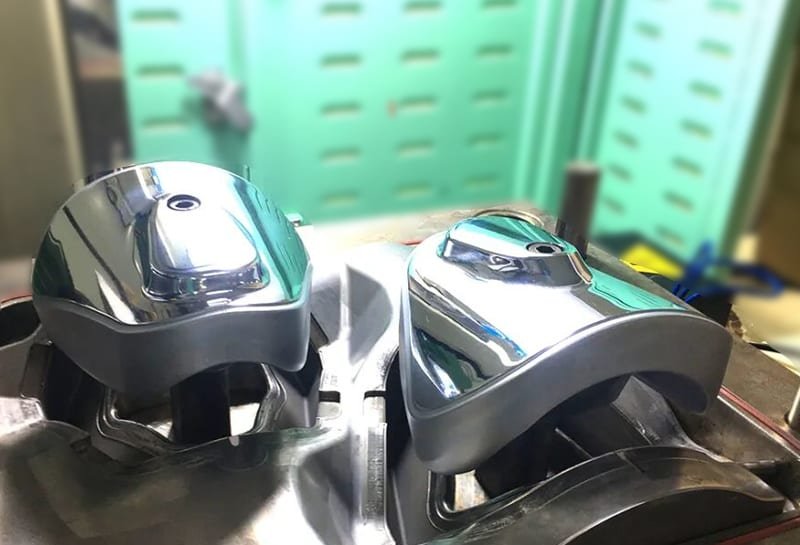
We used an insert-molding approach. The clear PC frame is injection molded first. That PC part is then placed into the LSR mold as an insert, and liquid silicone is injected around the edge to form the seal.
Most of the engineering effort went into the mold shut-off. The interface between the PC insert and the silicone cavity has to seal perfectly under injection pressure, yet not clamp so hard that it damages or marks the transparent surface. We machined the parting surfaces to a very tight tolerance so the gap was just enough to stop silicone from leaking, without crushing the PC.
Finding the right process window took time. Too little injection pressure and the silicone would not fill the thin sealing lip completely. Too much pressure and it would force its way past the shut-off, creating flash on the clear face. We tuned the mold temperature, injection profile, and cure time until the silicone filled the seal geometry cleanly and stayed exactly where it was supposed to.
Result
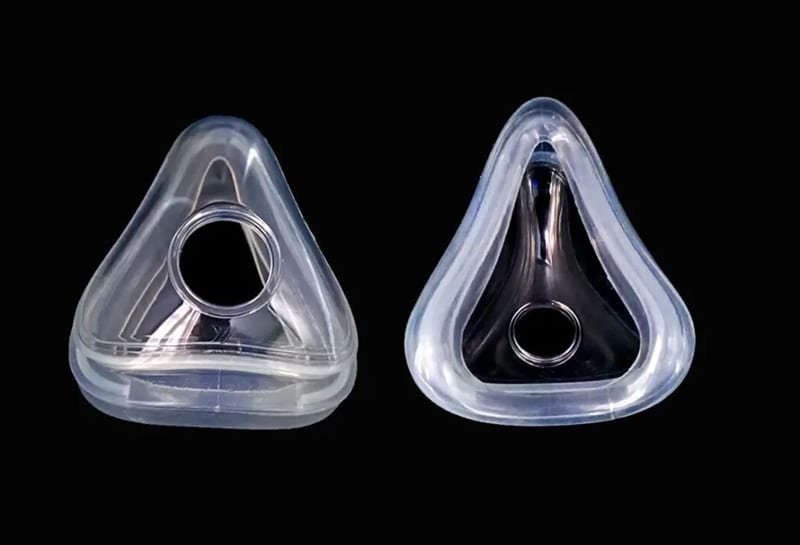
The masks come out of the mold with the silicone seal fully formed and no visible flash on the transparent PC body. There is no trimming step, no risk of scratched optics, and no secondary handling that could introduce contamination.
For the client, this means the part moves straight from molding to assembly and packaging. For us, it confirmed that when a transparent medical part cannot tolerate post-mold finishing, the only solution is to get the mold and process right the first time.