
Background
The client is a major player in infant feeding products. They design bottles, electric breast pumps, and accessories with a strong focus on how the product feels in daily use. When they moved to upgrade their anti-leak bottle and premium breast-pump lines, the silicone duckbill valve turned out to be the bottleneck.
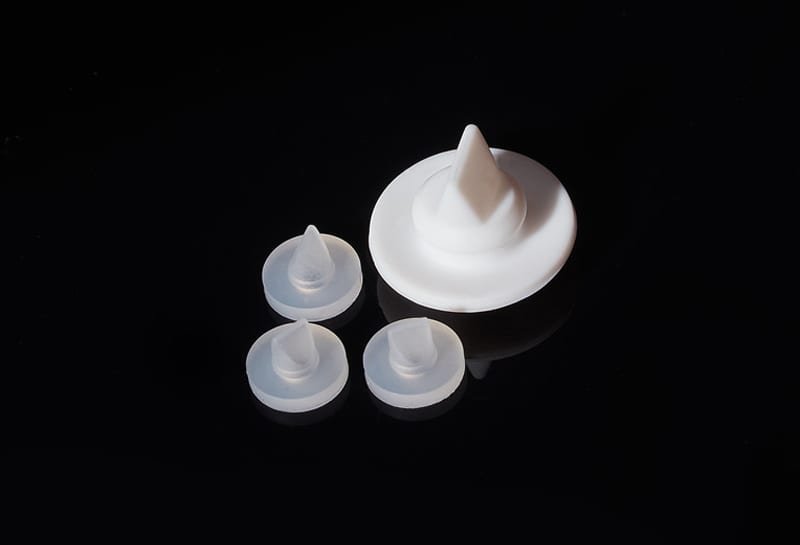
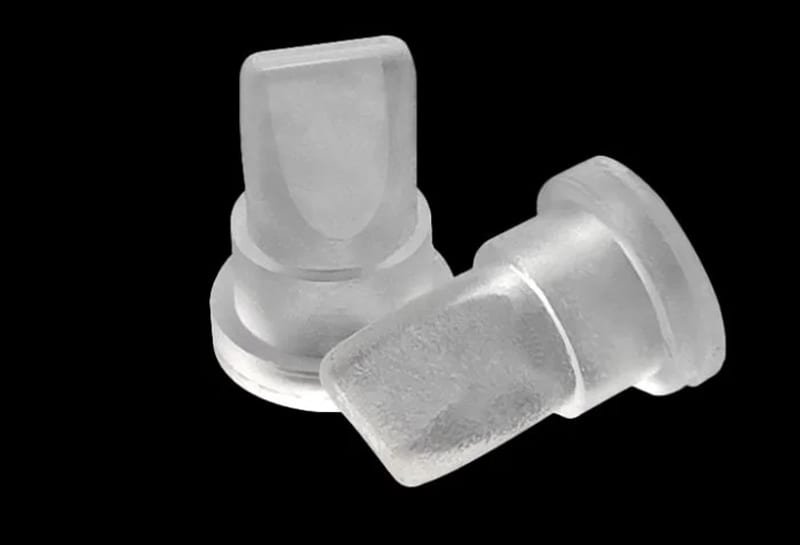
A duckbill valve is a simple-looking part: a thin silicone sleeve with a slit cut at the tip. Liquid flows out when the baby sucks or the pump creates vacuum, and the slit closes when pressure drops, preventing backflow. But getting that slit to open at exactly the right pressure, stay consistent over hundreds of uses, and not impart any taste or smell is harder than it looks.
Challenge
The client’s existing valves had three problems that kept showing up in user feedback.
Opening pressure varied from part to part. Some valves needed too much suction to open, which made feeding tiring for the baby. Others opened too easily and leaked. The root cause was inconsistent slit geometry—small variations in cut width and depth changed the force required to separate the lips.
Fatigue set in quickly. After roughly 300 open-close cycles, the slit edges lost their ability to spring back. The valve would no longer seal properly, leading to drips and backflow. For a premium product line, that lifespan was unacceptable.
There was also a faint odor in some batches. Even though the material was technically food-grade, trace volatiles from processing left a smell that discerning parents noticed. In the premium segment, that is enough to trigger a return.
What We Did
We started with the material. The valve is molded from a food-grade LSR formulation with no plasticizers or post-cure additives that could outgas. It is tested for chemical extractables and meets food-contact safety standards. That eliminated the odor issue at the source.
The critical dimension is the slit. We control the cut tolerance to ±0.2 mm. That sounds tight for a soft silicone part, but the opening pressure is directly tied to slit width, and 1 kPa is the sweet spot the client needed for easy, natural suction. Hitting that target repeatedly required tuning both the mold cavity and the cutting fixture so that every valve opens within the same narrow pressure band.
For durability, we adjusted the LSR durometer and wall thickness so the slit lips could flex through at least 1,000 cycles without taking a set. The material recovers its shape after each use rather than gradually deforming.
We also matched the valve’s outer geometry to each bottle and pump interface the client uses. Installation tolerance is held to ±0.1 mm so the valve seats securely without stretching or compression that could distort the slit.
Result
The results were clear once the new valves went into production.
Leakage complaints on the bottle line dropped by 90%. The consistent 1 kPa opening pressure meant babies could feed without excessive suction, and the valve sealed reliably between feeds.
Valve life tripled. Passing 1,000 cycles meant the product outlasted the typical usage period for a single valve, and the return rate fell from 5% to 0.5%.
With the odor issue gone and the performance data in hand, the client launched their premium line successfully. The improved product positioning supported a 20% brand premium in a market where parents will pay more for peace of mind.