
What is Conductive silicone Rubber?
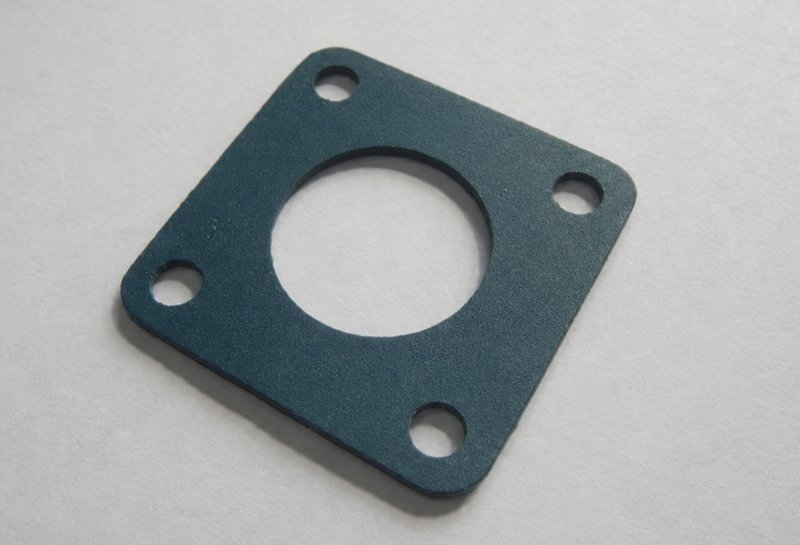
Conductive silicone rubber is a functional elastic composite material. It is made with methyl vinyl silicone rubber as the base polymer, then blended with conductive fillers, crosslinking agents, and processing additives. The material is prepared through internal mixing, compounding, vulcanization, and forming.
Conductive fillers allow silicone rubber to carry electrical current while retaining the flexibility needed to seal a joint. Depending on the formulation, the material can dissipate static charge or provide EMI shielding. Its elastic response helps maintain contact as the assembly moves.
How Conductive Silicone Rubber Works
The conductivity of conductive silicone rubber does not come from one single mechanism. Charge transfer depends on how the conductive fillers are distributed inside the silicone matrix. Two main mechanisms are involved: conductive network paths and the tunneling effect.
Conductive Network Paths
When the amount of conductive filler reaches the critical loading level, nanoscale filler particles begin to contact and connect with each other. These particles form a continuous three-dimensional conductive network inside the silicone rubber.
Electrons can move through this linked filler network, allowing current to pass through the material efficiently. This is the main conductive mechanism in medium- and high-conductivity silicone rubber. It provides high conductivity and stable long-term performance.
Tunneling Effect
When filler loading is lower, the conductive particles may not touch each other directly. A very thin polymer layer remains between adjacent particles. In this case, electrons can still pass through the insulating gap by quantum tunneling.
This mechanism supports weak conductivity and antistatic performance. It helps release small amounts of static charge and prevents static buildup. It is mainly used in antistatic-grade conductive silicone rubber.
Properties of Conductive Silicone Rubber
The key properties of conductive silicone rubber include volume resistivity, mechanical properties, aging resistance, and shielding effectiveness.
Volume resistivity measures the electrical conductivity of the material. For conductive silicone rubber used as a conductor, the volume resistivity should usually be lower than 10^3 ohm-cm. The lower the volume resistivity, the better the conductivity.
Tensile strength and elongation describe how the compound behaves when stretched, while tear strength indicates its resistance to crack growth. Hardness affects the force needed to compress it. Compression set shows how well it recovers, which matters when the gasket must maintain contact over time.
Aging resistance is also important. It directly affects product stability and service life, especially in outdoor, high-temperature, or demanding operating environments.
Shielding effectiveness is measured in dB. It is a key indicator for electromagnetic shielding materials. In general, stronger conductivity provides higher shielding effectiveness. Conductive silicone rubber used for EMI shielding can often reach shielding effectiveness above 60 dB.
Conductive Fillers Used in Silicone Rubber
Conductive fillers determine the conductivity level and performance profile of conductive silicone rubber. These fillers can be divided into two main groups: conventional conductive fillers and high-conductivity shielding fillers.
| Filler Group | Common Fillers | Main Use |
|---|---|---|
| Conventional conductive fillers | Acetylene carbon black, conductive carbon black, carbon fiber, graphite | Basic conductivity and antistatic applications where EMI shielding is not the main requirement |
| High-conductivity shielding fillers | High-purity conductive carbon black, nickel-coated graphite, copper-aluminum powder, silver-aluminum powder, aluminum powder, silver-coated glass powder, pure silver powder | EMI shielding, high-frequency interference control, and demanding electronic sealing parts |
Conventional conductive fillers offer controlled cost, good dispersion, and stable performance. They are common in general industrial and non-military products.
High-conductivity shielding fillers provide much stronger conductivity. Volume resistivity can reach about 10^-3 to 10^-1 ohm-cm. These fillers also provide excellent EMI shielding and can help block high-frequency electromagnetic interference and radiation.
Manufacturing Processes
Conductive silicone rubber products are commonly made by silicone rubber compression molding or silicone rubber extrusion.
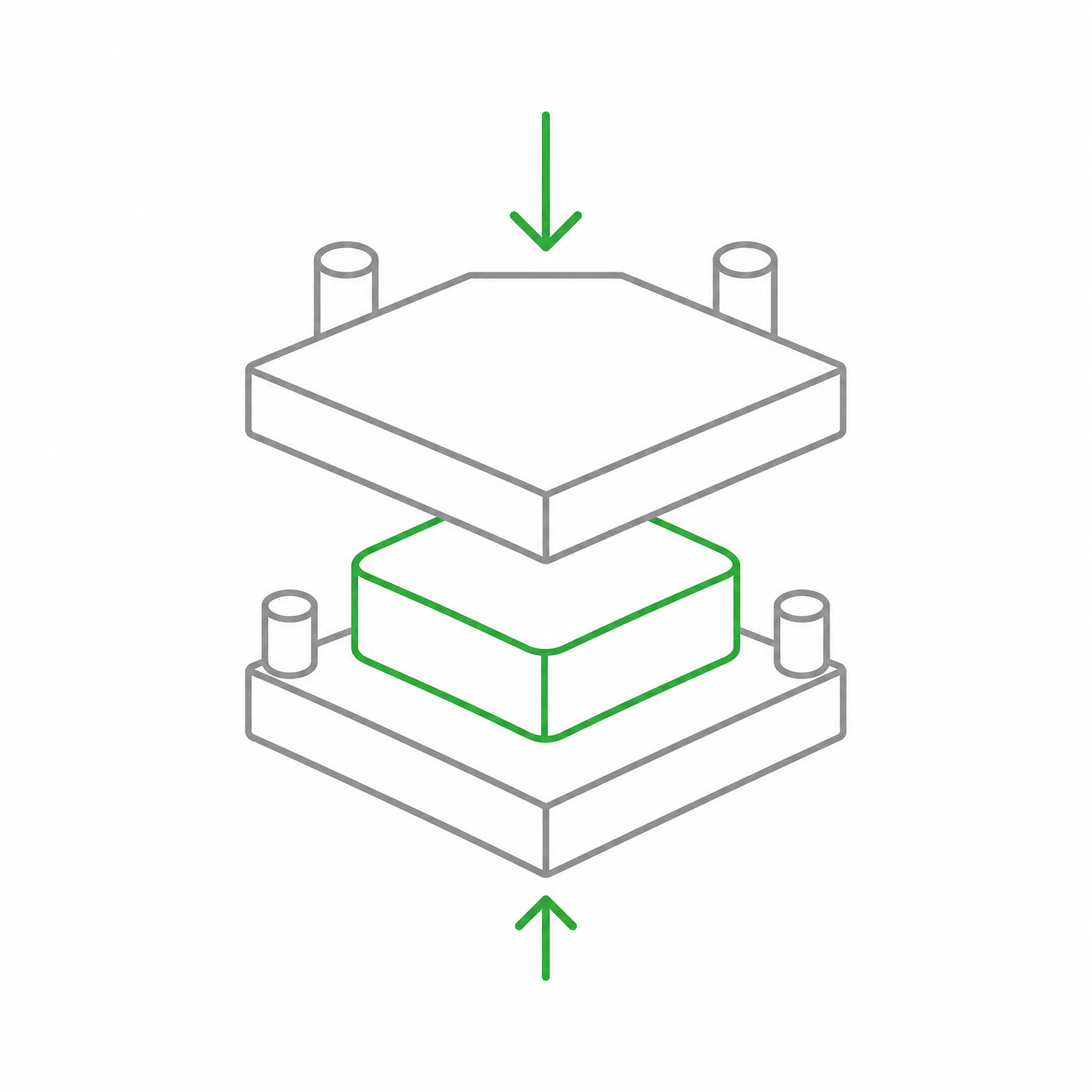
Compression-molded conductive silicone rubber can be made into sheets of different thicknesses, molded parts, strips, and die-cut flat gaskets. This route is useful for custom conductive pads, sealing parts, and molded conductive details.
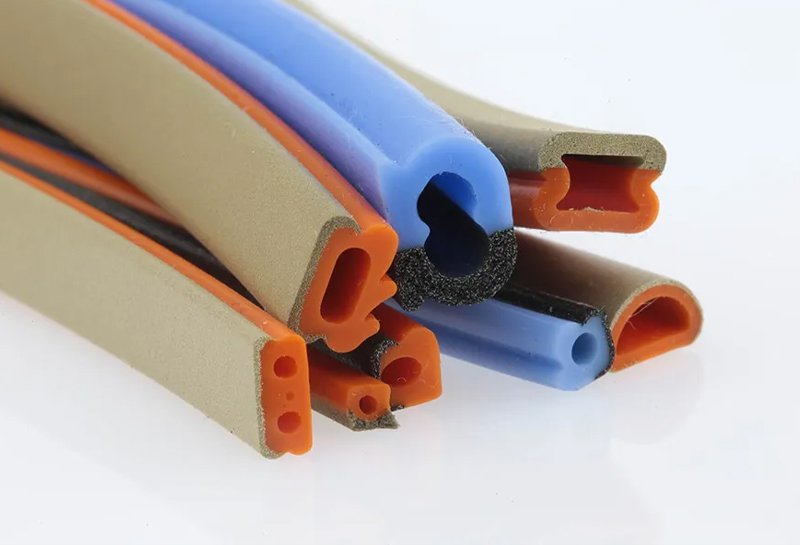
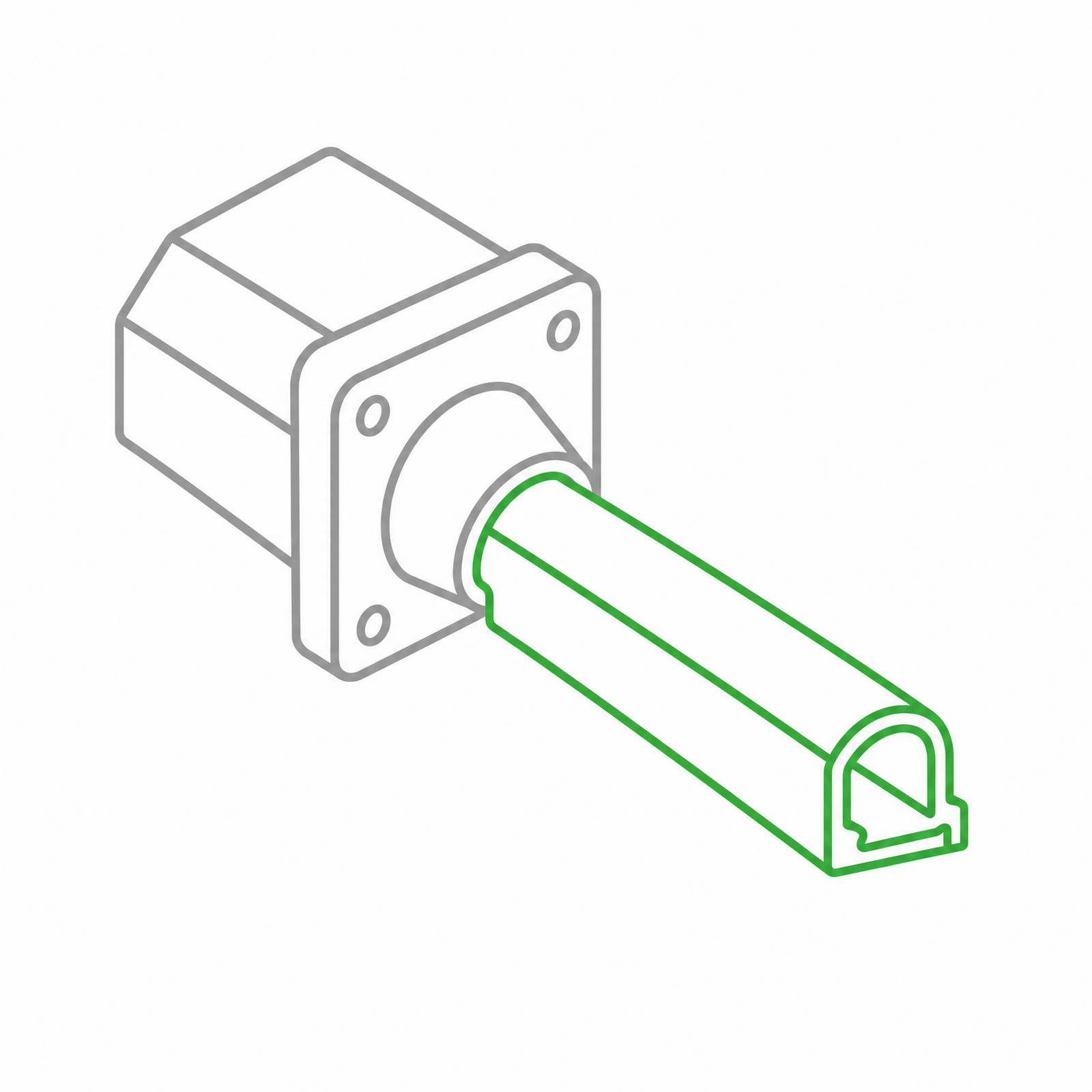
Extrusion produces continuous conductive gasket profiles. Standard cross-sections include round and rectangular strips, with hollow or shaped profiles available when the joint needs a different compression response. Custom dies can match the assembly space.
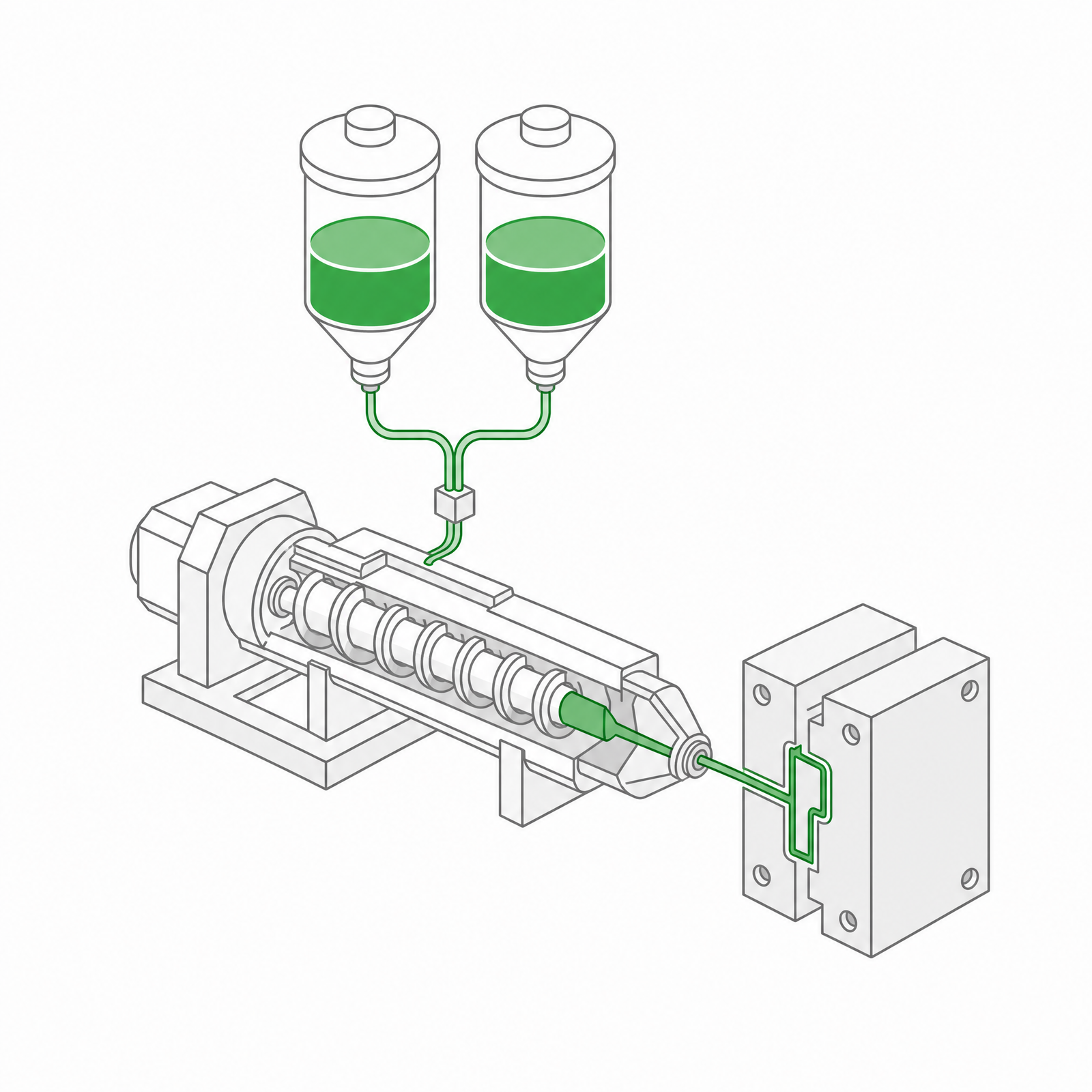
For high-volume or complex parts, conductive compounds may also be reviewed for LSR injection molding when the material system and part design support it.
Advantages of Conductive Silicone Rubber
Compared with ordinary conductive rubber and metal conductive materials, conductive silicone rubber offers several advantages.
Its volume resistivity can be controlled through filler selection and compounding. Conductivity is uniform, and the material can maintain stable performance over long-term use without major drift or decay.
It can work across a wide temperature range, usually from about -50°C to 200°C. It resists high and low temperature shock, aging, UV exposure, and corrosion. This makes it suitable for outdoor, high-voltage, and demanding environments.
It also has strong mechanical performance. The material can be soft, elastic, and easy to compress, with low compression set. It combines flexibility with good surface contact.
Conductive silicone rubber can be processed by compression molding, extrusion, and injection molding. It is suitable for complex shapes, small structures, and precision parts with tight design requirements.
A conductive silicone part can provide electrical contact while also sealing or cushioning the joint. The formulation and geometry determine which of these functions it can perform in the finished assembly.
Applications of Conductive Silicone Rubber
Conductive silicone rubber is widely used in modern electronics. Common applications include silicone rubber keypads, EMI shielding gaskets, flexible connectors, and zebra connectors.
Silicone Rubber Keypads
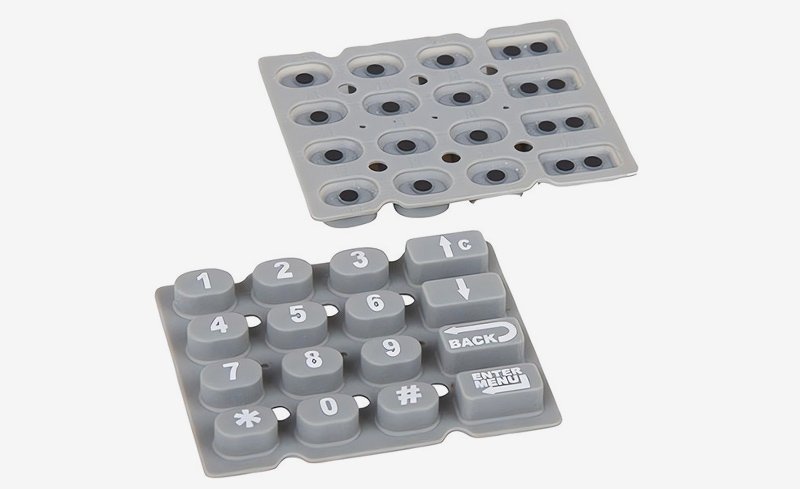
Silicone keypads are one of the most common applications. They are used in remote controls, calculators, medical devices, and industrial control panels.
The bottom of the keypad contains conductive particles or conductive contact areas. When the key is pressed, the silicone deforms and the conductive area touches the PCB contact. This closes the circuit. When the key is released, the elasticity of the silicone returns the key to its original shape and opens the circuit.
EMI Shielding Gaskets
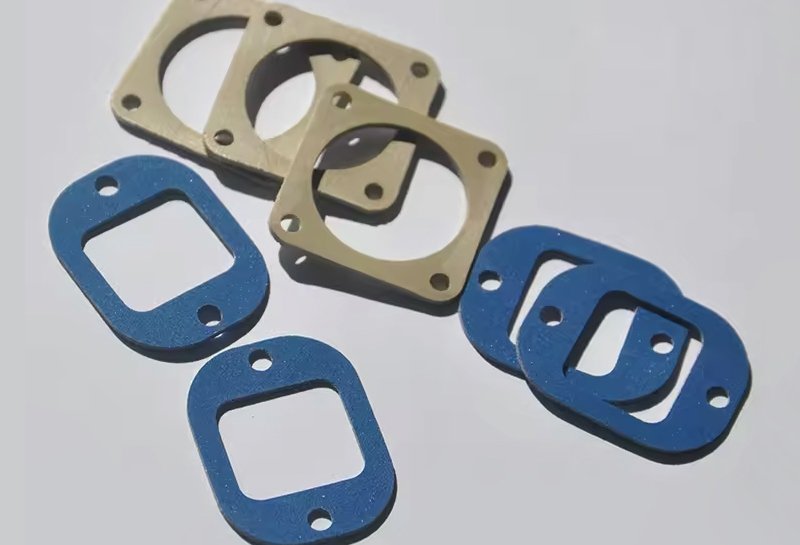
Conductive silicone rubber is often made into sealing strips or gaskets for communication equipment, computer enclosures, aerospace systems, and shielded cabins. The final gasket design should be reviewed around compression, conductivity, installation space, and shielding target.
These gaskets can provide EMI shielding effectiveness up to 120 dB in suitable designs. They can also provide water sealing and dust protection. This allows them to work in complex electromagnetic and environmental conditions.
Flexible Connectors and Zebra Connectors
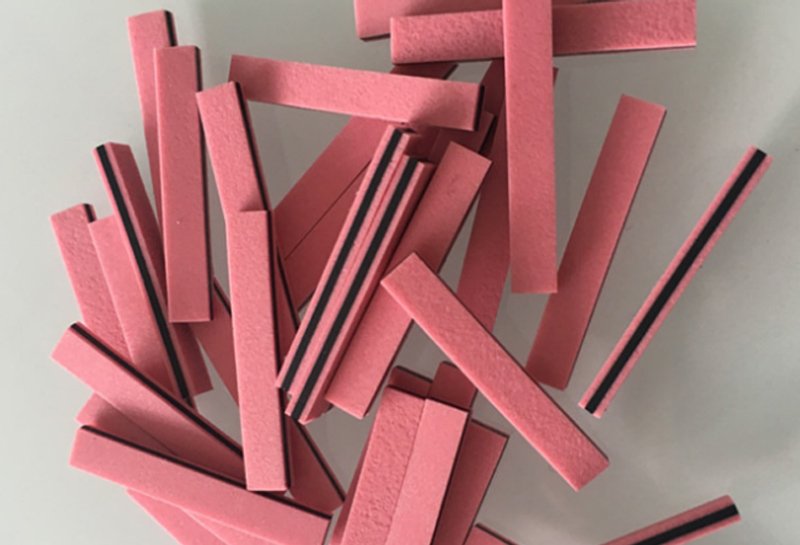
In compact assemblies or shock sensitive applications, anisotropic conductive silicone strips are placed between an LCD and a PCB driver board. With controlled mechanical compression, they provide a flexible and solder-free electrical connection.
This type of connector is often called a silicone rubber zebra connector or conductive zebra strip. It is useful when space is limited and reliable contact is required without soldering.
Conclusion
Conductive silicone performance starts with the base polymer and filler formulation. The curing process establishes the material’s properties, while the part geometry and installed compression determine how well it makes contact. Evaluation needs to reflect the actual service environment.
Before tooling, check how the material will make electrical contact in the assembled product. The manufacturing route must reproduce that interface without compromising any required sealing function.
 LSR Injection Molding
 Silicone Rubber Overmolding
 Compression Molding
 Silicone Rubber Extrusion
 In-house Tooling