
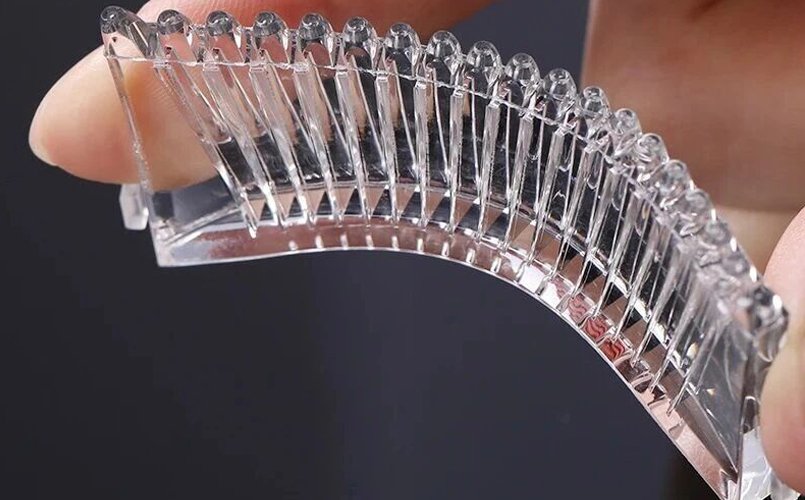
Optically clear silicone is a highly transparent grade of liquid silicone rubber (LSR) developed for applications that require excellent optical clarity, resistance to yellowing, and long-term stability. Its light transmittance can reach up to 95%, and it provides outstanding resistance to ultraviolet radiation and blue-light exposure. This article explains the material’s key properties, how it differs from conventional LSR and transparent engineering plastics, its principal optical applications, and the processing considerations involved in producing high-quality optical silicone components.
Overview of Optically Clear Silicone
Optically clear silicone is a highly transparent liquid silicone rubber characterized by excellent optical clarity and resistance to yellowing. Its light transmittance can reach up to 95%, and it offers outstanding stability under ultraviolet and blue-light exposure. Optical-grade LSR is supplied as two components, Part A and Part B. The two components are metered at a 1:1 ratio, combined through a static mixer, injected into a mold, and heat-cured. Optically clear liquid silicone rubber offers several important advantages:
- High optical clarity, with light transmittance of up to 95%;
- High flowability, making the material suitable for liquid silicone injection molding and compression molding;
- Outstanding stability under ultraviolet and blue-light exposure;
- Good tensile strength and tear resistance;
- Excellent thermal stability and weather resistance, with a service temperature range of approximately -60°C to 250°C.
Conventional LSR vs. Optically Clear LSR
Conventional liquid silicone rubber is generally transparent or translucent. When it is used for visible or appearance-critical components, the product may begin to show yellowing after approximately six months. In addition to the inherent properties of silicone, optical-grade LSR provides higher transparency and substantially better resistance to yellowing, making it suitable for applications in which long-term optical clarity is essential.
Silicone molecular chains are highly flexible, and the intermolecular forces between them are relatively weak. As a result, silicone has limited inherent mechanical strength and normally requires reinforcing agents.
Conventional LSR is commonly reinforced with fumed silica (SiO2) to increase hardness, tensile strength, and tear strength. Optically clear LSR instead uses silicone resin as a reinforcing component to improve light transmittance and weather resistance. However, silicone resin generally provides less mechanical reinforcement than fumed silica.
Transparent Engineering Plastics vs. Optically Clear LSR
Common transparent thermoplastics include PVC, PP, PET, PMMA, PS, PCTG, PC, and PPSU. The light transmittance of plastic materials is normally reported at test-piece thicknesses of 1 mm, 2 mm, or 3 mm. Among these materials, PMMA typically provides the highest light transmittance, at approximately 92%.
The light transmittance of liquid silicone rubber, by contrast, is commonly evaluated at a wall thickness of 12 mm. At this thickness, conventional LSR typically provides light transmittance ranging from 50% to 80%, depending on hardness and formulation. Optical-grade LSR can achieve more than 90% transmittance at 12 mm, while some material manufacturers offer optical grades with transmittance of approximately 94% to 95%.
| Properties / Materials | LSR | PC | PMMA | Glass |
|---|---|---|---|---|
| Light Transmittance | 92%-96% | 86%-89% | 89%-92% | 92%-97% |
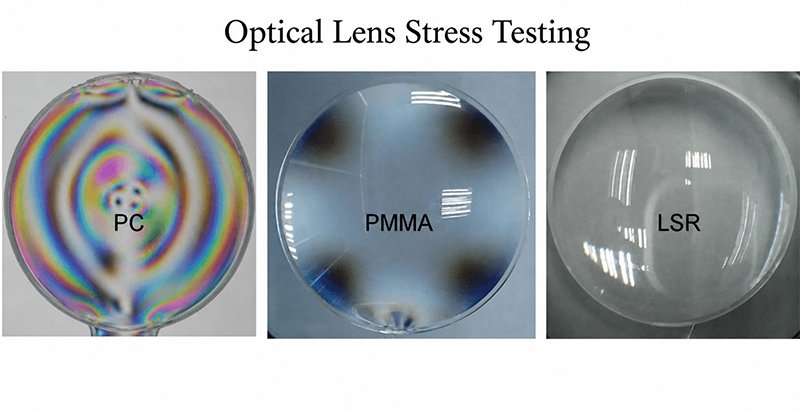
| Residual Stress | None | Entire Lens | Gate and Thickness Variation Areas | Lens Edges |
| Refractive Index | 1.41 | 1.526 | 1.482-1.521 | 1.519-1.917 |
| Density (g/cm³) | 1.04-1.12 | 1.18-1.22 | 1.15-1.19 | 2.40-2.80 |
| Temperature Resistance | - 40°C-250°C | - 45°C-135°C | - 35°C-90°C | - 80°C-400°C |
| Yellowing Resistance | Excellent | Poor | Poor | No Yellowing |
| UV Resistance | Excellent | Poor | Fair | Excellent |
| Designability | Excellent | Good | Good | Poor |
| Thermal Stability | Excellent | Poor | Poor | Prone to Cracking with Sudden Temperature Changes |
Applications of Optically Clear Liquid Silicone Rubber
LED Silicone Lighting Lens
LED lighting lenses are designed according to the principles of light refraction. They improve light utilization and luminous efficiency, and different lens structures can be selected to produce the required optical distribution for a particular application.
LED lighting lenses are used in indoor lighting fixtures, automotive headlamps, outdoor streetlights, aerospace systems, and lighting equipment designed for harsh operating environments.
Silicone LED lenses can be manufactured in a wide range of shapes to meet the lighting requirements of different industries. They can support explosion-resistant and impact-resistant designs while also performing secondary optical functions. Silicone also offers excellent environmental stability. In chemical-processing environments, corrosive-gas conditions, rapid temperature cycling, and other demanding operating conditions, silicone lenses can maintain reliable safety performance and stable optical properties. Their long service life also simplifies subsequent maintenance and replacement.
Automotive ADB Silicone Inner Lens
Adaptive Driving Beam (ADB) is an intelligent headlamp system that automatically adjusts the illuminated and shaded areas of the high-beam pattern according to road and traffic conditions.
In a typical ADB optical module, an inner lens collects light from the LED source and directs it in controlled zones toward the outer lens. The system must maintain an accurate beam pattern while reducing glare and improving image resolution. This creates several technical requirements for the inner lens.
First, LED light loss must be minimized, which means the lens material must provide high light transmittance and excellent surface accuracy. Second, because the lens remains close to the LED source for extended periods, the material must offer exceptional resistance to heat and ultraviolet exposure. Finally, ADB inner lenses often contain undercuts and other complex structural features, placing demanding requirements on mold design and high-volume production processes.
Compared with conventional optical lens materials, liquid silicone rubber can satisfy these requirements while providing greater design flexibility for high-precision optical structures. This makes it possible to manufacture complex ADB silicone inner lenses. Its excellent heat resistance and resistance to yellowing also help the lens maintain stable optical performance throughout the vehicle’s service life.
Automotive AR-HUD Silicone Lens
An automotive augmented-reality head-up display (AR-HUD) combines augmented-reality technology with a head-up display system. It uses the windshield as a display surface and projects driving information directly into the driver’s field of view, helping reduce distraction and lower the risk of accidents.
In an AR-HUD system, the projection distance must vary rather than remain fixed, creating demanding requirements for optical accuracy and response time. The system therefore requires high-precision optical lenses to provide a wider field of view and a longer virtual-image distance.
Silicone lenses are produced by injection molding in a cleanroom environment to maintain the required optical precision. They also offer low chromatic dispersion, excellent ultraviolet resistance, and strong heat resistance. When used in automotive AR-HUD systems, silicone lenses can maintain stable optical performance over long periods without distorting the projected image.
Silicone also has a lower density than conventional optical plastics and glass. For components of the same volume, a silicone lens can therefore reduce weight and support vehicle lightweighting.
LSR Fly-Eye Lens Array
A fly’s-eye lens consists of an array of small lenslets and is used in optical-path and illumination systems to achieve high optical-energy utilization and uniform illumination across a large area. The key to uniform lighting is maintaining consistent lens geometry and sufficient illumination brightness across the entire array.
An LSR fly’s-eye lens can provide light transmittance of up to 95%. Images projected through a silicone lens can appear clearer and more uniform than those produced by conventional lenses.
LSR fly’s-eye lenses also provide exceptional heat resistance. Even at temperatures of 200°C, they can maintain a stable refractive index and avoid risks such as surface-film delamination, cracking, yellowing, or color shift. This results in more stable brightness output, a longer service life, and higher light throughput efficiency.
Mini LED Silicone Lens
Mini LED, also known as a submillimeter light-emitting diode, is primarily used in television backlights, automotive displays, laptop computers, tablet computers, AR glasses, and related applications. It can improve display quality while supporting lower power consumption, longer service life, and thinner product designs.
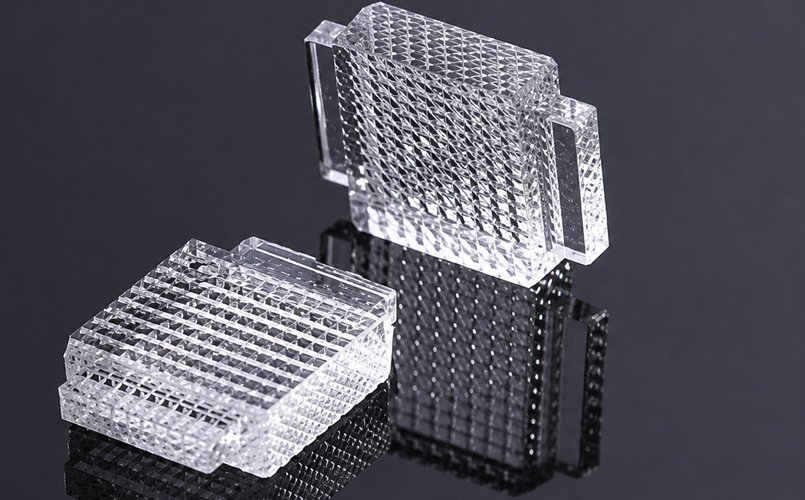
Because Mini LED systems use local dimming, yellowish artifacts may appear around the edges of the image. Incorporating a microlens structure into the backlight module can eliminate visible light spots, distribute light more uniformly, reduce halo effects, improve light utilization and reflectance, and minimize optical loss.
Mini LED systems also use a larger number of backlight sources and therefore generate more heat, placing greater demands on the thermal resistance of the lens material. LSR offers the design flexibility required for complex microstructures, together with high light transmittance and excellent heat resistance. These properties make it a preferred material for Mini LED optical lenses.
Silicone lenses have a density of only approximately 1.04 to 1.12 g/cm³ and can provide light transmittance of up to 95%. They offer excellent resistance to ultraviolet exposure and yellowing, with a temperature-resistance range of approximately -40°C to 250°C. The material contains no residual internal stress and exhibits very little dimensional deformation during prolonged exposure to high temperatures. Its optical properties remain stable, and it provides a long service life.
These characteristics make silicone lenses well suited to Mini LED optical systems. They can fit closely against the backlight module and provide stable, precise light output.
Processing Considerations for Optically Clear LSR
-
Use a professionally finished, high-gloss mold surface. Optical components require highly polished mold surfaces. Specialized machining, polishing, and surface-finishing processes are necessary to achieve the required optical quality.
-
Give particular attention to mold venting. Optically clear LSR places demanding requirements on air evacuation, making vent design one of the most critical aspects of the mold. Reducing the mold temperature and injection speed can help control bubble formation.
-
Thoroughly clean the molding machine before processing optical-grade LSR. The machine, feed system, and existing material passages must be cleaned completely before optical-grade LSR is introduced. Residual material left in the previous processing lines can reduce product transparency and negatively affect surface appearance.
-
Keep the mold temperature at or below approximately 135°C during molding. Excessive mold temperature may cause the silicone to stick to the mold or increase the risk of bubbles.
-
Control mold sticking and maintain strict mold-surface cleanliness. Optically clear silicone is relatively prone to sticking, so applying a suitable mold coating is recommended. The mold surface must remain clean, and optical molds generally require more frequent cleaning than molds used for conventional silicone. Dry-ice blasting equipment can be used to clean the mold surface efficiently.
 LSR Injection Molding
 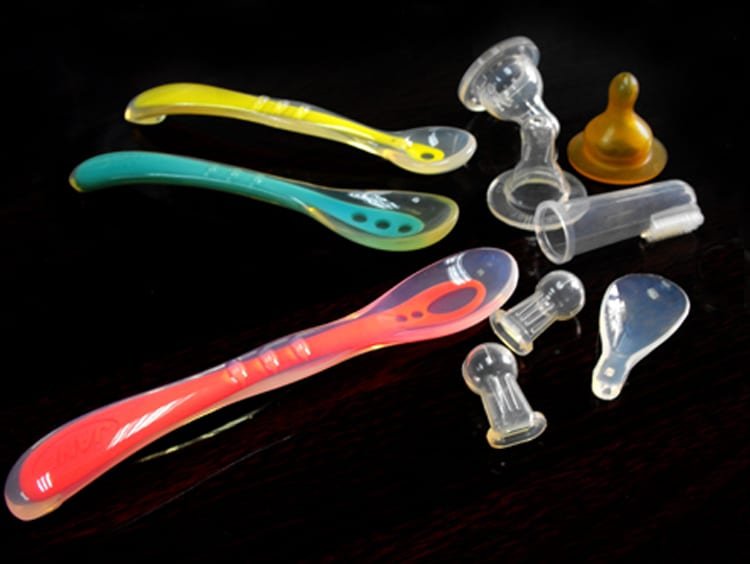 Silicone Overmolding
 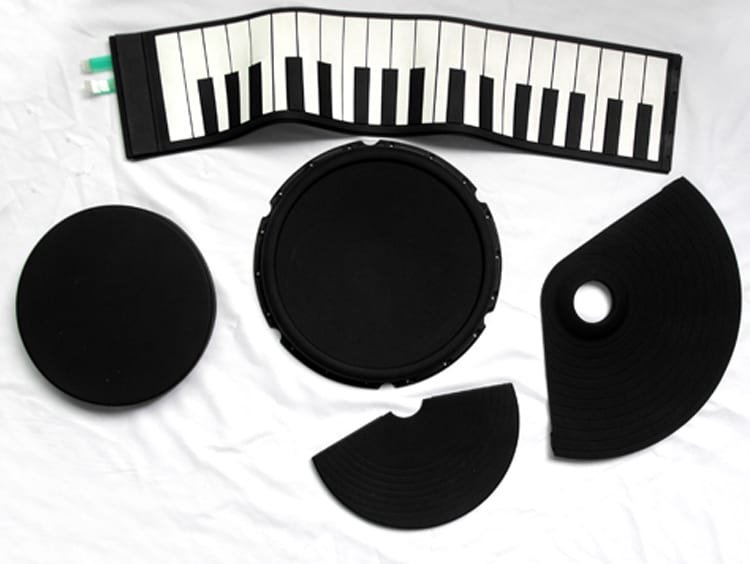 Compression Molding
 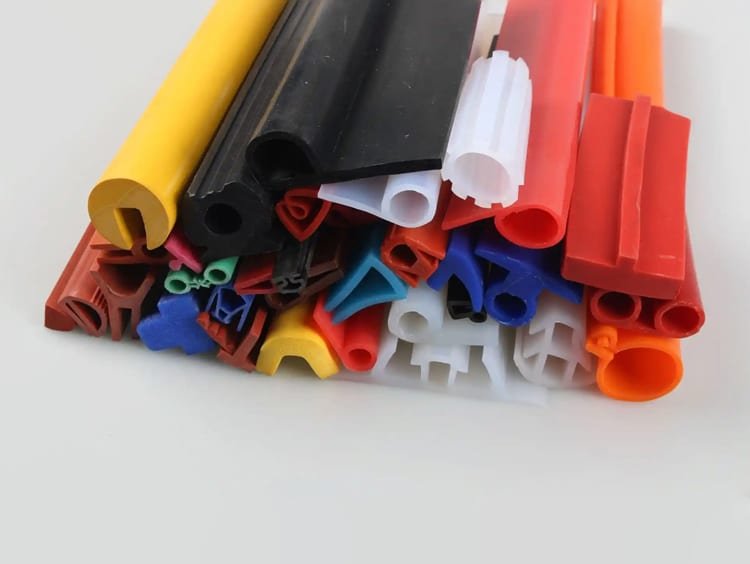 Silicone Extrusion
 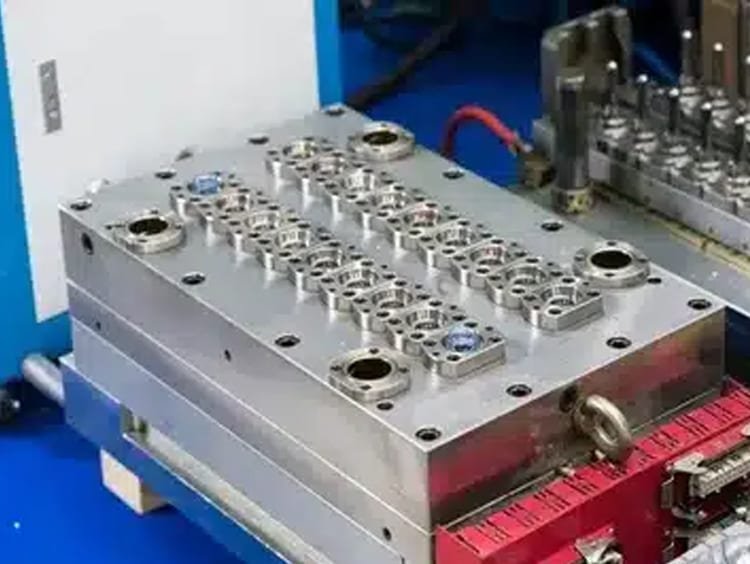 In-house Tooling