
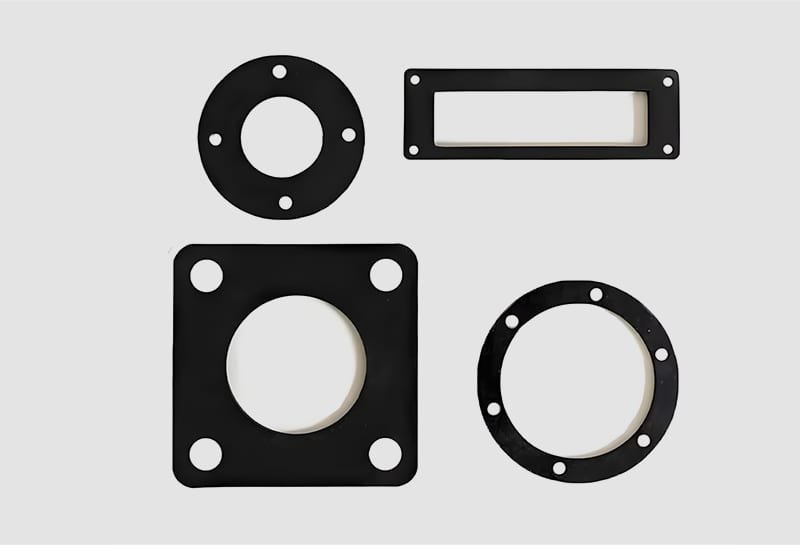
As 800 V high-voltage platforms, large cylindrical cells, and ultra-fast charging become more common in electric vehicles, battery pack materials face tougher requirements. They must help manage heat, resist flame, seal against water, absorb vibration, and stay stable through long thermal cycles.
Silicone rubber has become a key material in EV battery packs because it offers weather resistance, electrical insulation, electrolyte resistance, low compression set, and stable elasticity across a wide temperature range. It can be used as thermal interface material, waterproof sealing material, flame-retardant cushioning material, and electrical insulation material.
Heat resistance is only part of selecting silicone for a battery pack. A compressed part must recover after vibration and temperature changes, and the compound must tolerate likely fluid exposure. Electrical and flame-performance requirements need to be checked for its specific role.
Why EV Batteries Need Silicone Rubber?
The traction battery is one of the most important safety systems in an electric vehicle. Battery packs are now becoming more energy dense, faster to charge, more compact, and expected to last longer.
These changes make the operating environment more severe. The battery system sees a wider temperature range, higher heat concentration, tighter cell spacing, stronger vibration, and higher sensitivity to thermal runaway.
Under these conditions, a rubber or plastic part may harden and lose contact with the mating surface. Modified silicone compounds can address several pack requirements, but the formulation must be selected for the particular role. A sealing gasket and a flame-resistant thermal pad do not have the same specification.
Vehicle-level silicone programs should evaluate material behavior together with battery pack structure, assembly process, sealing load, and long-term reliability targets.
What EV Battery Packs Require from Materials?
EV makers and battery manufacturers now review silicone rubber parts based on long-life performance, not only initial hardness or short-term heat resistance. Four requirements are especially important.
Wide Temperature Stability
Battery pack silicone rubber parts may need long-term service from about -40°C to 150°C. Some local areas may require short-term resistance above 180°C. The material should also survive more than 500 thermal shock cycles without cracking, chalking, or clear performance loss.
Low Compression Set
Compression set is critical for gaskets, seals, cushioning pads, and thermal interface parts. A common target is compression set of 20 percent or lower after 150°C for 72 hours. This helps the part keep sealing force after years of vibration and compression.
If compression set is too high, the part may collapse, lose contact pressure, leak air or water, or reduce heat transfer.
Resistance to Electrolyte and Coolant
Battery pack components may be exposed to glycol-based coolant, electrolyte vapor, condensate, and other chemical media. The silicone rubber should resist swelling, softening, stickiness, hardening, and dimensional change during long-term exposure.
This is especially important around cooling plates, module sealing areas, electrical connectors, and pack enclosure interfaces.
Flame Resistance and Electrical Insulation
Cell isolation parts, thermal barriers, and insulating pads must provide stable insulation in high-voltage areas. Many designs also require UL 94 V-0 flame resistance. The goal is to reduce the risk of flame spread and help slow thermal runaway propagation inside the battery pack.
Main Silicone Rubber Applications in EV Battery Packs
Silicone rubber applications in EV battery packs can be grouped into three main areas: thermal management, waterproof sealing, and flame-retardant cushioning or isolation. These applications should not use the same material by default. Each one has different performance targets.
Cell Thermal Management: Silicone Thermal Pads
Ultra-fast charging creates continuous heat inside battery cells and modules. Traditional heat dissipation materials may have high thermal resistance or may age too quickly under repeated heat cycles.
Silicone rubber thermal pads work as thermal interface materials between the cells and the liquid cooling plate. They fill small air gaps, reduce interface thermal resistance, and transfer local heat away from the cell. This helps reduce hot spots and lowers the risk of thermal runaway.
Common performance targets for EV battery thermal pads include:
- Thermal conductivity: 0.8 to 3.0 W/m-K
- Preferred thermal conductivity for high-density cells: above 1.5 W/m-K
- Service temperature: about -50°C to 200°C
- Soft surface contact and good gap filling
- Low oil bleeding
- Non-corrosive formulation
- Long-term aging resistance without chalking
Battery Pack Sealing: Weatherproof Silicone Rubber Gaskets and Seals
A battery-pack seal must keep moisture out over years of outdoor use. Temperature changes can reduce contact pressure, and coolant exposure may affect the rubber itself. Evaluate both the joint and the material under those conditions.
Standard rubber can become brittle in winter or swell in high-temperature environments. It may not meet IP67-level protection or long-term automotive durability requirements.
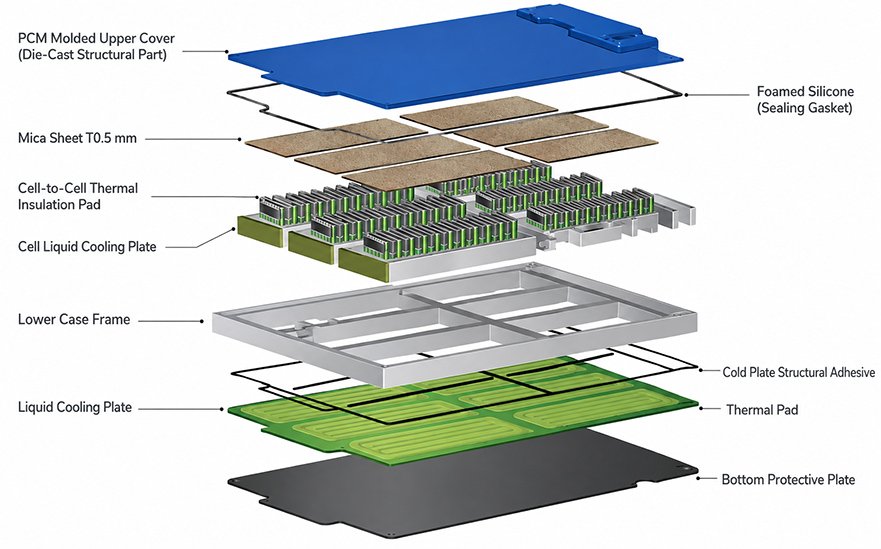
Silicone rubber seals and gaskets are used around battery pack housings, covers, connector areas, and other sealing interfaces. Their job is to block water vapor, dust, coolant, and contaminants from entering the pack. Stable sealing also helps protect battery insulation performance.
Key evaluation items include compression set, media resistance, high- and low-temperature cycling, aging resistance, and dimensional stability. Compact connector interfaces may also need custom gasket geometry to keep compression stable in limited space.
Cell Flame-Retardant Cushioning: Silicone Foam and Insulating Pads
Densely packed cells leave little room for movement. Swelling and thermal expansion change the load on neighboring surfaces, while vehicle vibration can make those surfaces rub. Cushioning must accommodate those changes within the available space.
Flame-retardant silicone foam and insulating silicone pads provide cushioning, vibration damping, thermal insulation, and electrical isolation between cells. In a thermal runaway event, they can help slow flame spread and improve pack-level safety margin.
Important requirements include UL 94 V-0 flame resistance, low density, high rebound, stable insulation, and long-term compression resistance.
EV Battery Silicone Rubber Selection Notes
A thermal pad must carry heat across the interface and stay in contact as the pack ages. High conductivity is useful only if the pad also conforms to the gap. Review thermal resistance after aging to check for hardening or contact loss that could create local hot spots.
For pack sealing, the material needs low compression set, coolant resistance, and stable performance across a wide temperature range. Common failure modes include water leakage, condensation, and loss of sealing rebound. A media-resistant silicone rubber compound should be selected, and the compression set target should normally be controlled at 20 percent or lower.
For flame-retardant cushioning, the key requirements include UL 94 V-0 flame resistance, high rebound, lightweight design, and electrical insulation. Poor material selection can cause flame-retardant failure, compression collapse, or vibration noise. EV-grade flame-retardant silicone foam should be checked after thermal cycling, not only in its initial condition.
Common Mistakes When Selecting Materials for EV Batteries
Mistake 1: Checking Initial Hardness Only
Some low-cost silicone rubber parts feel soft at the beginning, but their rebound becomes poor after high-temperature aging. After one or two years in a vehicle, this can lead to seal collapse, reduced thermal contact, or failed waterproofing.
Compression set and aging behavior are more important than initial touch or initial hardness alone.
Mistake 2: Using General Consumer Silicone Instead of EV-Grade Material
General silicone materials are not always suitable for electrolyte or coolant exposure. Under long-term battery pack conditions, they may swell, become sticky, release impurities, or lose mechanical strength.
This can affect insulation stability and increase the risk of micro-short circuits or sealing failure. EV battery parts should use compounds designed for the real operating media and temperature range.
For broader material background, see our guide to liquid silicone rubber and the comparison of HCR vs. LSR silicone rubber.
Mistake 3: Focusing Only on Flame Resistance
Flame resistance is important, but it is not the only requirement. Some materials use too much flame-retardant filler. This can make the silicone brittle at low temperature.
In cold winter service, especially in northern regions, poor low-temperature flexibility can cause pads or seals to crack. A reliable EV silicone material must balance flame resistance, thermal shock stability, compression recovery, and insulation performance.
How to Choose Silicone Rubber for EV Battery Projects
Start with the real function of the part. A thermal pad, a housing gasket, and a flame-retardant cell cushion need different material designs.
For thermal pads, check heat transfer at the intended compression. Repeat the assessment after aging, including any oil bleeding that could affect contact or nearby components.
For pack seals, evaluate whether the gasket retains contact in its groove after coolant exposure and weathering. Waterproof testing should confirm the assembled result.
For flame-retardant cushioning pads, focus on UL 94 V-0, rebound, density, compression fatigue, electrical insulation, and thermal shock.
Select the compound in the context of the battery pack. Its location determines the electrical and thermal demands, while the cooling system determines likely fluid exposure. Confirm performance against the intended service life and validation requirements.
Conclusion
Silicone rubber plays a practical role in modern EV battery packs. It helps with heat transfer, waterproof sealing, vibration control, flame protection, and electrical insulation.
Faster charging and longer service targets make material selection more demanding. A silicone component must retain its intended function as the pack ages, whether it forms a seal or a thermal interface. Evaluate the chosen compound under those conditions before approving it for production.
For EV battery projects, silicone rubber should be selected by function and tested under real operating conditions. This gives engineers a clearer path from material selection to production validation.
 LSR Injection Molding
 Silicone Rubber Overmolding
 Compression Molding
 Silicone Rubber Extrusion
 In-house Tooling