
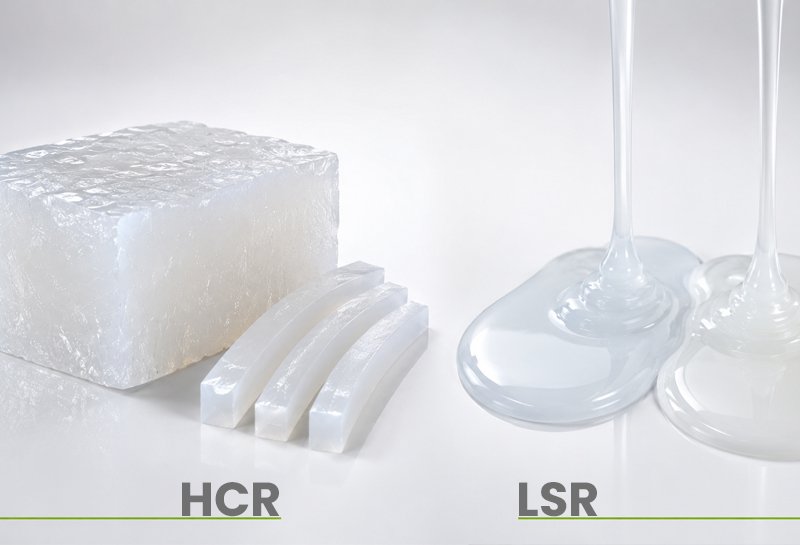
LSR and HCR both cure into elastic silicone rubber. Suitable grades retain flexibility through heat and cold and resist outdoor aging. Their main manufacturing difference is the form in which the material enters the process.
LSR is a pumpable two-part liquid used mainly for LSR injection molding. HCR is a gum-like solid that must be prepared before it enters the mold or extrusion equipment. This difference shapes the production setup: LSR lends itself to metered automation, while HCR requires more material preparation.
What Is LSR?
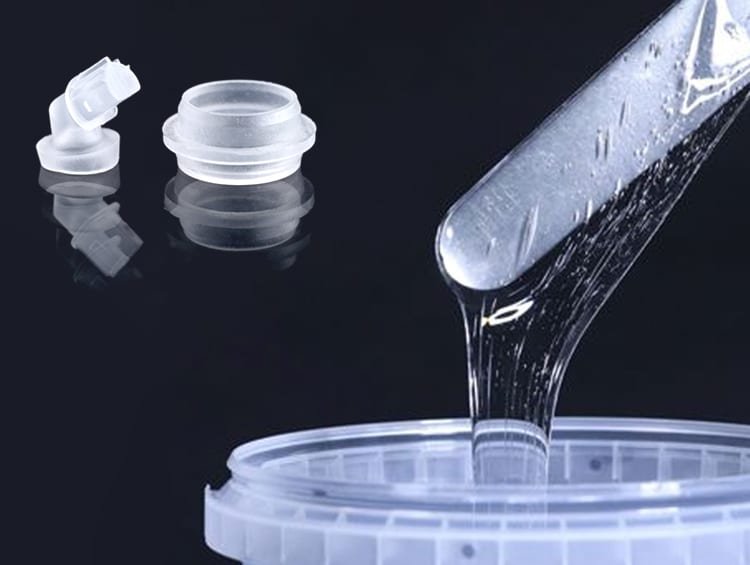
LSR stands for liquid silicone rubber. It is a heat-cured silicone rubber with low viscosity. The material can be metered, mixed, pumped, and injected by machine.
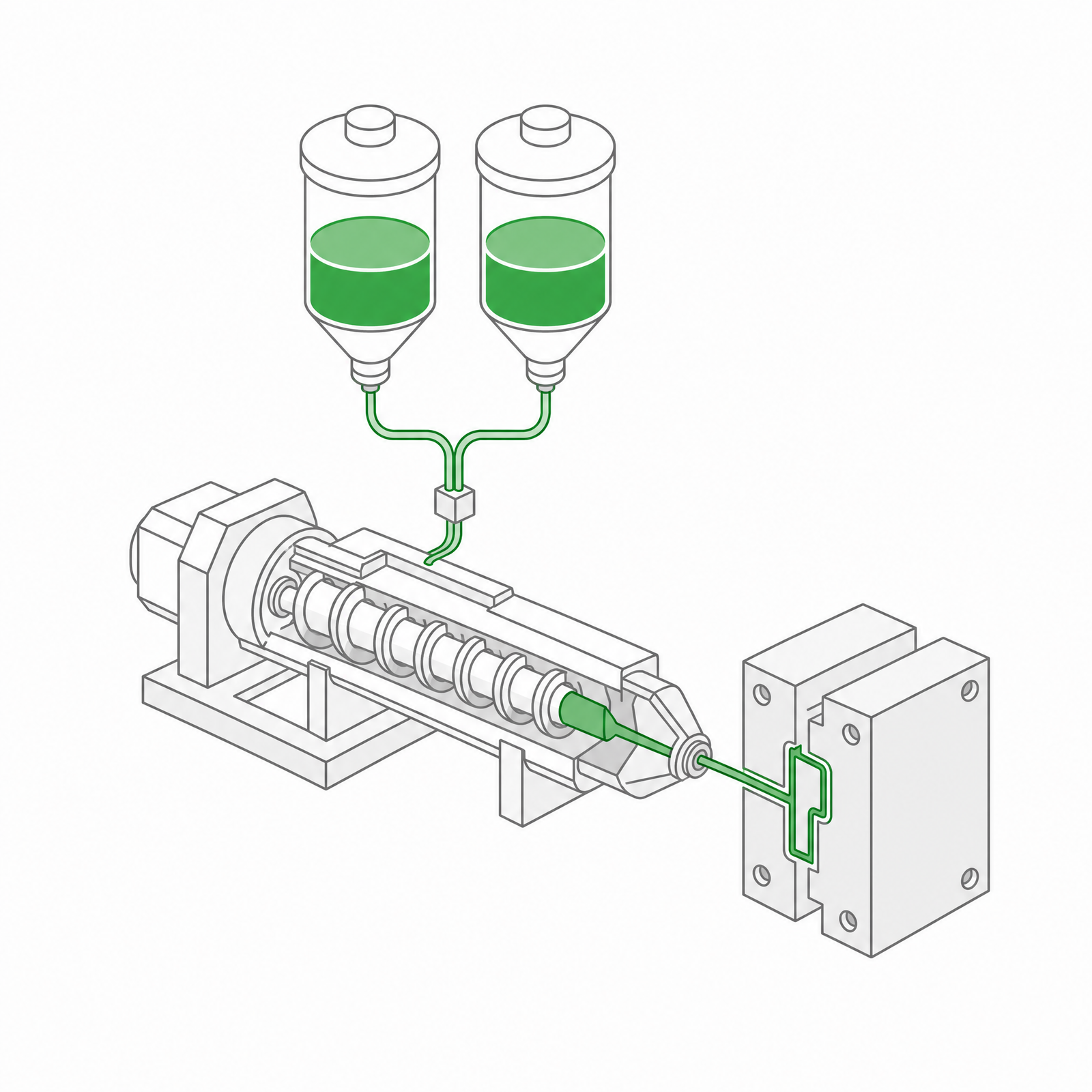
LSR is usually supplied as A and B components. One side contains the platinum catalyst. The other side contains the crosslinker and inhibitor. During production, the two components are fed at a controlled ratio, often 1:1, through a static mixer. The mixed material enters a cooled injection unit, then flows into a heated mold.
Inside the mold, the liquid material crosslinks and becomes an elastic silicone rubber part. This process supports repeatable production, fine details, thin walls, and automated demolding when the mold and part design allow it.
What Is HCR?
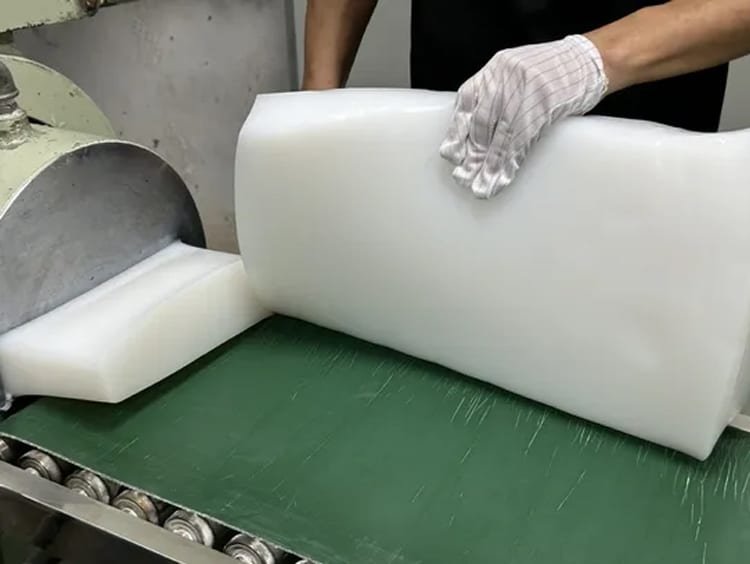
HCR stands for high consistency rubber. It is also called HTV silicone, solid silicone rubber, or gum-stock silicone. Before curing, it looks like a thick rubber compound rather than a liquid.
HCR is generally based on high-molecular-weight polysiloxane with reinforcing filler. Before forming, it is mixed on a mill or in an internal mixer. The curing system and any functional additives are incorporated at this stage to prepare the compound for its intended use.
After mixing, the compound is cut, weighed, or shaped into a preform. It can then be used for compression molding, transfer molding, extrusion, or calendaring.
HCR vs. LSR: Quick Comparison
Material Form
LSR is supplied as two liquid components. The polymer chain is relatively short, so the material has low viscosity. It can be pumped through a closed feed system and injected into small cavities.
Most base formulation work is completed by the material supplier. The silicone molder may add approved color paste or specified additives, but the A/B ratio and cure behavior must stay within the material supplier’s control window.
HCR has longer polymer chains and much higher viscosity. It cannot be moved through a liquid metering system. It must be mixed and shaped before processing.
HCR compounding allows fillers to be selected for a specific function, such as conducting heat or reducing compression set. Those additions also change how the compound flows and cures. The formulation must deliver the target performance without making the part difficult to mold.
Curing System
Curing turns uncured silicone into an elastomer by forming a crosslinked network. The curing system affects processing temperature, reaction speed, odor, volatile content, and post-cure requirements.
LSR usually uses a platinum-catalyzed addition cure system. After the material enters the heated mold, vinyl silicone reacts with hydride silicone and forms a stable elastic network.
This reaction does not create the same decomposition byproducts often seen in peroxide curing. For this reason, LSR is often selected for parts that need low odor, good clarity, and low volatile content.
The platinum catalyst is sensitive to contamination. Sulfur, nitrogen, tin compounds, some release agents, and some substrate residues can inhibit curing. If contamination reaches the material, mold, or overmolded substrate, the part may stay tacky or cure only partly in local areas.
Peroxide curing is common for HCR. When heated, the peroxide decomposes and starts crosslinking between polymer chains. This system is mature and works well for silicone rubber compression molding and extrusion.
Some decomposition products can remain in the molded part. A post cure may be used to remove volatiles, stabilize the crosslinked network, and improve some mechanical properties. The exact post-cure condition should be set by the material grade, part thickness, and application standard.
HCR can also use platinum addition cure. Compared with peroxide-cured HCR, platinum-cured HCR can offer lower odor and lower volatile content.
Molding And Processing
LSR Injection Molding
LSR production usually follows a closed and automated route:
- A and B components are fed from drums by supply pumps.
- Metering pumps control the mixing ratio.
- The two components pass through a static mixer.
- The mixed material enters a cooled injection unit.
- The material is injected through a cold runner into a heated mold.
- The silicone cures in the cavity and is removed after mold opening.
LSR molding uses a cold runner and a hot mold. The feed system and runner stay cool enough to prevent early reaction. The mold cavity stays hot enough to cure the part quickly after filling. Material inside the cold runner can remain uncured after a cycle and be used again in the next shot.
HCR Compression Molding
Compression molding is a common process for HCR. The mixed compound is cut, weighed, and shaped into a charge. The charge is placed into an open heated cavity. When the mold closes, the rubber flows under pressure and fills the cavity while curing.
HCR molding depends heavily on the rubber charge. Weight, shape, and placement all affect flow inside the mold. Too little material can cause short fill. Too much material can create excess flash. Poor placement can trap air or leave local areas underfilled.
HCR Extrusion And Calendaring
HCR is also used in continuous processes such as silicone rubber extrusion and calendaring.
In extrusion, the compound is pushed by a screw through a die to form tubing, sealing strips, wire jackets, or custom profiles. The extrudate then cures in hot air, infrared equipment, or another vulcanization system.
In calendaring, rollers form the compound into a sheet with controlled thickness. The process can also laminate silicone onto fabric or another substrate. It is often used for silicone sheet, diaphragms, membranes, and reinforced composite materials.
Mold Design
LSR has low viscosity. It can fill small features, but it can also enter tiny mold gaps. LSR tooling needs tight control of parting lines, ejector clearances, and runner sealing. The mold also needs stable cavity temperature. Large temperature differences can create uneven curing, local under-cure, demolding distortion, or dimensional variation.
HCR compression molds are usually simpler in structure. They often include upper and lower mold halves, cavities, vents, and flash grooves. Extra rubber flows into the flash area during closing and is removed after curing.
Venting is important. If air is trapped at the end of the flow path, bubbles or surface defects can appear. HCR molds may look simpler than LSR molds, but multi-cavity molds and insert molds still need accurate machining and good alignment.
Mechanical Performance
Both LSR and HCR are silicone elastomers, so both can provide strong compression set and stress relaxation performance compared with many other rubber families.
HCR can show lower compression set than LSR in some grades and test conditions. A lower compression set means the material resists permanent deformation better after compression. This can be useful for long-term sealing.
LSR often shows higher elongation at break. In some comparisons, LSR elongation can be about twice that of HCR. This means LSR can stretch further before breaking under tensile load. The exact values still depend on the grade, cure system, filler package, hardness, and test method.
Structure And Design
LSR has an advantage when the product has narrow flow paths, small cavities, or fine details. The material can flow into features that would be difficult for high-viscosity HCR to fill.
LSR is often a good fit for:
- Thin-wall parts.
- Micro holes and narrow slots.
- Flexible membranes.
- Complex curved surfaces.
- Miniature seals.
- Multi-cavity precision parts.
- Overmolded parts with plastic, metal, or glass inserts.
The part still needs to release from the mold after curing. Deep undercuts, closed inner cavities, and very thin edges can tear or deform during demolding.
HCR is often a practical choice for thicker sections and larger parts with relatively simple geometry. Compression molding can produce these shapes, while extrusion suits continuous tubing and profiles.
Because HCR has high viscosity, the flow distance inside the mold should not be too long. Thin ends, changing wall sections, and closed areas can make filling harder.
Compounds
Both LSR and HCR are available in many hardness levels. Common LSR grades cover soft to medium-hard ranges. HCR often has a wider hardness window. Some HCR material families can cover very soft grades up to about Shore A 80.
HCR mixing is useful when the part needs a functional compound. Common directions include:
- Thermally conductive silicone.
- Electrically conductive silicone.
- Flame-resistant silicone.
- High-tear silicone.
- High-temperature silicone.
Fillers change processing behavior. For example, higher thermal filler loading often raises viscosity and hardness. It may also reduce elongation and flow. Mold pressure, venting, part thickness, and curing conditions need to match the compound.
LSR suppliers offer specialty grades for functions such as heat transfer or bonding to a substrate, as well as grades intended for medical and food-contact applications. These compounds are usually supplied ready to process. Only approved colors and additives should be used to avoid disturbing the A/B ratio and curing behavior.
Overmolding And Multi-Material Molding
LSR is well suited for silicone rubber overmolding with metal, glass, and selected high-temperature plastics. During injection, the liquid material can flow around the insert and form a continuous sealing layer or soft-touch surface.
Bonding usually comes from one or both of these methods:
- Chemical bonding: self-adhesive LSR or primer helps silicone bond to the substrate during curing.
- Mechanical locking: holes, grooves, bosses, or undercuts in the substrate hold the cured silicone in place.
HCR can also overmold metal or other substrates by compression molding or transfer molding. This route usually needs manual insert placement. It may also need surface treatment or primer to support bonding.
Conclusion
HCR and LSR are both important silicone rubber materials. LSR starts as a pumpable two-part liquid and is mainly used in injection molding. HCR starts as a solid gum-like compound and supports compression molding, extrusion, calendaring, and broader compounding control.
For precision parts, thin walls, automation, and multi-material sealing, LSR is often the better route. For thicker parts, profiles, sheets, and custom functional compounds, HCR can be more practical. A good silicone rubber part design should choose the material and process together before tooling begins.
 LSR Injection Molding
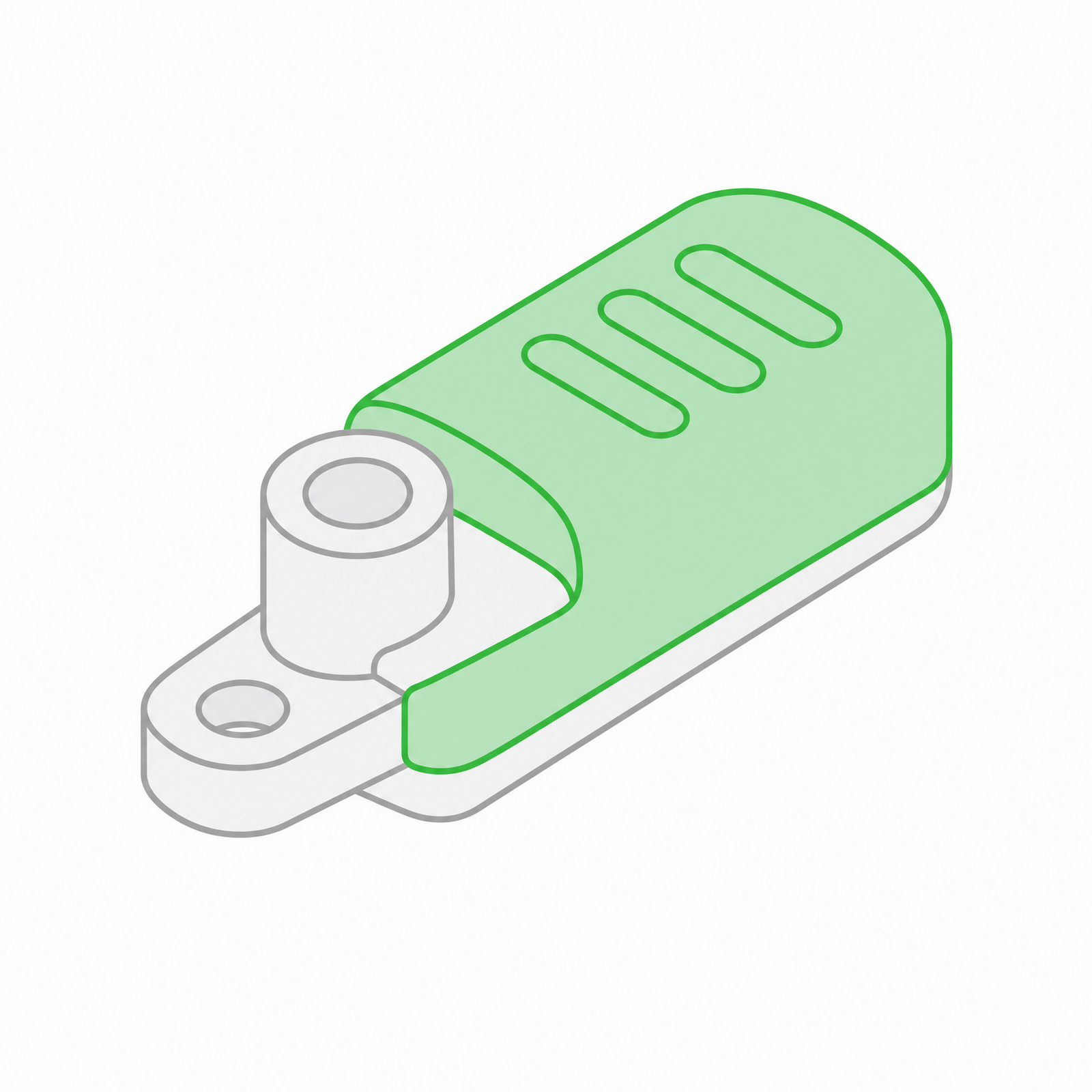 Silicone Rubber Overmolding
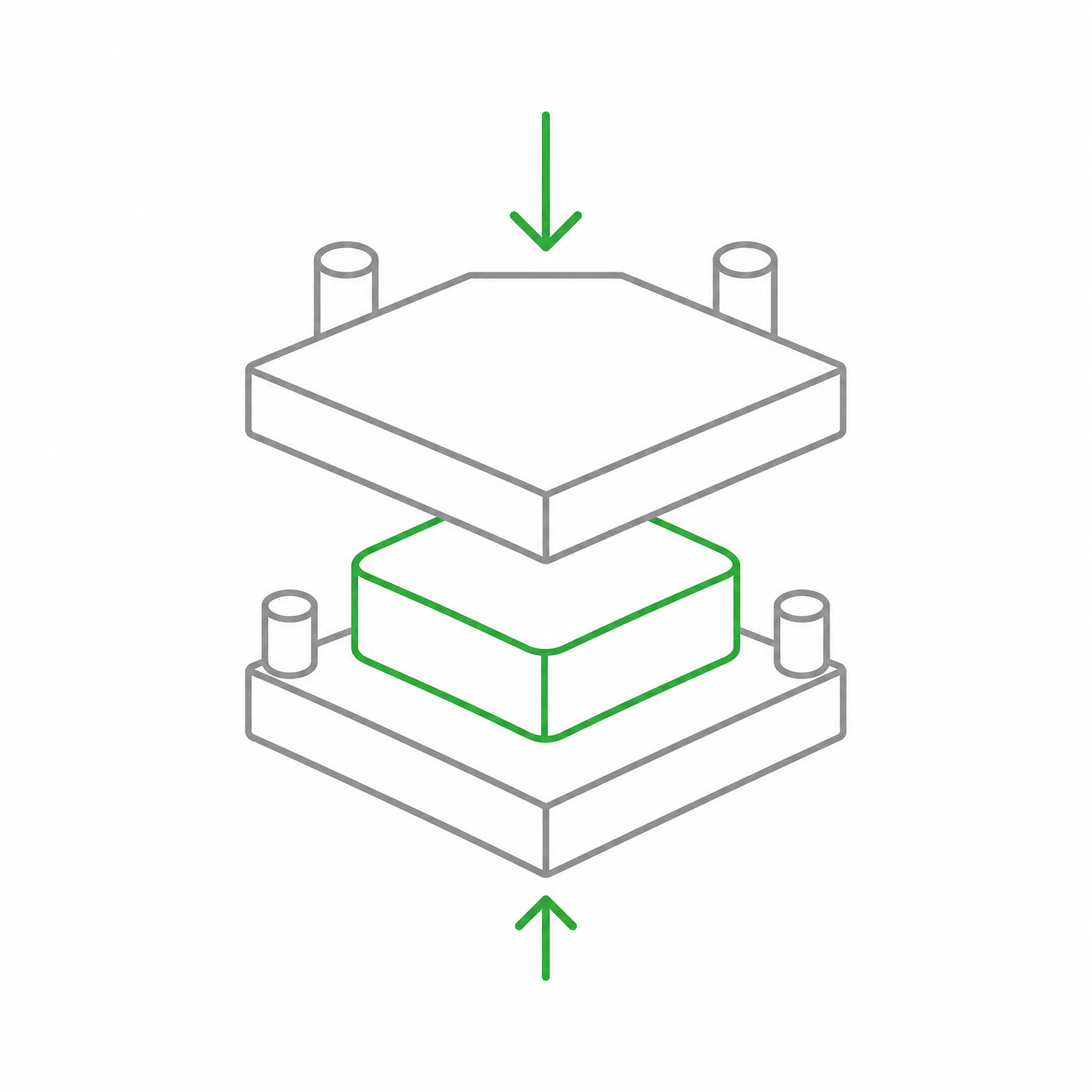 Compression Molding
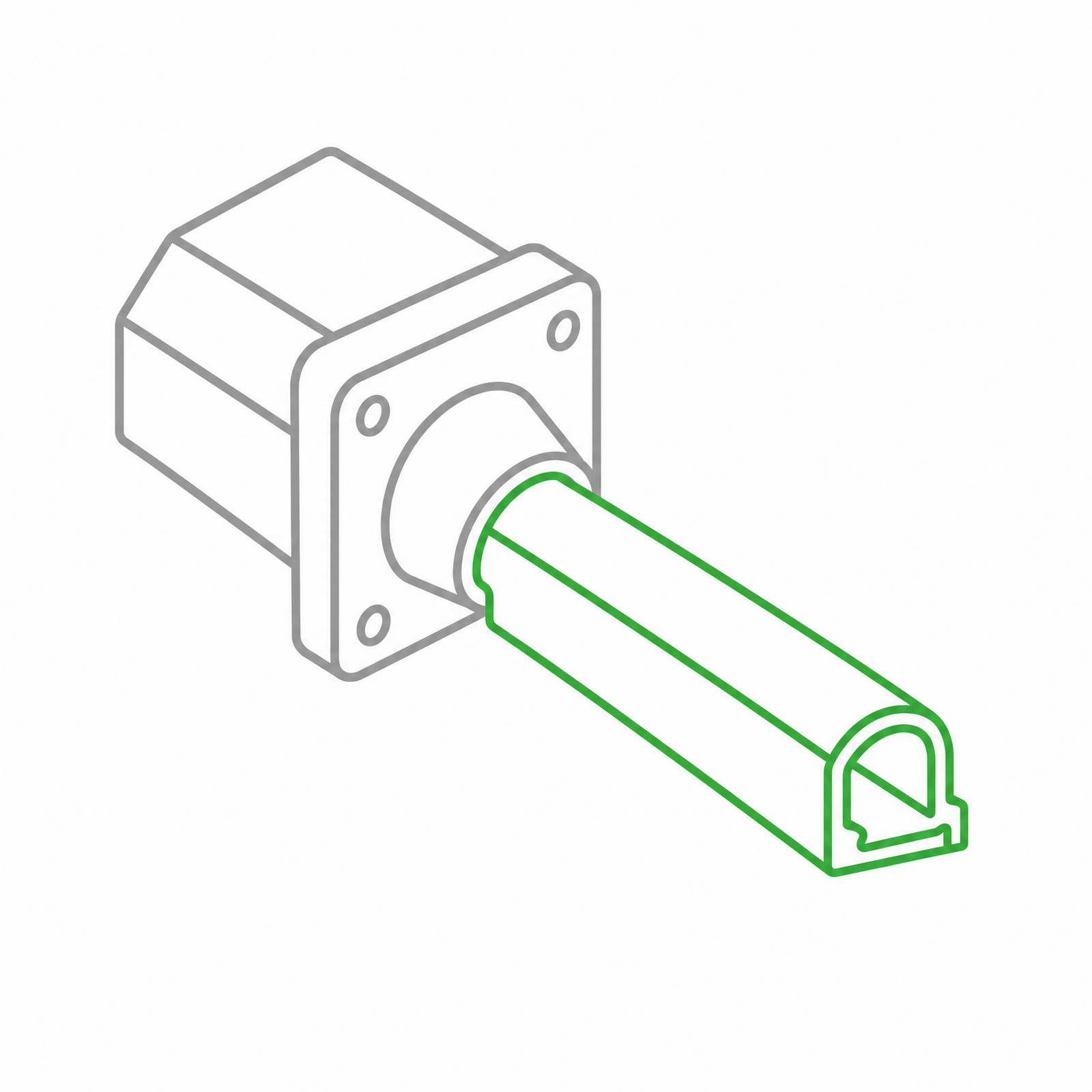 Silicone Rubber Extrusion
 In-house Tooling