
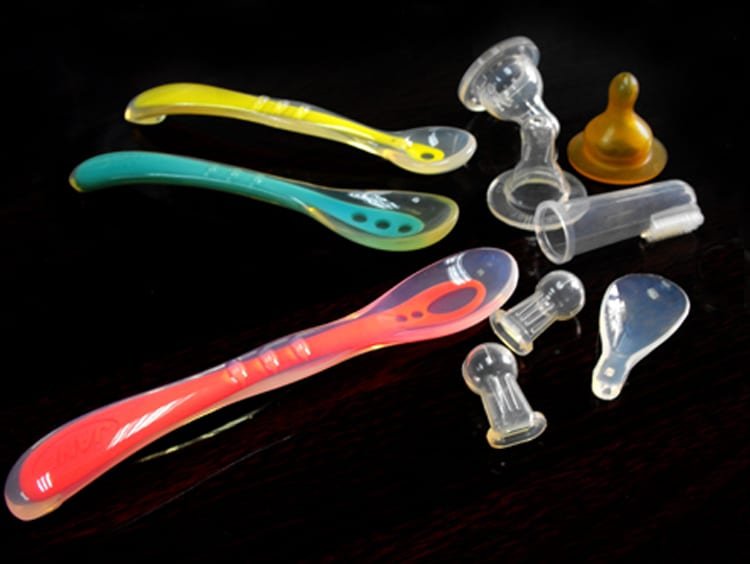
If you have ever pulled a baking mold out of a 230°C oven, fed an infant with a silicone bottle nipple, you have already handled food-grade silicone rubber. It is everywhere in nowadays food processing, yet most engineers only know the material specs when something goes wrong — a seal fails during CIP, a gasket starts off-gassing, or a customs hold-up stalls a shipment because the compliance paperwork does not match the batch.
This article is written to explain what food-grade silicone actually is, how regulations differ across the US, China, and Germany, what makes it perform the way it does, how it stacks up against regular industrial silicone, how to tell the two apart in the field, and where it is being used right now in production environments. We will also cover the practical stuff that rarely makes it into datasheets: how to inspect a shipment, how to prep a new part before first use, and the myths that still trip up even experienced buyers.
What is Food-Grade Silicone Rubber?
The Chemistry Behind It
At its core, food-grade silicone rubber is a polysiloxane elastomer. The backbone is a chain of silicon-oxygen bonds (Si–O), with organic side groups — usually methyl or vinyl — attached to the silicon atoms via Si–C bonds. That inorganic-organic hybrid structure is the reason silicone behaves the way it does: the Si–O bond energy sits at roughly 452 kJ/mol, well above the 348 kJ/mol of a C–C bond in organic rubbers like NBR or EPDM. That difference is not academic trivia; it is the molecular reason silicone can survive temperature swings that would turn a nitrile seal into brittle scrap.
Food-grade variants take that base chemistry and add a layer of process discipline. Every raw material — base polymer, filler, catalyst, pigment — has to sit on an approved list for food contact. There is no room for “good enough” industrial additives.
3 Categories of Food-grade Silicone
In practice, food-grade silicone is not one single material. It breaks down into three categories that matter when you are specifying or buying:
General-purpose food-grade silicone
It is the workhorse. It is built from polysiloxane polymer with a siloxane content of at least 90%, reinforced with standard food-grade fillers. The continuous temperature range is roughly -40°C to 230°C. It is chemically inert to acids, bases, and oils at room temperature, which makes it the default choice for baking molds, food storage lids, spatulas, and ice cube trays. Under China’s GB 4806.11-2024 framework, it must pass migration testing and keep residual low-molecular-weight siloxanes below 0.5%. Industrial-grade silicone is explicitly banned from this category because it can carry curing-agent impurities that migrate into food.
Platinum-cured silicone
It is the premium tier. Instead of peroxide curing, it uses a platinum catalyst to drive a hydrosilylation reaction between vinyl-terminated polysiloxane and a hydride-functional cross-linker. No byproducts. No peroxide residues. The result is higher purity, better aging resistance, and a surface that stays non-tacky after years of use. That is why it is the go-to for baby bottle nipples, feeding spoons, microwave containers, and medical-grade food instruments. If you are buying for infants, pregnant women, or any sensitive population, this is what you want. A legitimate platinum-cured product should carry a “Platinum Cured” mark on the packaging or the part itself. If it does not, be suspicious.
High-temperature food-grade silicone
It pushes the upper limit to 250–280°C by adding heat-resistant additives — typically silica-based fillers — to the polysiloxane base. It keeps its structural integrity at temperatures where general-purpose silicone would start to degrade. You will find it in oven mats, high-temperature baking trays, and any application where the part sits close to a heating element for extended periods. The catch is that those fillers must appear on the GB 4806.11-2024 positive list. Low-quality heat-resistant additives can leach out under sustained high heat, so the filler quality matters as much as the base polymer.
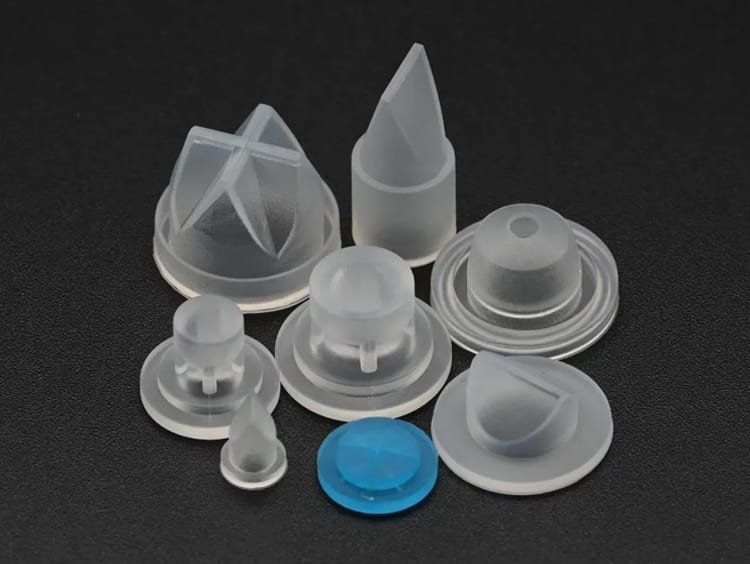
From a form perspective, you will also encounter HTV (high-temperature vulcanizing), RTV (room-temperature vulcanizing), and LSR (liquid silicone rubber). LSR dominates in food-contact injection moldingfood-contact injection molding because it flows like a liquid, cures fast, and holds tight tolerances — critical when you are molding a 0.5 mm valve diaphragm that has to seal against 6 bar of dairy product.
Regulatory: US, China, and Germany
Here is where things get complicated. Every major market has its own rulebook, and “FDA approved” does not mean the same thing as “LFGB compliant” or “GB 4806.11 certified.” If you are designing for export, you need to know the differences.
United States: FDA 21 CFR 177.2600
The FDA does not hand out approvals for raw materials. Instead, it regulates the finished article under 21 CFR 177.2600 — “Rubber articles intended for repeated use.” The regulation specifies which polymers and adjuvants are permitted, sets quantity limits on specific substances, and requires that the finished product not transfer anything toxic or unsafe into food.

Requirements:
- The rubber must be manufactured under GMP conditions.
- For fat-contact applications, there is a hexane extraction test with defined limits.
- The article must be thoroughly cleaned before first food contact.
- The burden of proof is on the manufacturer, not the FDA.
What catches people off guard is that 177.2600 is a performance standard, not a materials list. You can use a silicone formulation that is not explicitly named in the regulation, provided you can demonstrate through testing that the finished article meets the extraction limits. That flexibility is useful, but it also means you need a competent lab and solid documentation.
China: GB 4806.16-2025
China’s regulatory framework for food-contact silicone rubber sits under GB 4806.11-2024, which controls three things that matter in practice: low-molecular-weight siloxane residues, heavy metals (lead and cadmium), and additive migration limits. The standard requires that any silicone material intended for food contact must pass migration tests and keep residual siloxanes under 0.5% — a limit that effectively forces manufacturers to either use platinum curing or execute a very thorough post-cure on peroxide-cured material.
In September 2025, regulators released GB 4806.16-2025 as the first standalone national food safety standard dedicated specifically to silicone rubber materials and articles. It takes effect on September 2, 2026, replacing the silicone rubber sections of the older GB 4806.11-2016. This is significant because it treats silicone as its own category, with test conditions and limits tailored to its chemistry rather than lumping it together with other elastomers.
Here is what changed in the new standalone standard:
| Parameter | Limit | Test Conditions | Notes |
|---|---|---|---|
| Overall migration | ≤ 10 mg/dm² | Per GB 31604.8 | Infant-specific articles: ≤ 60 mg/kg |
| KMnO₄ consumption | ≤ 10 mg/kg | Water, 60°C, 2 h | Extended from 0.5 h in the old standard |
| Heavy metals (as Pb) | ≤ 1 mg/kg | 4% acetic acid, 60°C, 2 h | Also extended from 0.5 h |
| Volatile matter | ≤ 0.5 g/100g (0.5%) | Per Appendix B | New requirement, aligned with German LFGB |
The extended test time from 0.5 h to 2 h is not a trivial change. It forces manufacturers to prove their post-cure process is actually working — a 30-minute soak might let marginal parts pass, but two hours will expose any residual volatiles left from incomplete curing.
The standard also expanded the approved base raw materials from 19 to 21, adding fumed silica and 1-ethynylcyclohexanol to the positive list. On the migration test side, it dropped the old special provision allowing 50% ethanol as a fat simulant for silicone, now requiring vegetable oil or an approved substitute per GB 31604.1 — a more realistic test condition that better mimics actual food contact.
European Union and Germany: EC 1935/2004 and LFGB
At the EU level, Regulation (EC) No 1935/2004 sets the overarching framework: materials must not release substances in quantities that could endanger human health, and they must not alter the organoleptic properties of food — taste, smell, or appearance.
But the real teeth are at the national level. In Germany and France, food-contact silicone rubber must meet LFGB (Lebensmittel-, Bedarfsgegenstände- und Futtermittelgesetzbuch) requirements, enforced by the Federal Institute for Risk Assessment (BfR). LFGB testing is more comprehensive than FDA 177.2600. It covers migration limits, sensory evaluation, and substance-specific restrictions, and it is widely regarded as the most stringent food-contact standard globally.

Products that pass LFGB can carry the “knife and fork” symbol, a consumer-trusted mark across the EU. In the industry, LFGB-grade silicone is often called “platinum silicone” because the purity requirements effectively demand platinum curing. The cost reflects that — LFGB-grade material typically runs 20–40% higher than FDA-grade, but it is non-negotiable if you are selling into Germany, France, or the Nordic markets.
Other Standards Worth Knowing
- NSF/ANSI 51: Covers commercial food equipment and components. If your silicone part is going into a restaurant-grade ice machine or a commercial mixer, this certification is often required by equipment OEMs.
- EU 10/2011: The plastics regulation. Silicone additives that are not explicitly covered in 1935/2004 sometimes need to be cross-checked against this plastics positive list.
- GB 9685: China’s additive standard. Any additive in your silicone formulation — colorants, processing aids — has to appear on this list or in a subsequent NHC announcement.
Properties and Performance Characteristics
Thermal Performance
Food-grade silicone rubber operates continuously from -60°C to +230°C for general-purpose grades, with high-temperature formulations pushing that upper limit to 250–280°C. That range is unmatched among elastomers.
At the cold end, silicone stays flexible at -60°C, which matters if your sealing application involves blast freezing or cryogenic transport. At the hot end, it handles standard autoclave cycles (121°C, 15 min, 15 psi) and pharmaceutical-grade sterilization (134°C, 3 min) without hardening or cracking. For comparison, EPDM tops out around 120°C — right at the edge of autoclave conditions — and NBR starts degrading noticeably above 100°C.
But here is a practical point that does not always make it into datasheets: even high-temperature silicone rated for 280°C should not sit at 250°C or above for extended periods. Prolonged exposure accelerates aging, increases cross-link density, and eventually causes the material to harden and lose elasticity. If your process runs at 260°C continuously, you are pushing the material past its comfort zone. For baking and oven applications, 230°C is the safe ceiling for general-purpose grades; 280°C is the absolute max for high-temp grades, and even then, intermittent exposure is better than continuous.
Chemical Resistance and Inertness
The Si–O backbone is remarkably inert toward water, weak acids, weak bases, and salt solutions. In a typical food plant CIP environment — 1–2% NaOH at 70–85°C followed by 0.5–1% HNO₃ at the same temperature range — silicone does not swell, harden, or surface-crack.
Three characteristics matter especially for food contact:
No flavor pickup, no flavor release. Silicone does not adsorb flavor compounds, and it does not leach anything into the product. That is critical for dairy, juice, craft beer, and any application where off-taste is a quality defect, not just a safety issue.
Hydrophobicity. Low surface tension means water and most aqueous foods do not cling to the surface. It drains clean and dries fast — a subtle but important hygiene advantage.
Natural non-stick. Low surface energy means sugars, proteins, and starches do not adhere strongly. Less residue means less cross-contamination risk and shorter cleaning cycles.
The caveats: concentrated strong acids, strong bases, hydrofluoric acid, and hydrocarbon solvents will attack silicone. If your cleaning protocol involves aggressive solvents or concentrated caustic, you need to validate compatibility. Also, silicone and strong oily foods are not a great match for extended contact at elevated temperatures — the oil can penetrate the surface over time and cause swelling.
Mechanical Properties
| Property | Typical Value | Why It Matters |
|---|---|---|
| Shore A hardness | 40–60 | Balances sealing force with compliance |
| Tensile elongation at break | ≥ 300% | Accommodates complex shapes and dynamic flexing |
| Tear strength | 20–30 kN/m | Handles repeated bending and assembly stress |
| Compression set | < 15% (22 h / 175°C) | Long-term seal reliability under clamping load |
| Surface | Non-porous, smooth | Limits bacterial adhesion, simplifies cleaning |
The elastic recovery is excellent. After repeated stretch, compression, and twist cycles, silicone returns to its original geometry. That is why it dominates dynamic seals like peristaltic pump tubes and valve diaphragms — parts that flex thousands of times per shift and cannot afford to take a set.
Hygiene and Safety Profile
Food-grade silicone contains no BPA, BPS, phthalates, lead, or latex. The non-porous surface structure limits biofilm formation, which is a significant advantage in HACCP-managed facilities. When a cleaning validation protocol requires proof of microbial elimination, a smooth silicone surface is easier to sanitize than a textured or microporous alternative.
What are Differences Between Food-grade and General Silicone Rubber
The word “silicone” covers everything from bathroom caulk to breast implants. The difference between food-grade and industrial-grade is not just a certificate — it is a fundamentally different supply chain.
Raw Material Differences
| Aspect | Food-Grade | Industrial-Grade |
|---|---|---|
| Reinforcing filler | Fumed silica (high purity, 7–40 nm) | Precipitated silica, calcium carbonate, or other cheap fillers |
| Purity | No industrial plasticizers | May contain plasticizers and processing aids |
| Cross-linking | Platinum or food-grade peroxide | Any catalyst, including tin-based systems |
| Colorants | Food-grade approved pigments | Industrial pigments, possible heavy metals |
Fumed silica is the critical difference. Produced via flame hydrolysis of silicon tetrachloride, it has extremely fine particle size and high surface area (50–400 m²/g). It reinforces the silicone matrix without the optical scattering that causes cloudiness. Precipitated silica or mineral fillers are cheaper but introduce impurities, reduce transparency, and degrade mechanical properties.
Manufacturing Environment
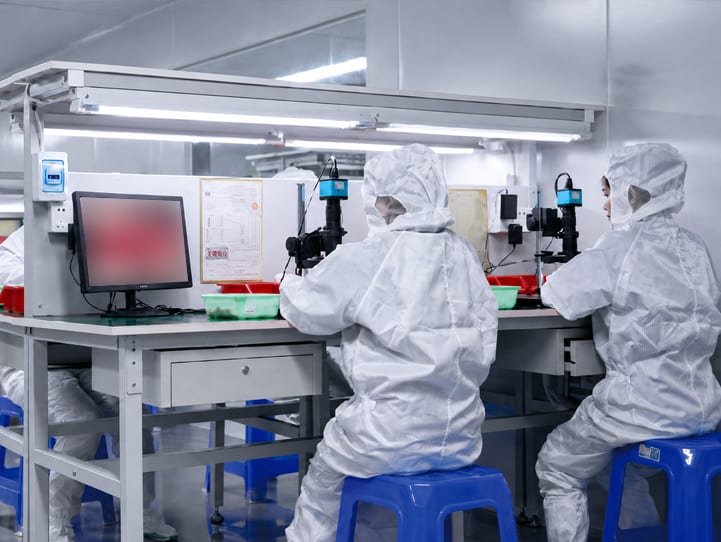
Food-grade silicone is produced in Class 100,000 (ISO 8) or better cleanrooms with HEPA filtration, anti-static controls, and dust-free garments. Industrial silicone is made in standard factory environments where airborne particulates and cross-contamination are not controlled to the same level. That difference in environment cost is real, and it shows up in the price.
Post-Cure Processing
After initial molding, food-grade silicone typically undergoes post-cure — a secondary bake at ~200°C for 4 hours to drive off residual volatiles, peroxide decomposition products, and low-molecular-weight siloxanes. Industrial-grade silicone often skips this step. The result is a part that may smell like a chemistry lab the first time it heats up.
Documentation and Compliance
Food-grade silicone comes with a paper trail:
- Declaration of Compliance (DoC) listing applicable regulations (FDA, LFGB, GB 4806.11/4806.16, etc.)
- Certificate of Analysis (CoA) with batch-specific test data
- MSDS/SDS for safe handling
Industrial silicone gives you a TDS (Technical Data Sheet) with hardness and tensile strength, but no migration data, no heavy metal results, and no food-contact compliance statement. If you are building a device that touches food and your QA auditor asks for documentation, industrial silicone leaves you empty-handed.
Cost Reality
Expect food-grade silicone to cost 30–100% more than industrial-grade at the raw material level. That premium covers fumed silica, cleanroom overhead, post-cure energy, and certification testing. From a total cost of ownership perspective, the premium pays for itself through reduced recall risk, longer service intervals, and access to export markets that require LFGB or FDA compliance.
How to Identify Food-Grade Silicone
When a shipment arrives and the label says “food-grade,” how do you verify that claim? And once you have verified it, how do you prep it for first use and keep it serviceable? Here is a practical hierarchy of checks, from the receiving dock to the maintenance schedule.
Step 1: Read the Label Before You Touch the Material
This sounds obvious, but it is the step most people skip. A legitimate food-contact silicone product must carry three things on the packaging or the part itself:
- The words “food contact” or “for food use” — not just “food grade,” which is a marketing term with no legal standing in most jurisdictions.
- A compliance standard number — GB 4806.11-2024 for China, FDA 21 CFR 177.2600 for the US, or LFGB for Germany/EU. If the label only says “food grade” with no standard number and no certification mark, the odds are high that it is non-compliant. Do not buy it.
- For platinum-cured products, a “Platinum Cured” mark. If you are buying for infants, medical use, or any sensitive application, and the label does not explicitly say platinum-cured, assume it is peroxide-cured and ask for proof.
If you are buying from a distributor rather than the manufacturer, ask for the DoC and CoC (Certificate of Conformance) directly. A reputable supplier will have them ready. If they hesitate, that is a red flag.
Step 2: Sensory and Physical Checks at Receiving
You do not need a lab to catch most fakes. Here is what to do on the shop floor:
Visual inspection: Food-grade silicone should look clean — high transparency or a uniform translucent/white color, smooth surface, no specks or bubbles. Industrial-grade often looks cloudy, grayish, or speckled. Bright, saturated colors (neon red, deep purple) are fine for low-temperature applications, but be cautious if the part is intended for oven use — some non-food-grade pigments are used to hide filler impurities.
Touch test: Run your fingers across the surface. Food-grade silicone feels smooth, soft, and elastic. Industrial-grade can feel tacky, rough, or waxy.
Smell test: Warm the sample to 50–60°C for ten minutes, then smell it. Food-grade silicone should be essentially odorless, or have a very faint volatile note that dissipates quickly. Industrial-grade often releases sour, sulfurous, or solvent-like odors — residual peroxide breakdown products, plasticizers, or solvents that did not get baked out.
Stretch test (Pinch Test): Grab the sample and stretch or twist it hard. Watch the stressed area:
- Food-grade: Color stays uniform. No whitening.
- Industrial-grade: White streaks or a cloudy haze appear where the material is stressed.
The physics behind this is simple: fumed silica has a refractive index close to the silicone matrix, so it does not scatter light under deformation. Cheap fillers like calcium carbonate or low-molecular polymer fractions have a larger refractive index mismatch. When the matrix deforms, micro-cracks form at the filler interface, and those interfaces scatter light — you see white. This test catches about 95% of filled industrial silicone in solid form.
Stretch recovery: Pull the sample to about twice its length and release. Food-grade silicone should snap back to its original shape immediately. If it takes a set or returns slowly, it likely contains excessive plasticizer or low-quality polymer.
Step 3: Lab Validation
Heat aging: Place the sample in a 200°C oven for 30 minutes. Food-grade silicone shows no significant deformation, discoloration, or odor. Industrial-grade often softens, turns sticky, changes color, or releases acrid smoke.
Oil immersion: Soak the sample in edible vegetable oil at 60°C for 24 hours. Food-grade silicone stays dimensionally stable with no color change or swelling. Industrial-grade often swells, discolors, or turns tacky on the surface.
Third-party certification check: Request test reports from accredited labs — SGS, Intertek, TÜV, Bureau Veritas. Verify that the cited standard is explicit, the test scope covers overall migration, heavy metals, volatile matter, and sensory evaluation, the report date is within validity (typically 1–2 years), and the material grade matches the shipment.
Step 4: First-Use Preparation
Even compliant food-grade silicone can have trace low-molecular-weight siloxanes on the surface from manufacturing. Before first use, soak the part in a white vinegar solution (roughly 1 part vinegar to 3 parts water) for 2 hours. The mild acidity helps draw out residual surface siloxanes. After soaking, wash with neutral detergent, rinse thoroughly, and dry completely before use. This is especially important for infant products and anything that will contact fatty foods, where residual siloxanes are most likely to migrate.
Step 5: Daily Care and Aging Management
Cleaning: Hand wash with mild detergent when possible. Dishwashers are convenient, but the aggressive detergents and high-pressure jets can accelerate surface degradation over time, especially for thin-walled parts like baking molds and spatulas.
Drying: Dry thoroughly before storing. Silicone is hydrophobic, but trapped moisture in crevices or between stacked molds can promote mold growth — not because the silicone supports it, but because organic residue in the water does.
Temperature discipline: Do not exceed the rated temperature. General-purpose silicone is safe to 230°C; high-temperature grades to 280°C. Even then, avoid prolonged exposure above 250°C — it accelerates aging. Never expose silicone to open flame. And before microwaving any silicone container, confirm it carries a “microwave safe” label. Not all silicone is rated for microwave use; localized overheating can warp the part or create hot spots.
Damage policy: If the part is torn, cracked, or deeply scored, retire it immediately. Damage creates surface area where bacteria can harbor and where mechanical stress will propagate. A cracked baking mold is not just a cosmetic issue — it is a food safety issue.
Aging signs: Know when to replace. If the surface starts feeling sticky, the color shifts noticeably, cracks appear, or the elasticity drops (it no longer snaps back when stretched), the material has aged beyond its safe service window. Even if it looks intact, aged silicone can release higher levels of low-molecular-weight substances. The practical replacement cycle for household items is 1–3 years, depending on use intensity. For industrial seals and gaskets, follow the manufacturer’s service interval or your plant’s preventive maintenance schedule.
Applications of Food-grade Silicone
Food and Beverage Processing
In dairy, juice, beer, and sauce plants, silicone is the default elastomer for seals, gaskets, hoses, and diaphragms. It survives CIP/SIP cycles, does not flavor the product, and its white or translucent color makes visual contamination detection easier on inspection lines.
Specific parts:
- Seals and gaskets for heat exchangers, homogenizers, fillers, and fermenters.
- Tubing for peristaltic pumps, milk transfer, and juice concentrate lines.
- Valve diaphragms and O-rings in dispensing, check, and regulating valves.
- Conveyor belts and scrapers in baking, confectionery, and dairy lines.
Baking and Kitchenware
Silicone baking molds handle 230°C oven temperatures and release cleanly without excessive grease. Foldable food containers and reusable food bags are replacing single-use plastics. Kitchen spatulas, spoons, and brushes use soft silicone to protect non-stick cookware surfaces.
Infant and Medical Products
Baby bottle nipples, sippy cup seals, feeding spoons, and teething toys all rely on platinum-cured food-grade silicone for its softness, heat resistance, and safety profile. These applications sit at the intersection of food contact and oral contact, so the compliance bar is even higher — and the “Platinum Cured” label is non-negotiable.
On the medical side, food-grade purity is a stepping stone to medical-grade certification. Respiratory mask seals, oxygen tubing, medical device keypads, and sterilization equipment gaskets often start with food-grade silicone formulations and then add biocompatibility testing (USP Class VI, ISO 10993) for the final medical clearance.
Packaging and Pharmaceutical Equipment
Food packaging machines use silicone seals on fillers, sealers, and vacuum packagers. In pharmaceutical manufacturing, autoclave door seals and freeze-dryer gaskets must withstand 134°C saturated steam repeatedly. Silicone is one of the few elastomers that can do that without taking a compression set.
 LSR Injection Molding
  Compression Molding
 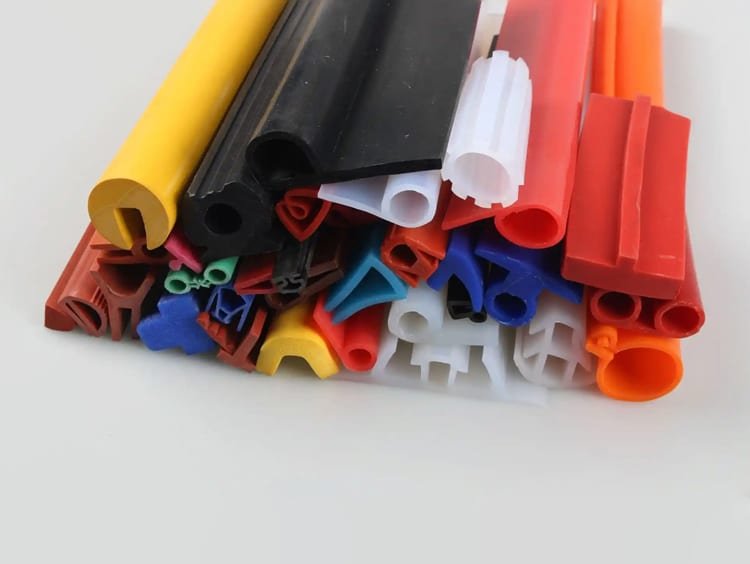 Silicone Extrusion
 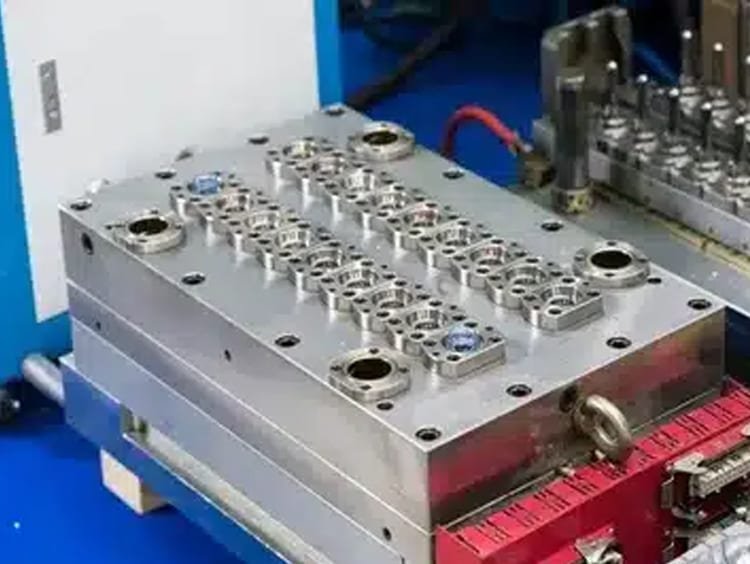 In-house Tooling