
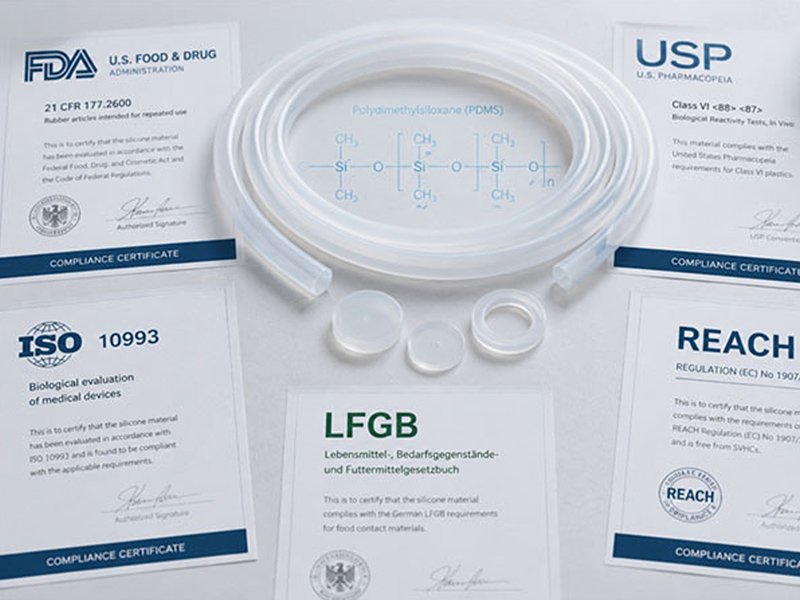
Silicone is a widely used polymer material. Starting from the material itself, this article reviews the introduction and removal mechanisms of catalysts, additives, and stabilizers throughout the entire production process, and explains—based on authoritative regulatory standards and scientific data—why silicone that meets food-grade and medical-grade standards is a non-toxic and safe material.
Silicone Material is Non-toxic
For polymer materials such as plastics and silicone, safety is reflected in several aspects. First, the material itself must be non-toxic and physiologically inert. In addition, the material should exhibit chemical stability, corrosion resistance, and resistance to decomposition, so as to prevent the generation of harmful substances. A negative example is polycarbonate. The most widely used polycarbonate today is bisphenol A (BPA) polycarbonate. During use, some unreacted BPA monomer may migrate out of the material. This substance can affect children’s metabolism and growth development, making it unsuitable for children’s products.
Compared with ordinary plastics, silicone is significantly safer. As an organosilicon polymer, silicone’s molecular chain consists mainly of siloxane bonds, with attached groups primarily being methyl groups and other non-reactive moieties. Therefore, silicone is extremely stable, resistant to decomposition, and physiologically inactive—it does not participate in metabolism and has no toxic effect on the human body. Biocompatibility testing of medical silicone tubing shows that human tissue reacts very little to it, and even when implanted in the body, it does not cause foreign-body reactions. It is precisely because of this that people feel confident letting silicone come into contact with the human body during medical procedures, or even using it for blood transfusion or human implantation.
The physiological inertness of silicone makes it widely used in medicine.
Safety During Use
In daily use, we also need to be concerned about the stability and weather resistance of the material. In particular, when food-grade silicone is used as a container, we often need to heat and sterilize it. Whether the material can withstand high temperatures and whether it will produce harmful substances during heating are therefore very important indicators.
Among polymer materials, silicone’s heat resistance is excellent. This is because the main chain skeleton of silicone is composed of alternating silicon and oxygen atoms, giving it properties similar to inorganic substances such as quartz. It can be regarded as a semi-inorganic, semi-organic material, and thus inherits some of the high-temperature resistance characteristics of inorganic substances. Silicone can generally be used at 200°C without concern for material decomposition or the generation of harmful substances, and it can be repeatedly heated. This is why some spatulas, baby bottles, and lunch boxes can be made from silicone. Every material has its specific range of use and environmental conditions, and silicone is no exception. Compliant silicone will not decompose easily within the specified temperature range, but exceeding the design temperature, prolonged dry heating, or direct contact with flame can still cause aging, hardening, cracking, or thermal decomposition. Therefore, silicone products should be used within the temperature range specified by the manufacturer.
How Are Potential Residues Controlled During Production?
Silicone itself is non-toxic, but the public often worries whether auxiliary substances such as catalysts, stabilizers, and crosslinking agents used in the production process will remain in the final product and harm the human body. In fact, through sophisticated multi-stage purification processes, the residues of these substances are controlled below regulatory limits, or even to near-undetectable levels.
To turn silicone raw material into an elastic product, the following substances typically need to be added or used:
- Reinforcing fillers;
- Crosslinking agents;
- Catalysts;
- Curing inhibitors;
- Color pastes and pigments;
- Heat stabilizers;
- Processing or release aids.
These substances are not all “washed away” after production. In the final product, they have 4 main final destinations:
1. Participate in the Reaction
For example, in platinum-cured addition silicone, the hydrosiloxane crosslinker reacts with vinyl groups on the polymer, linking different polymer chains together. After the reaction is complete, the crosslinker no longer exists in its original free state, but becomes part of the three-dimensional silicone structure.
2. Remain in the Material
Fumed silica, compliant pigments, and some heat stabilizers are inherently part of the final product. They do not need to be completely removed in subsequent processes; instead, they must meet requirements for raw material purity, addition level, and migration limits.
3. Expelled During Curing or Post-Curing
Peroxide decomposition by-products, small amounts of low-molecular-weight siloxanes, and other volatile components can diffuse out from within the silicone during high-temperature curing and post-curing, and are then carried away by the oven’s exhaust system.
4. Present as Trace Residues
Catalysts are not necessarily completely removed. For example, platinum catalyst may remain in the finished product at very low levels, but its usage amount and content in the finished product are restricted. Safety assessment is not concerned with whether “any chemical substance can be detected,” but rather with the chemical state of the residue, its migration potential, and the actual human exposure level.
In other words, the fact that additives are not completely removed does not mean they will migrate out of the silicone, and even less does it mean they will cause harm to the human body.
Formulation Design
The safety of a silicone product first depends on what raw materials are used. Food, infant, and medical applications cannot simply use ordinary industrial silicone and then wash it into “food-grade” or “medical-grade” status. At the formulation design stage, it is necessary to confirm:
- Whether the polysiloxane base material is suitable for the intended use;
- Whether the crosslinking system complies with the relevant regulations;
- Whether color pastes and pigments are suitable for food or human contact;
- Whether fillers meet purity and heavy metal requirements;
- Whether stabilizers and processing aids have clear justification for use;
- Whether raw material batches are traceable.
The German Federal Institute for Risk Assessment’s BfR Recommendation XV makes specific provisions on the base polymers, crosslinking systems, catalysts, inhibitors, and some additives that may be used in food-contact silicone rubber, and sets maximum content or migration limits for certain substances.
Therefore, the first step in safety control is not “removing toxic substances later,” but rather not casually adding substances unsuitable for the intended use from the very beginning.
Mixing and Compounding
Before mixing or injection, silicone needs to have the base polymer, fillers, colorants, and curing system uniformly blended. Liquid silicone rubber (LSR) typically consists of two components, A and B, with the catalyst on one side and the crosslinker on the other.
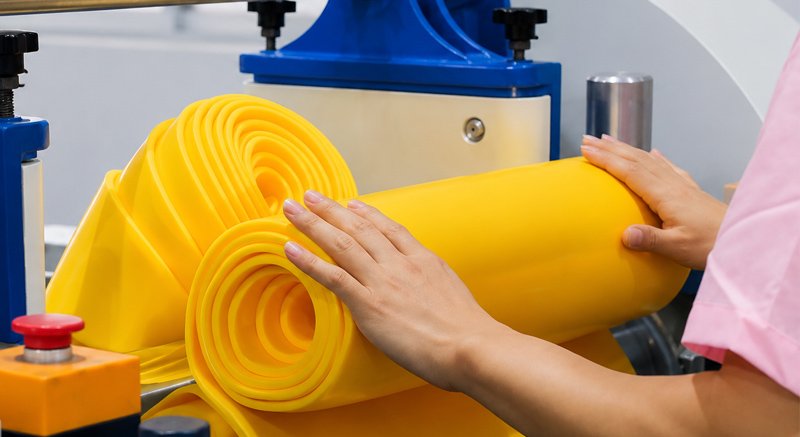
At this stage, additives have usually not yet been removed, nor have they necessarily undergone complete reaction. The safety significance of this step lies in:
- Ensuring accurate formulation ratios;
- Avoiding local excess of catalyst or crosslinker;
- Preventing uneven mixing that causes local under-cure;
- Avoiding contamination from equipment oil, other rubber materials, or cleaning agents;
- Ensuring each batch is processed according to established process parameters.
If the A/B ratio is incorrect, mixing is uneven, or the material is contaminated by inhibitors, the silicone may not fully cure, manifesting as a tacky surface, obvious odor, insufficient strength, or increased extractables.
Platinum Curing
Liquid silicone injection molding typically employs a platinum-catalyzed addition crosslinking system. After the materials are mixed and heated, the Si–H groups in the hydrosiloxane react with the vinyl groups on the polymer, and the liquid material gradually transforms into an elastic crosslinked network.
An important characteristic of addition crosslinking is that the normal reaction itself does not produce volatile by-products. The crosslinker becomes part of the material structure through chemical reaction, rather than remaining in the product as a liquid after molding.
Platinum acts as a catalyst in this reaction. It is not consumed in large quantities like the crosslinker, nor does it need to be completely removed from the finished product. However, its usage level is very low and is regulated. BfR Recommendation XV stipulates that the platinum content in relevant food-contact silicone rubber finished products shall not exceed 50 mg per kilogram of finished product; specific inhibitors used to control curing speed shall not exceed 0.1% in total.
Therefore, the safety logic of platinum-cured silicone is not “platinum is absolutely absent from the finished product,” but rather:
- The catalyst is added at a very low level;
- Platinum does not exist in large amounts as free liquid;
- The crosslinking reaction does not produce peroxide decomposition by-products;
- The content and migration risk in the finished product are controlled.
Peroxide Curing
Some solid silicone, extruded silicone, and compression-molded silicone use organic peroxides for vulcanization. When heated, peroxides decompose to form free radicals, which then initiate crosslinking between polymer chains.
This process differs from platinum addition curing. While initiating crosslinking, peroxides may produce small amounts of decomposition by-products. These substances may cause odor, surface bloom, or increased volatiles, and therefore require adequate curing and post-curing treatment.
BfR Recommendation XV not only specifies the use conditions for certain peroxides and their transformation products, but also explicitly requires that final silicone rubber products must test negative for residual peroxides. For 2,4-dichlorobenzoic acid produced by specific peroxides, its migration into food or food simulants must not exceed 5 mg/kg.
This means that in compliant peroxide-cured silicone:
- The original peroxide is decomposed during heating;
- The crosslinking reaction connects polymer chains;
- Volatile decomposition products are further expelled during post-curing;
- The final product must not retain detectable active peroxide.
Post-Curing (Secondary Vulcanization)
Post-curing is an important step for controlling odor, volatiles, and extractables in silicone. After molding, silicone parts are placed in a hot-air circulation oven with fresh air supply and exhaust capability, and held at a specified temperature for a set time. This process serves two main purposes: continuing any crosslinking that may not yet be fully complete, and allowing low-molecular-weight siloxanes and crosslinking by-products to diffuse out from within the silicone and be expelled.
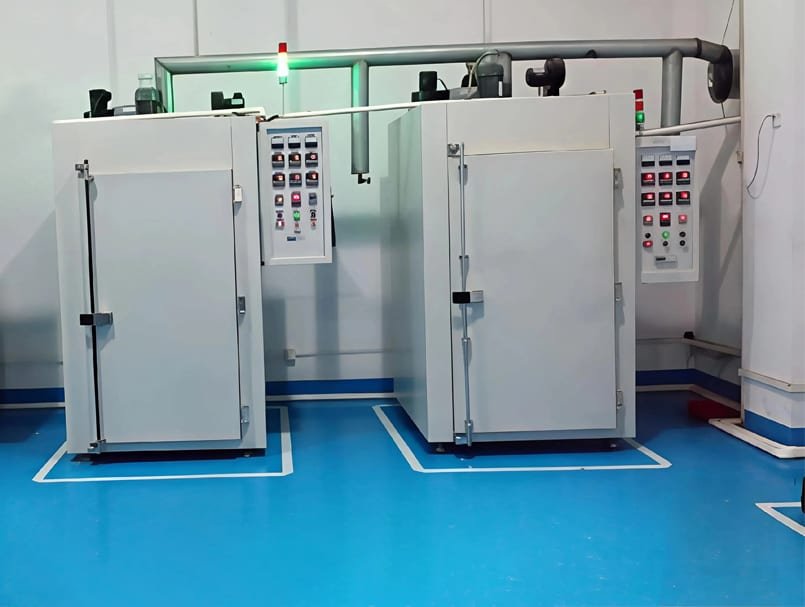
Post-curing can be used to remove crosslinker by-products and low-molecular-weight polymer components; most volatile components are typically expelled within approximately the first two hours. For a test piece about 2 mm thick, typical reference conditions are 200°C for 4 hours. Actual time must be validated based on material grade, part thickness, and oven loading, and cannot be directly applied to all products.
Although platinum addition silicone does not produce peroxide by-products, post-curing may still be used for food and medical applications to reduce low-molecular-weight siloxanes and other volatile components.
Recommendations for Silicone Use
In daily life, people often judge material quality by appearance and odor, and some misconceptions have even emerged. Due to certain historical reasons, a considerable number of people believe that colored silicone or plastic must be recycled material—an unhealthy, inferior product. In fact, as a daily necessity, having color for aesthetics or other functions is perfectly normal. For ordinary people choosing silicone products, the simplest thing is to check whether the material is food-grade.
Food-grade material standards specifically regulate the raw materials and production processes that may be used for silicone products, which excludes a considerable number of silicone products with health risks. In addition, food-grade material standards place special emphasis on so-called migration testing. In migration testing, silicone is immersed in ethanol or other solvents, and after the test, the immersion liquid must show no change in color or turbidity. At the same time, various relevant substances in the immersion liquid, such as heavy metals and nitrosamines, must not exceed specified limits. Therefore, regardless of the color of the silicone, as long as it meets food-grade material standards, there is no need to worry about harmful substances leaching out.
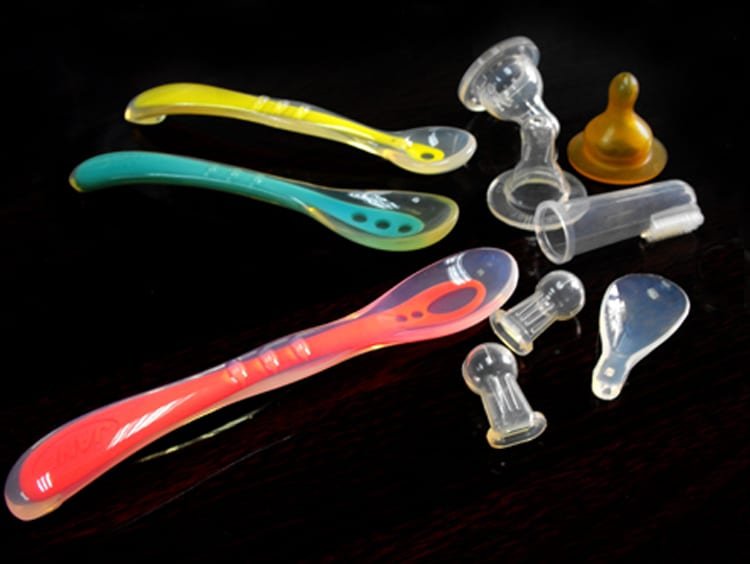
 LSR Injection Molding
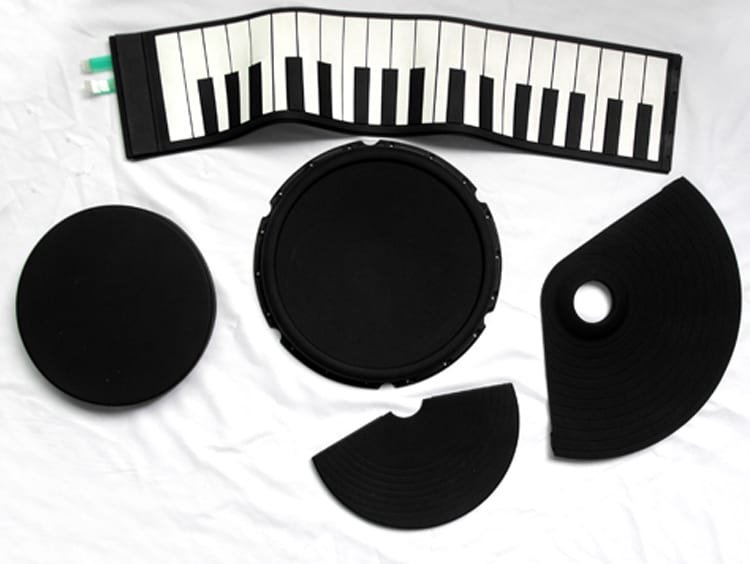
  Silicone Overmolding
  Compression Molding
 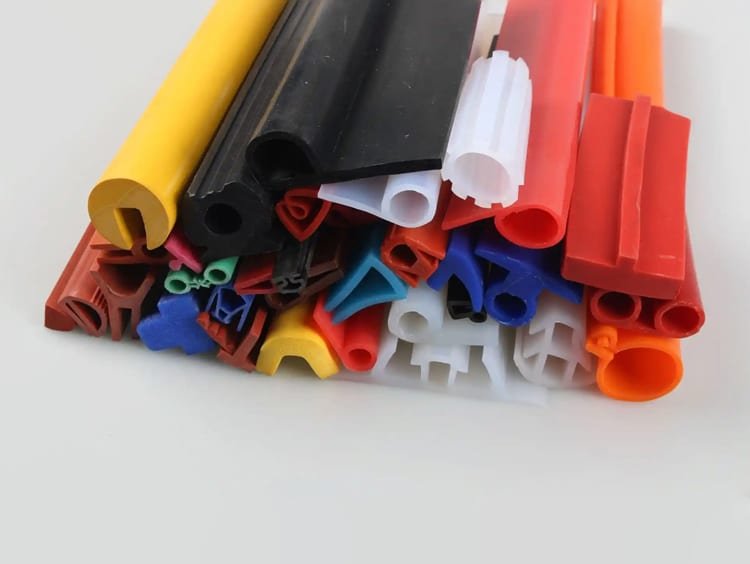 Silicone Extrusion
 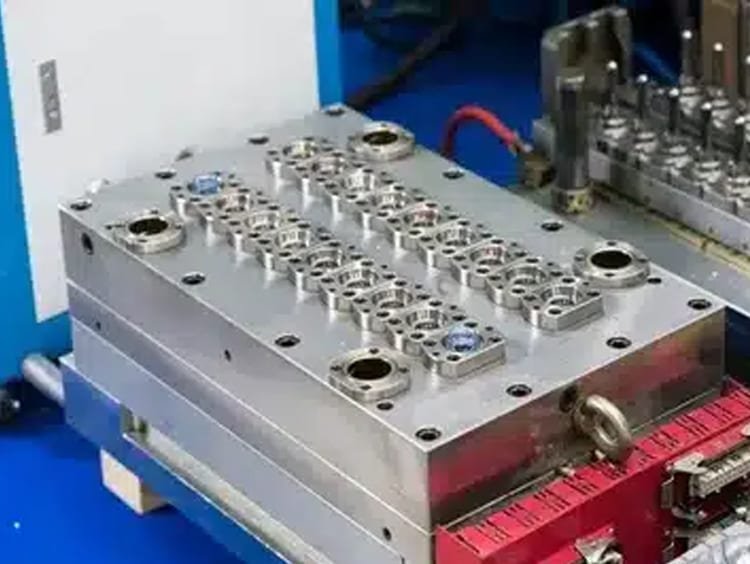 In-house Tooling